

HalleluYAH! Yeshua haMashiyach The Perfect Blood of Pesach Lamb Offering Substituter is ALIVE on April 7, 30 CE (18 Nisan/Abib) on dawn (Sunday) before sunrise.


Beloved ones,
According Matthew 28:1 is the key:
The Only Begotten Son Yeshua is risen on dawn (Sunday) before sunrise [April 7, 30 CE Sunday, 18 Nisan/Abib].
Aramaic Paul Younan show us all see the first day of the week regards (Sunday, if you will) is called Khad b’Shabba (first-of-seven) according Matthew 28:1.
Yeshua haMashiyach The Only Begotten Son Himself Pesach Lamb Offering is risen!
Deep spiritual pondering of YHWH/Yeshua/Torah: The powerful key is on Matthew 28:1 TLV.
The Son Is Risen!
1Now after Shabbat, as it began to dawn on the first day of the week, Miriam of Magdala and the other Miriam came to look at the tomb.
The above verse 1 show us all….. after Shabbat, as it began to dawn on the first day of the week! In Aramaic: Khad b’Shabba
2And suddenly there was a great earthquake, for an angel of Adonai descended from heaven and came and rolled back the stone and sat on it.
3His appearance was like lightning, and his clothing as white as snow.
4And those keeping watch were shaken for fear of him and became like dead men.
5But the angel answered and said to the women, “Do not be afraid, for I know you are looking for Yeshua who was crucified.
6He is not here; for He is risen, just as He said. Come, see the place where He was lying.
7Go quickly now and tell His disciples that He is risen from the dead. And behold, He’s going before you to the Galilee. There you will see Him. See, I have told you!”
8They quickly left the tomb, with fear yet with great joy, and ran to bring news to His disciples.
Please click on Matthew 28:1 have different Bible translations:
Remember Count 3 days and 3 nights, not 3 nights and 3 days!
Aramaic Andrew G. Roth:
Purge out from you the old leaven that you may be a new mass, as you are unleavened. For our Paskha (Passover) is the Mashiyach, who was slain for us. Therefore let us celebrate the festival, not with the old leaven, nor with the leaven of wickedness and bitterness, but with the leaven of purity and sanctity. (1 Corinthians 5:7-8-AENT)
3 Days and 3 Nights always 72 hours? <——-LQQK Good question!
Therefore the timeline from death to resurrection is as follows…
Day 1: Thurs at 3 PM to sunset.
Night 1: Thurs sunset to Fri dawn.
Day 2: Fri dawn to sunset.
Night 2: Fri sunset to Sat dawn.
Day 3: Sat dawn to sunset.
Night 3: Sat sunset to Sun dawn. <———LQQK Matthew 28:1! Yeshua rose dawn (Sunday) before sunrise according those scripture verse. HalleluYAH!
Share my spiritual belief:
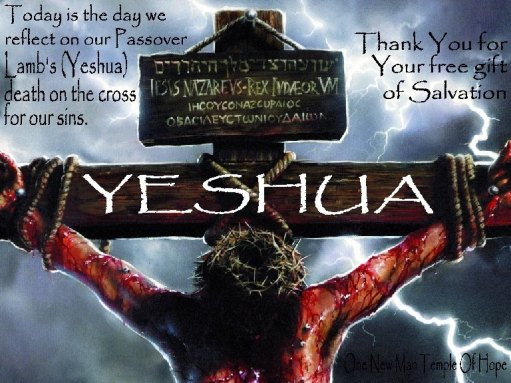
Yeshua Himself The Blood of Pesach Substituter Chag haMatzah is High Shabbat:
My belief is:
Yeshua haMashiyach Himself Passover (Pesach) Lamb did served Pesach Seder (14 Nisan) very late afternoon before sunset) and broke matzah at new night (15 Nisan Chag haMatzot) on Luke 22. The key is 14th falls new 15th.
After served Pesach Seder and broke matzah (unleavened, 15 Nisan), walked surrounding the Garden of Gethsemane,

Before He (Yeshua) was arrested at night (Luke 22) still was on new 15 Nisan and got kiss death of Betrayer Judas:
Please click Kiss of Death


Andrew G. Roth:
Deuteronomy 22:18 TLV The elders of that city are to take the man and punish him.
YASAR (22:18) = flog or whip, presumably with 39 lashes, which is the rabbinic fence to make sure never to go over the maximum Torah mandated 40 lashes, and Torah itself only puts 40 as a maximum and does not prohibit administering only 39 (Deuteronomy .)25:1-3
The details in this commandment also would extend past this historical moment in the text and link to earlier mechanisms in Torah to investigate adultery as well, such as the water of cursing given in Numbers 5, meaning a husband who falsely accuses his wife by that process could also face 39 lashes. It is an open question however, given the fact that 40 years separate Numbers 5 from Deuteronomy 22 and 25 if the lashes would have been applied in the years in between these separated procedures.
Also 2 Corinthians 11:24 has Paul tell us he was flogged with thirty-nine lashes on three separate occasions, and this is just one more in a whole series of examples where the NT tells us what aspects of the Oral Law were current in 1st century Israel.
And finally, I should also point out that the Romans, when flogging Yeshua, had no such limitations on the number of stripes they could administer. A man condemned by the Sanhedrin would not likely get too many pleas in his behalf to not exceed the Torah limits.


Yeshua haMashiyach Himself Perfect Blood of Pesach Lamb Offering “substitute” on April 4, 30 CE [Thursday, 15th of Aviv/Nisan] crucified on Chag haMatzot (High Holy Day).
About the ninth hour refers 3 pm
My El! My El! [Lemana shabakthani] Why have you spared me?
AENT [Aramaic English New Testament]
Matthew 27: 46. And about the ninth hour, Y’shua cried out with a loud voice and said, My El! My El! [Lemana shabakthani] Why have you spared me?
In Torah: We see every scripture verses reveal deep about hour.
The first hour = 6 to 7 am
The second hour = 7 to 8 am
The third hour = 8 to 9 am
The fourth hour = 9 to 10 am
The fifth hour = 10 to 11 am
The sixth hour = 11 am to 12 pm
The seventh hour = 12 to 1 pm
The eighth hour = 1 to 2 pm
The ninth hour = 2 to 3 pm
The tenth hour = 3 to 4 pm
The eleventh hour = 4 to 5 pm
The twelfth hour = 5 to 6 pm
Look at above photo of Matzah [Unleavened]
Note the appearance of the matzah. It is easy to see what looks like bruises and stripes, and that it is pierced. Isaiah prophesied about Yeshua haMashiyach:
He was pierced for our transgressions, He was bruised for our iniquities; the punishment that brought us peace was upon Him, and by His stripes we are healed.” [Isaiah 53:5]


The Jewish Law VS The Romans Law:
Everyone, Yes and I understood agreeing the above seeing Rav Shaul (Paul) went through the Jewish law had 39 lashes and can imagine Romans under Roman law had no compassions unlimited flogging Yeshua:
Yeshua The Blood of Pesach Lamb Offering as Substitute hung, crucified, and died on the torture execution stake on April 4, 30 CE Thursday, (Nisan 15/Abib 15), Chag haMatzah was High Shabbat at 3 p.m. before sunset.
Why?
Because of the Second Chagigah!
First of all I do not have problem with 14 Nisan and 15 Nisan – both viewers, please respect my view on Pharisees knew their plans something on Yeshua haMashiyach according scripture verses what I understood both First Chagigah and Second Chagigah the key is peace (shalom) offering also joyful life present YHWH-Shalom. Please click my ASL “Second Chagigah“
Please click on: Alfred Edershiem
Also, please click and read this excellent article on Alfred Edershiem elaborates why:
The Temple: on Chapter 11 The Passover
The Three Things
We have already explained that according to the Rabbis (Chag. ii, 1; vi. 2), three things were implied in the festive command to ‘appear before the Lord’—’Presence,’ the ‘Chagigah,’ and ‘Joyousness.’ As specially applied to the Passover, the first of these terms meant, that every one was to come up to Jerusalem and to offer a burnt-offering, if possible on the first, or else on one of the other six days of the feast. This burnt-offering was to be taken only from ‘Cholin’ (or profane substance), that is, from such as did not otherwise belong to the Lord, either as tithes, firstlings, or things devoted, etc. The Chagigah, which was strictly a peace-offering, might be twofold.
This first Chagigah was offered on the 14th of Nisan, the day of the Paschal sacrifice, and formed afterwards part of the Paschal Supper.
The second Chagigah was offered on the 15th of Nisan, or the first day of the feast of unleavened bread. It is this second Chagigah which the Jews were afraid they might be unable to eat, if they contracted defilement in the judgment-hall of Pilate (John 18:28).
In reference to the first Chagigah, the Mishnah lays down the rule, that it was only to be offered if the Paschal day fell on a week-day, not on a Sabbath, and if the Paschal lamb alone would not have been sufficient to give a satisfying supper to the company which gathered around it (Pes. vi. 4). As in the case of all other peace-offerings, part of this Chagigah might be kept, though not for longer than one night and two days from its sacrifice. Being a voluntary offering, it was lawful to bring it from sacred things (such as tithes of the flock).
But the Chagigah for the 15th of Nisan was obligatory, and had therefore to be brought from ‘Cholin.’ The third duty incumbent on those who appeared at the feast was ‘joyousness.’ This expression, as we have seen, simply referred to the fact that, according to their means, all Israel were, during the course of this festival, with joyous heart to offer peace-offerings, which might be chosen from sacred things (Deut 27:7). Thus the sacrifices which every Israelite was to offer at the Passover were, besides his share in the Paschal lamb, a burnt-offering, the Chagigah (one or two), and offerings of joyousness—all as God had blessed each household. As stated in a previous chapter, all the twenty-four courses, into which the priests were arranged, ministered in the temple on this, as on the other great festivals, and they distributed among themselves alike what fell to them of the festive sacrifices and the shewbread. But the course which, in its proper order, was on duty for the week, alone offered all votive, and voluntary, and the public sacrifices for the whole congregation, such as those of the morning and the evening (Succah v. 7).
Pharisees, Scribes, Sadducees, … knew!
The Second Chagigah:
Bingo! Yes and I agree on the Second Chagigah according scripture verses what they did to Yeshua before execution stake also Exodus 12 Chapter elaborate very clarification what I understood both views joyfully The Pesach Festival (14 Nisan) is 8 celebration days while Chag haMatzah (15-22) is seven (7) days according the scripture verses. I will make short ASL video what my view share you all.


YHWH
Sign shows in order:
Hebrew
Latin
Greek


Please click:
Pharisees under the Jewish Law
VS
Roman soldiers under the Roman Empire


Yeshua haMashiyach Ben David “The Messiah Son of David”
Shalom,
HalleluYAH! Yeshua Himself Blood of Pesach Lamb Substituter is ALIVE!
I find very interesting about Matthew 28:1 regards Khad b’Shabba in Aramaic (first-of-seven) “Sunday” elaborates “the first day of the week” (Sunday) dawn before sunrise according few scripture verses (i.e.: John 20:1, Luke 24:1 and Mark 16:1-2 …..depend on verses.
Revelation 22:16 TLV
I, Yeshua, have sent My angel to testify these things to you for My communities. I am the Root and the Offspring of David, the Bright and Morning Star.”
Bright and Morning in H7925: shakam
H7925
שׁכם
shâkam
BDB Definition:
1) to rise or start early
1a) (Hiphil)
1a1) to rise early, make an early start
1a2) early (as adverb)
Part of Speech: verb
A Related Word by BDB/Strong’s Number: a primitive root
Same Word by TWOT Number: 2386
Strong’s Concordance in H7925: shakam
shakam: to start or rise early, arose early, …. <—— Bingo!
Original Word: שָׁכַם
Part of Speech: Verb
Transliteration: shakam
Phonetic Spelling: (shaw-kam’)
Short Definition: early
http://biblehub.com/hebrew/7925.htm
The bottom line is “early” (rise early)….i.e.: Read Matthew 28:1 shows “dawn” what does this mean?
The answer:
Read very slowly there are two different Hebrew words: shakam and shachar similarly they are almost same.
English: dawn in Hebrew shachar:
H7836 shachar, a root meaning “to dawn”, to look early or diligently for,
H7925 dawn means dayspring, early, light, morning, whence rises
From shachar; dawn (literal, figurative or adverbial) — day(-spring), early, light, morning, whence riseth.
see HEBREW shachar
do something betimes, enquire early, seek betimes, seek diligently early, in the morning
A primitive root; properly, to dawn, i.e. (figuratively) be (up) early at any task (with the implication of earnestness); by extension, to search for (with painstaking) — (do something) betimes, enquire early, rise (seek) betimes, seek diligently) early, in the morning).
I see that is why shakam shows to start or rise early in English dawn (shachar) means the time that marks the beginning of twilight before sunrise. Make sense?
Yeshua rose dawn (Sunday)! HalleluYAH!
May YHWH bless you all joyful today.
Malachi 3:16

 Jesus Christ is New Paschal Lamb of God
You must be logged in to post a comment.