
A senior horse (an aged horse).
If an adult male that hasn’t been castrated then he is called a gelding.
If they haven’t been castrated then he is called a stallion.
If they are an adult female they are called a mare.
If its a female foal (baby horse) then it is called a filly.
If it is a male foal it is called a colt.
A suckling or weanling baby colt (male) or baby filly (female):
A weanling is an animal that has just been weaned. The term is usually used to refer to a type of young horse, a foal that has been weaned, usually between six months and a year. Once it is a year old, the horse is referred to as a yearling. A still nursing foal (colt “male” or filly. A young foal under 1 year of age that been removed or weaned from its mother horse (dam).
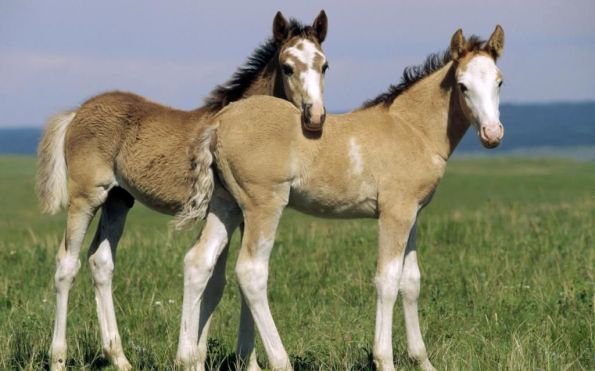
A yearling horse – a horse is just approaching or just turning one year old.
A yearling is a young horse either male or female that is between one and two years old. Yearlings are comparable in development to a very early adolescent and are not fully mature physically. While they may be in the earliest stages of sexual maturity, they are considered too young to be breeding stock. Describes methods of training a young horse (a yearling horse) from birth up until it is old enough to ride.
Yearlings may be further defined by sex, using the term “colt” (male) to describe any male horse under age four, and “filly” (female) describe any female horse under age four.
A short yearling and long yearling:
A short yearling is a yearling horse that is just turned a year old. A long yearling is a horse that is closer to two than one year old.
Note: The registered horses change age with new calendar year, not on their birthdate. For example: a baby foal was born in January, a baby foal was born in March, a baby foal was born in August and a baby foal was born in September, they all will be considered the same “age” in January when they are called yearlings.
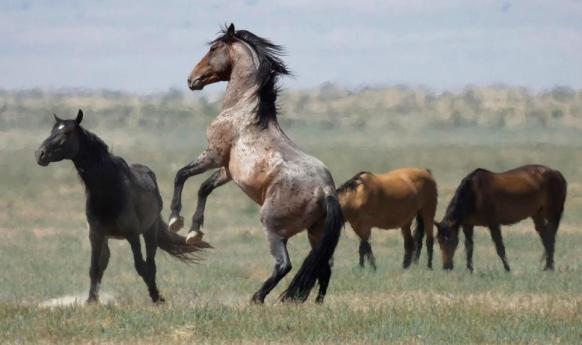
A male horse is “fathered” a baby colt (male) or baby filly (female): Sire
When they turn 4, male horses become stallions — unless they are castrated. Male horses who are altered are referred to as geldings. If a horse has fathered a baby, he’s called a sire.
A gelding horse: a castrated male horse
A gelding is a castrated male horse or other equine, such as a donkey or a mule. Castration, as well as the elimination of hormonally driven behavior associated with a stallion, allows a male horse to be calmer and better-behaved, making the animal quieter, gentler and potentially more suitable as an everyday working animal. The gerund and participle “gelding” and the infinitive “to geld” refer to the castration procedure itself.
Castration is the act of neutering, or gelding (a male horse).
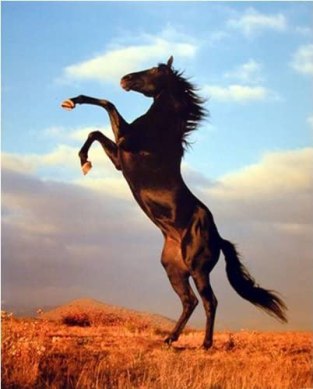
A stallion horse: a male horse is 4 years old and over that has not been castrated. .
A mature male horse is called a stallion, and the female horse is called a mare. A stallion used for breeding is known as a stud. A castrated stallion is commonly called a gelding. Formerly, stallions were employed as riding horses, while mares were kept for breeding purposes only. Geldings were used for work and as ladies’ riding horses. Recently, however, geldings generally have replaced stallions as riding horses. Young horses are known as foals; male foals are called colts (plural) and female called filly (fillies are plural).
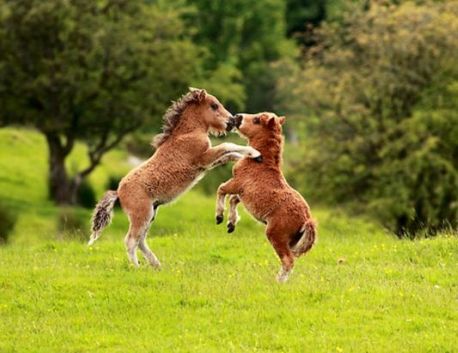
A baby male foal is called colt is singular. Colts are plural.
A baby female foal is called filly is singular. Fillies are plural.
Foal is a young horse especially under the age of one, or still nursing a mare (female horse). Either colt (male) or filly (female)


A mature female horse: mare
Typically, a mare is defined as a female horse over the age of three, and a filly is a female horse three and younger.
In Thoroughbred horse racing, a mare is defined as a female horse more than four years old.
A baby foal’s mother is called dam. A baby foal’s father is called sire.
Spaying of female horses, called mares, is very rarely done. A gelding “male castrated horse”: To neuter a horse is to geld it and the result is a horse called a gelding. This is the most common surgical procedure done on the farm and most male horses are gelded before they reach the age of three.


Pony:
A female or male horse or pony under 1 year of age. A female foal is known as a “Filly Foal”, a male foal is known as a “Colt Foal”.
Depending on breed, management and environment, the modern domestic horse has a life expectancy of 25 to 30 years. Uncommonly, a few animals live into their 40s and, occasionally, beyond.
Old Billy:
The oldest verifiable record was “Old Billy”, a 19th-century horse that lived to the age of 62. Old Billy (AKA: Billy or Ol’ Billy) was the longest-lived horse on record. Old Billy was verified to be 62 at his death on November 27, 1822.
Born in England in 1760, he lived as a barge horse that pulled barges up and down canals. Old Billy was said to look like a big cob/shire horse, and was brown with a white blaze.
Please click Old Billy


Fun to learn about horses. Please click few excellent articles:
Fun to learn glossary of equine

Lipizzaner Stallions in Vienna
Please click Lipizzaner Stallions
 Jesus Christ is New Paschal Lamb of God
You must be logged in to post a comment.