This applies me, you all every nations read Revelation 20:11-15 NET
YHWH/Yeshua/Torah: The Great White Throne
20:11 Then29 I (John/Yochanan) saw a large30 white throne and the one who was seated on it; the earth and the heaven31 fled32 from his presence, and no place was found for them. 20:12 And I saw the dead, the great and the small, standing before the throne. Then33 books were opened, and another book was opened—the book of life.34 So35 the dead were judged by what was written in the books, according to their deeds.36 20:13 The37 sea gave up the dead that were in it, and Death38 and Hades gave up the dead that were in them, and each one was judged according to his deeds. 20:14 Then39 Death and Hades were thrown into the lake of fire. This is the second death—the lake of fire. 20:15 If40 anyone’s name41 was not found written in the book of life, that person42 was thrown into the lake of fire.
Footnotes
| 29 | tn Here καί (kai) has been translated as “then” to indicate the implied sequence within the narrative. |
| 30 | tn Traditionally, “great,” but μέγας (megas) here refers to size rather than importance. |
| 31 | tn Or “and the sky.” The same Greek word means both “heaven” and “sky,” and context usually determines which is meant. In this apocalyptic scene, however, it is difficult to be sure what referent to assign the term. |
| 32 | tn Or “vanished.” sn The phrase the earth and the heaven fled from his presence can be understood (1) as visual imagery representing the fear of corruptible matter in the presence of God, but (2) it can also be understood more literally as the dissolution of the universe as we know it in preparation for the appearance of the new heaven and new earth (Rev 21:1). |
| 33 | tn Here καί (kai) has been translated as “then” to indicate the implied sequence of events within the vision. |
| 34 | tn Grk “another book was opened, which is of life.” |
| 35 | tn Here καί (kai) has been translated as “so” to indicate the implied result of the books being opened. |
| 36 | tn Grk “from the things written in the books according to their works.” |
| 37 | tn Here καί (kai) has not been translated because of differences between Greek and English style. |
| 38 | sn Here Death is personified (cf. 1 Cor 15:55). |
| 39 | tn Here καί (kai) has been translated as “then” to indicate the implied sequence within the narrative. |
| 40 | tn Here καί (kai) has not been translated because of differences between Greek and English style. |
| 41 | tn The word “name” is not in the Greek text, but is implied. |
| 42 | tn Grk “he”; the pronoun has been intensified by translating as “that person.” |
Be Careful What You Do
Scripture Reading — Revelations 20:11-15
Anyone whose name was not found written in the book of life was thrown into the lake of fire. — Revelation 20:15.
This may be the scariest passage in all of Scripture. The dead, including you and me, will be judged according to what we have done.
What we do matters. Our actions reflect and have an influence on the person we will be. We are either becoming more like the spiritual person we are called to be in Mashiyach, or we are following our sinful nature and wandering away from Elohim (God) toward certain destruction. Even if we say we love Mashiyach but our actions show the opposite, we are denying the love of Mashiyach within us. What we do is proof of who we are. As James 2:17 puts it, “Faith by itself, if it is not accompanied by action, is dead.”
A song I learned as a child talks about this:
“Oh, be careful little hands what you do. Oh, be careful little hands what you do. For the Father up above is looking down in love, so be careful little hands what you do.” Other verses remind little mouths to be careful what they say, and little feet to be careful where they go.
YHWH Elohim & His record of our words and deeds places great responsibility on us. We need to ask, “Are we acting as spiritually obedient, loving believers, or as destructive lawbreakers?”
But because of Elohim’s love in Messiah, we need not despair. We can repent of our wrongdoing, ask forgiveness thru Ruach haKodesh (the Holy Spirit), and be wholeheartedly assured that Yeshua haMashiyach is the Pesach Lamb of Elohim through His Eternity of eternities Blood Substitution pays the wholeness debt of all our sin.
Deep spiritual comprehension of the Good News:
Yeshua means YHWH is Salvation. Mashiyach (Messiah/Christ) means Anointed One. YHWH & His Mashiyach are the Eternal One sits on One Throne reigns eternity of eternities. Click on Romans 10:8-10
Prayer
O Elohim, you know what we do. You care what we do. Help us always to do what’s right, showing your love and obeying your commands, in Yeshua’s Name. Amen.
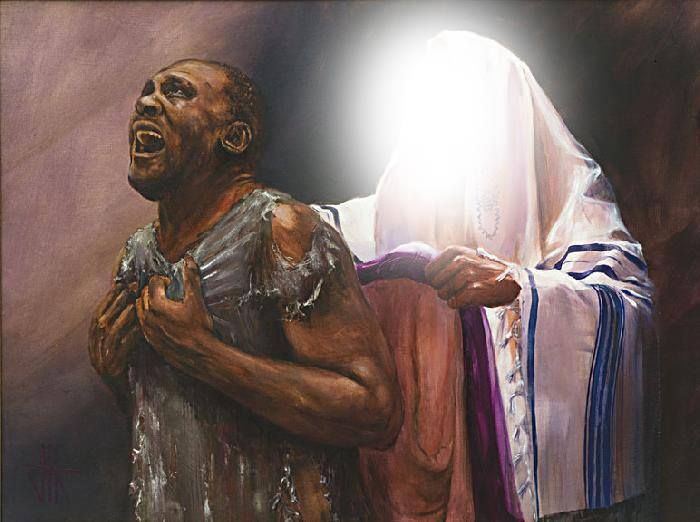
 Jesus Christ is New Paschal Lamb of God
You must be logged in to post a comment.