
Mem is the thirteenth letter of the Hebrew alphabet
Numerical value: 40
Sound: “M”
Meaning: 1. Water 2. Mashiach
Moshe’s life 40 x 3 = 120:
The ideal full life for a person is 120 years (based on the life of Moses), which splits into three segments of 40 years. Each segment is a stage of different stage development in a person’s life.
Matthew 4:1-11, Mark 1:12-13, and Luke 4:1-13 and Exodus 34:28

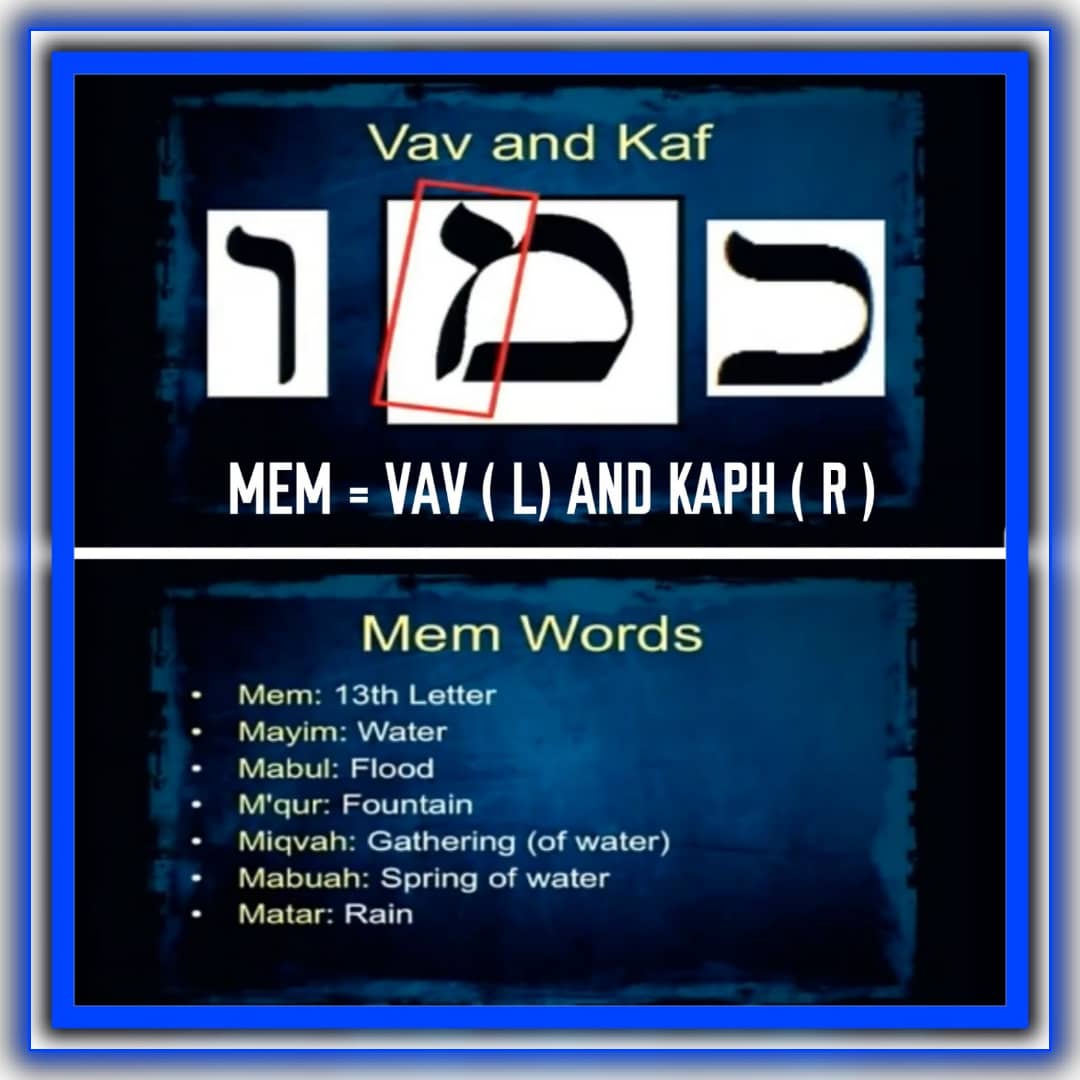
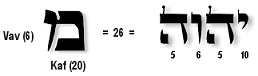
The letter Mem is the 13th letter of the Aleph-Bet, having the numeric value of 40. The pictograph for Mem looks like a wave of water, whereas the classical Hebrew script (Ketav Ashurit) is constructed of a Kaf with a Vav beside it:
The machzor (Hebrew: מחזור, plural machzorim, pronounced [maχˈzoʁ] and [maχzoˈʁim], respectively) is the prayer book which is used by Jews on the High Holy Days of Rosh Hashanah and Yom Kippur. Many Jews also make use of specialized machzorim on the three pilgrimage festivals of Passover, Shavuot, and Sukkot.
The machzor means ”cycle”. I research finding the word machzor comes from the root word of chazer, CH-Z-R, also means to “return,” “repeat” or “review.” Chazarah is the noun and chazar is the verb. A basic component of Torah study is returning to a text, studying it again and again until it has been well understood. In fact, in Talmudic days it was common for people to chazer the same subject 100 times. This gave rise to the adage, “He who learns but does not review is like he who sows but does not reap.”
Interesting where did I got information? Very excellent article from Chabad chazer.

The Machzor
Unpacking the 13 Attributes (one version):
- YHVH – I am God before people sin
- YHVH – I am God after people sin if they repent
- El – (All-powerful) God
- Rahum – Compassionate
- VeHanun – Gracious
- Erekh Apayim – Slow to anger
- Verav Hesed – Abounding in lovingkindness
- Ve’emet – And in truth
- Notzer hesed La’alafim – Maintaining lovingkindness for 1,000 generations
- Nosei avon – Forgiving premeditated sins
- Va’fesha – sins committed in rebellion
- Va’hata’ah – sins made by mistake
- Venakeh – acquitting the penitent.
(R. Tam, RH 17b, adapted by Max Arzt, Justice and Mercy)

In Hebrew, selichot translates to “forgiveness,” and indeed there is an emphasis in these prayers on the merciful attributes with which God is said to govern the world. Slichot (Selichot)
Where did 13th attributes of Mercy came from? Exodus 34:6-7 👈❤️
Exodus 34:6-7 TLV Thirteen Attributes of God 👈❤️🥰
6 Then Adonai passed before him, and proclaimed, “Adonai, Adonai, the compassionate and gracious God, slow to anger, and abundant in lovingkindness and truth, 7 showing mercy to a thousand generations, forgiving iniquity and transgression and sin, yet by no means leaving the guilty unpunished, but bringing the iniquity of the fathers upon the children, and upon the children’s children, to the third and fourth generation.”&*

Begin each night’s count with the blessing:
Hebrew: “Baruch atah YAHWEH Eloheinu Melekh Ha-olam asher kid’shanu b’mitzvotav v’tzivanu al S’firat Ha-omer.”
(English: Blessed are You, YAHWEH our Elohim, King of the Universe who sanctified us with His commandments and commanded us to count the Omer.)
Please click The Refiner’s Fire 2022 Omer

Psalms 119:97-104 TLV
MEM מ
97 O how I love Your Torah!
It is my meditation all day.
98 Your mitzvot make me wiser than my enemies
—for they are mine forever.
99 I have more insight than all my teachers,
for Your testimonies are my meditation.
100 I have gained more understanding than all my elders,
for I have kept Your precepts.
101 I kept my feet from every evil way,
in order to follow Your word.
102 I do not turn away from Your rulings,
for You Yourself have taught me.
103 How sweet is Your word to my taste—
yes, sweeter than honey to my mouth!
104 From Your precepts I get discernment,
therefore I hate every false way.

| By Rabbi Simon Jacobson DAY 13 YESOD OF GEVURAH Bonding in Discipline |
| Thursday evening, April 28 we count thirteen days of the Omer. For discipline to be effective it must be coupled with commitment and bonding. Both in disciplining yourself and others there has to be a sense that the discipline is important for developing a stronger bond. Not that I discipline you, but that we are doing it together for our mutual benefit. Exercise for the day: Demonstrate to your child or student how discipline is an expression of intensifying your bond and commitment to each other. |
 Jesus Christ is New Paschal Lamb of God
You must be logged in to post a comment.