
What do Catholics celebrate February 2?
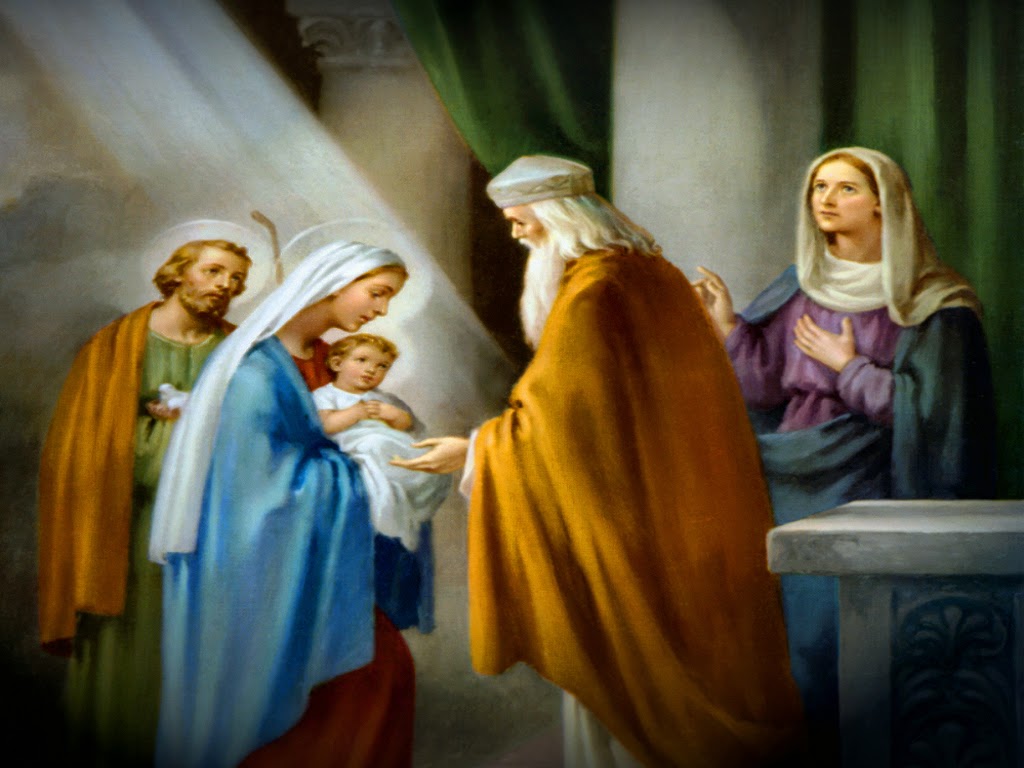
Candlemas, Christian festival on February 2 commemorating the occasion when the Virgin Mary, in obedience to Jewish law, went to the Temple in Jerusalem both to be purified 40 days after the birth of her son, Jesus, and to present him to God as her firstborn (Luke 2:22–38).
The Feast of the Presentation of Jesus Christ
Candlemas, also known as the Feast of the Presentation of Jesus Christ, the Feast of the Purification of the Blessed Virgin Mary, or the Feast of the Holy Encounter, is a Christian feast day commemorating the presentation of Jesus at the Temple. It is based upon the account of the presentation of Jesus in Luke 2:22-40.
“Catechism of the Catholic Church” (CCC)
CCC 529 The presentation of Jesus in the temple shows him to be the firstborn Son who belongs to the Lord.1 With Simeon and Anna, all Israel awaits its encounter with the Savior-the name given to this event in the Byzantine tradition. Jesus is recognized as the long-expected Messiah, the “light to the nations” and the “glory of Israel”, but also “a sign that is spoken against”. The sword of sorrow predicted for Mary announces Christ’s perfect and unique oblation on the cross that will impart the salvation God had “prepared in the presence of all peoples”.
1 Cf. Lk 2:22-39; EX 13:2, 12-13.
Leviticus 12 NABRE
Uncleanness of Childbirth. 1 The Lord said to Moses: 2 Tell the Israelites: When a woman has a child, giving birth to a boy, she shall be unclean[a] for seven days, with the same uncleanness as during her menstrual period. 3 On the eighth day, the flesh of the boy’s foreskin shall be circumcised,[b] 4 and then she shall spend thirty-three days more in a state of blood purity; she shall not touch anything sacred nor enter the sanctuary till the days of her purification are fulfilled. 5 If she gives birth to a girl, for fourteen days she shall be as unclean as during her menstrual period, after which she shall spend sixty-six days[c]in a state of blood purity.
6 [d]When the days of her purification for a son or for a daughter are fulfilled, she shall bring to the priest at the entrance of the tent of meeting a yearling lamb for a burnt offering and a pigeon or a turtledove for a purification offering. 7 The priest shall offer them before the Lord to make atonement for her, and thus she will be clean again after her flow of blood. Such is the ritual for the woman who gives birth to a child, male or female. 8 If, however, she cannot afford a lamb, she may take two turtledoves or two pigeons, the one for a burnt offering and the other for a purification offering. The priest shall make atonement for her, and thus she will again be clean.
Footnotes
- 12:2–5 The mother has two stages of uncleanness or impurity: the first where her uncleanness is as severe as during her menstrual period and is contagious to profane persons and objects (cf. 15:19–24), and the second where she does not contaminate persons and objects but is still impure to what is holy, such as the sanctuary (12:4) or sacrifices. The implication is that in the second stage she may resume sexual relations with her husband (which would be prohibited in the first stage according to 18:19).
- 12:3 Circumcision is the sign of the covenant between God and Israel (Gn 17:1–27) and allows full participation in the religious community (Ex 12:43–49; Jos 5:2–10). This command was fulfilled after Jesus’ birth (Lk 2:21).
- 12:5 If she gives birth to a girl…sixty-six days: while the longer period of uncleanness following the birth of a girl, compared to that following the birth of a boy, might reflect the relative disparity in social status between men and women in ancient Israel (and attested in other cultures), this is by no means certain. There is no simple correlation in the Bible between the worth of something and the degree of impurity it can occasion.
- 12:6–8 Certain tolerated impurities (see note on 11:1–15:33) are strong enough to pollute the sanctuary and require purification offerings, including the parturient (see also 14:10–32; 15:13–15, 28–30). Cf. note on 4:3. Mary fulfilled the command of bringing sacrifices after the birth of Jesus (Lk 2:22–24).
I enjoy reading ETWN about Feast of St. Simeon and St. Anna on February 3rd. Enjoy!
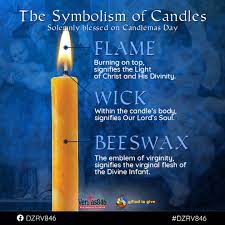
Parishioners can bring candles to this Mass to have them blessed for use at home throughout the year. The Catholic Company explains that candles are symbolic of the incarnate Christ.
“The beeswax is a symbol of his pure body, the wick his soul and the flame his divinity.”
Please click about Blessing Candles
May God bless you. 🤟🙏💜🕊️🔥
 Jesus Christ is New Paschal Lamb of God
You must be logged in to post a comment.