On September 16, 2023 (1 Tishri 5784) Rosh haShanah same time I received new Confirmation and new Eucharist into the Presence of Christ is The Body, Blood, Soul and Divinity at Most Blessed Sacrament Catholic Church.
Author: paradisedove
Mashiyach alike spiritual servant of Abba YHWH Elohim. One Torah for all. May Abba YHWH bless you. Malachi 3:16
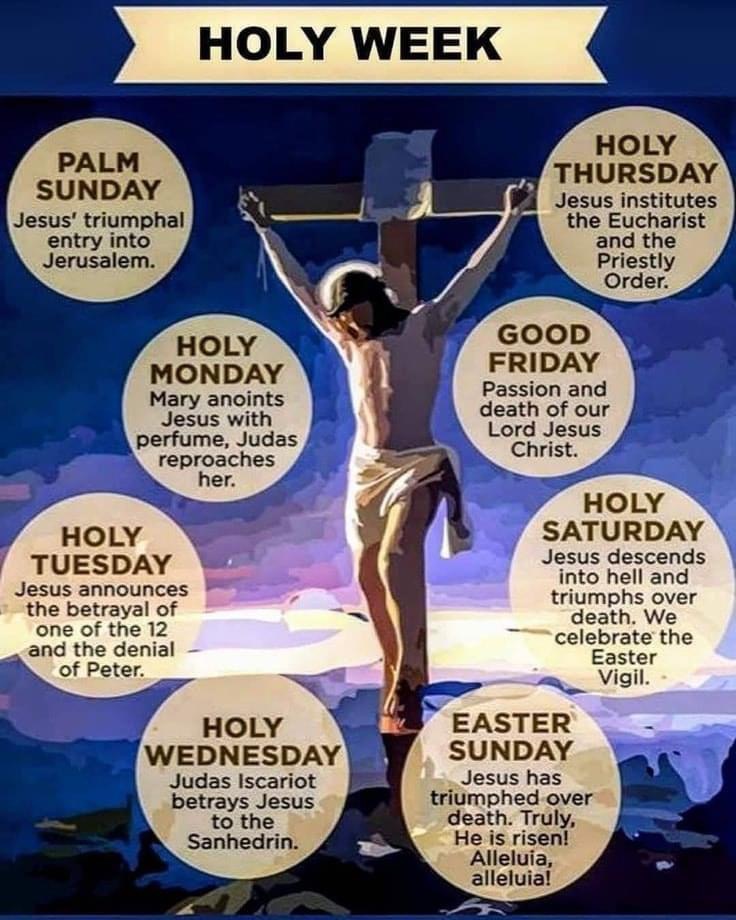
Evening of Thursday on March 28, 2024 toward Sunday on March 31, 2024
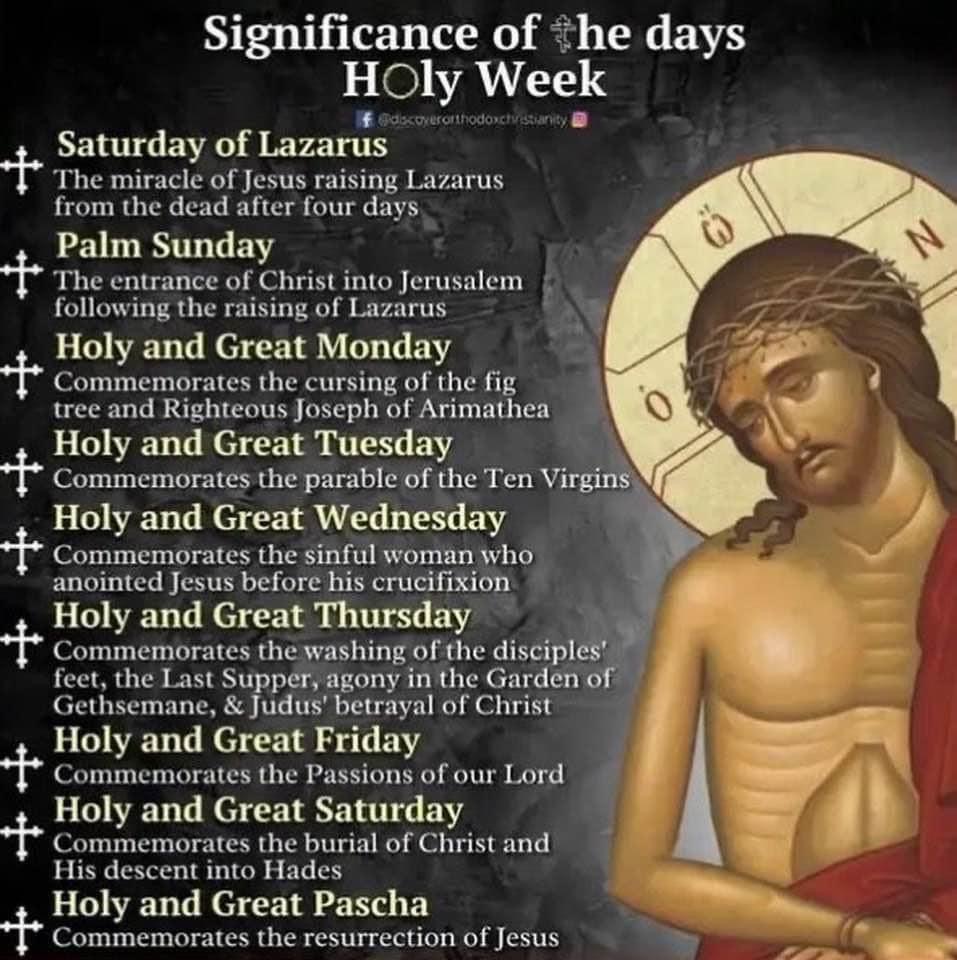
The Paschal Triduum is the three days of preparation prior to the Feast of Easter. These are understood by Thursday, Friday and Saturday of Holy Week because let us remember that Sunday is the day on which Jesus was resurrected, according Sacred Scriptures and Sacred Traditions to the Catholic Church. The Paschal Mystery is about Christ’s Passion, death, Resurrection, and Ascension,
Let’s take a step back for a minute and look at the word Paschal. It comes from the Hebrew word PASACH which means to PASS OVER. This refers, of course, to the first Passover when the Lord passed over the homes of the Israelites while striking down the firstborn of Egypt. In that case, the Israelites smeared the blood of a lamb on their doorposts to signify their belief in the one true God. The sacrificing of an innocent lamb became the means of their salvation and their deliverance from captivity in Egypt. In the same way, God sent His Son to be our paschal lamb. The essence of our faith is this: that Jesus came to die for us, to free us from sin, and so that we might have a new and eternal life.
Catholic CCC #:
1085 In the liturgy of the Church, it is principally his own Paschal mystery that Christ signifies and makes present. During his earthly life Jesus announced his Paschal mystery by his teaching and anticipated it by his actions. When his Hour comes, he lives out the unique event of history which does not pass away: Jesus dies, is buried, rises from the dead, and is seated at the right hand of the Father “once for all.” His Paschal mystery is a real event that occurred in our history, but it is unique: all other historical events happen once, and then they pass away, swallowed up in the past. The Paschal mystery of Christ, by contrast, cannot remain only in the past, because by his death he destroyed death, and all that Christ is – all that he did and suffered for all men – participates in the divine eternity, and so transcends all times while being made present in them all. The event of the Cross and Resurrection abides and draws everything toward life.
The Messianic Fulfillment on New Testament quoted from Old Testament about 520 and 518 BC in Zechariah 9:9, the prophet Zechariah speaks prophetic of a future king presenting himself to Jerusalem while riding on a humble donkey. This foreshadowed that confirmation happened about 500 years toward to the Good News of Jesus on Luke 19:35-37 we read Luke 19 Jesus rode into Jerusalem on a donkey and presented himself as The Christ/Messiah (Anointed One) the King.
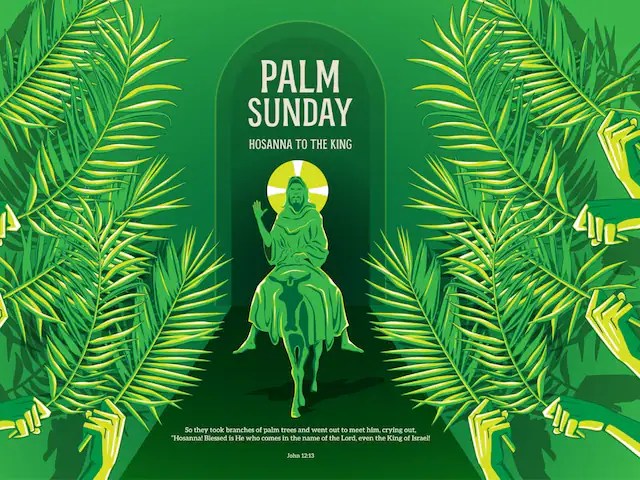
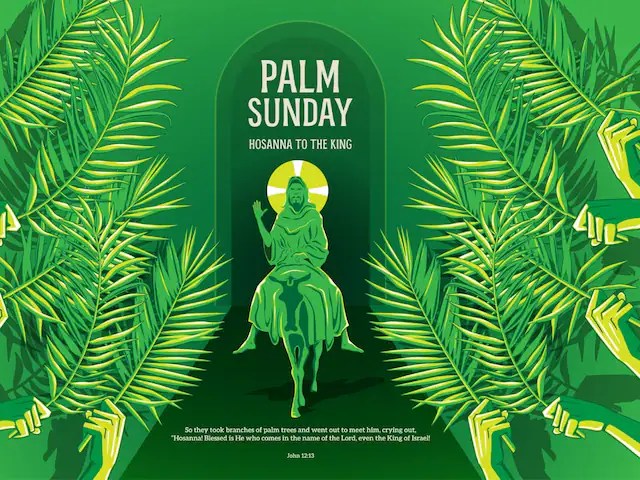
On the Palm Sunday before His death, the Savior rode into the city of Jerusalem a donkey, which fulfilled an Old Testament prophecy. Many people, joyfully celebrating recognizing Jesus as their King, shouted “Hosanna!” and laid down palm fronds for the donkey to walk on.
PALM SUNDAY of the Lord’s Passion! ✝️ Hosanna to the Son of David!
So they took branches of palm trees and went out to meet him, crying, “Hosanna! Blessed is he who comes in the name of the Lord, even the King of Israel!” John 12:13
This took place to fulfil what was spoken by the prophet, saying, “Tell the daughter of Zion, Behold, your king is coming to you, humble, and mounted on an ass, and on a colt, the foal of an ass.” Matthew 21:4-5
Question: Why did Jesus rode donkey?
Jesus walked everywhere. He occasionally traveled in a boat to cross bodies of water. Jesus walked mostly. Close to the City of Jerusalem, Jesus suddenly asks for a donkey and then rides it into the city of Jerusalem.
Answer: Jesus was fulfilling a prophecy. Jesus was humbled quoting from Zechariah 9:9.
Rejoice greatly, O daughter of Zion! Shout aloud, O daughter of Jerusalem! Lo, your king comes to you; triumphant and victorious is he, humble and riding on an ass, on a colt the foal of an ass. Zechariah 9:9
“I tell you, if these were silent, the very stones would cry out.”Luke 19:40
After this I looked, and behold, a great multitude which no man could number, from every nation, from all tribes and peoples and tongues, standing before the throne and before the Lamb, clothed in white robes, with palm branches in their hands, and crying out with a loud voice, “Salvation belongs to our God who sits upon the throne, and to the Lamb!” And all the angels stood round the throne and round the elders and the four living creatures, and they fell on their faces before the throne and worshiped God, saying, “Amen! Blessing and glory and wisdom and thanksgiving and honor and power and might be to our God for ever and ever! Amen.”Revelation 7:9-12
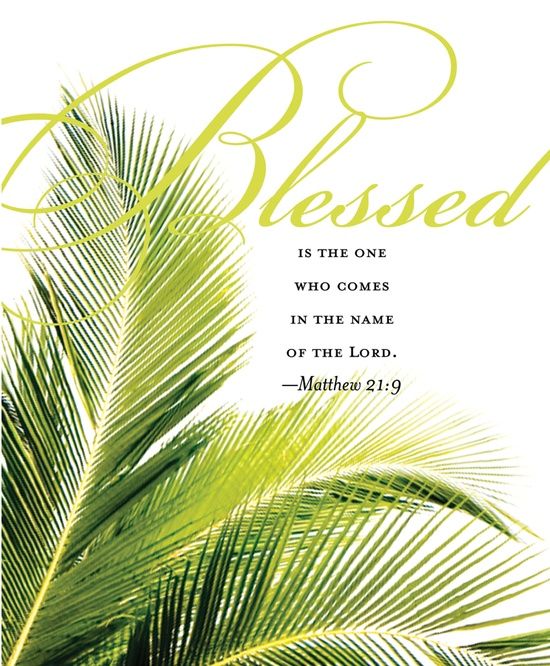
“Hosanna! Blessed is he who comes in the name of the Lord! Blessed is the kingdom of our father David that is to come! Hosanna in the highest!” Mark 11:1-10
Check out today’s Gospel and sign up for daily readings at:
Question: Why do Catholics worship on Sunday as the Lord’s day and not on the Sabbath day as prescribed in the Old Testament?
Read carefully to answer: neither of these reasons are why Christians began to worship on Sunday. 👇L👀K👇
👉 The reason the early Christians worship on Sunday was because Jesus rose from the dead on a Sunday, which was now known as the Lord’s day. 👈 💜🙏💜🕊️🔥📿
Early “believers, followers, servants of Christ” aka Early Christians followed Jesus and saw Sunday as “The Eighth Day,” signaling a “new beginning,” means literally is an “eighth day.” In Hebrew word for “eighth”: Shemini, Sh’mini, or Shmini (שְּׁמִינִי—Hebrew for “eighth” We all can see here is H8083
💜💜💜💜CATECHISM OF THE CATHOLIC CHURCH SECOND EDITION💜💜💜💜
PART THREE LIFE IN CHRIST
SECTION TWO THE TEN COMMANDMENTS
CHAPTER ONE “YOU SHALL LOVE THE LORD YOUR GOD WITH ALL YOUR HEART, AND WITH ALL YOUR SOUL, AND WITH ALL YOUR MIND”
ARTICLE 3 THE THIRD COMMANDMENTRemember the sabbath day, to keep it holy. Six days you shall labor, and do all your work; but the seventh day is a sabbath to the Lord your God; in it you shall not do any work.90
The sabbath was made for man, not man for the sabbath; so the Son of Man is lord even of the sabbath.91
2168 The third commandment of the Decalogue recalls the holiness of the sabbath: “The seventh day is a sabbath of solemn rest, holy to the LORD.”92
2169 In speaking of the sabbath Scripture recalls creation: “For in six days the LORD made heaven and earth, the sea, and all that is in them, and rested the seventh day; therefore the Lord blessed the sabbath day and hallowed it.”93
2170 Scripture also reveals in the Lord’s day a memorial of Israel’s liberation from bondage in Egypt: “You shall remember that you were a servant in the land of Egypt, and the LORD your God brought you out thence with mighty hand and outstretched arm; therefore the LORD your God commanded you to keep the sabbath day.”94
2171 God entrusted the sabbath to Israel to keep as a sign of the irrevocable covenant.95 The sabbath is for the Lord, holy and set apart for the praise of God, his work of creation, and his saving actions on behalf of Israel.
2172 God’s action is the model for human action. If God “rested and was refreshed” on the seventh day, man too ought to “rest” and should let others, especially the poor, “be refreshed.”96 The sabbath brings everyday work to a halt and provides a respite. It is a day of protest against the servitude of work and the worship of money.97
2173 The Gospel reports many incidents when Jesus was accused of violating the sabbath law. But Jesus never fails to respect the holiness of this day.98 He gives this law its authentic and authoritative interpretation: “The sabbath was made for man, not man for the sabbath.”99 With compassion, Christ declares the sabbath for doing good rather than harm, for saving life rather than killing.100 The sabbath is the day of the Lord of mercies and a day to honor God.101 “The Son of Man is lord even of the sabbath.”102
II. THE LORD’S DAY This is the day which the LORD has made; let us rejoice and be glad in it.103
The day of the Resurrection: the new creation
2174 Jesus rose from the dead “on the first day of the week.”104 Because it is the “first day,” the day of Christ’s Resurrection recalls the first creation. Because it is the “eighth day” following the sabbath,105 it symbolizes the new creation ushered in by Christ’s Resurrection. For Christians it has become the first of all days, the first of all feasts, the Lord’s Day (he kuriake hemera, dies dominica) Sunday: We all gather on the day of the sun, for it is the first day [after the Jewish sabbath, but also the first day] when God, separating matter from darkness, made the world; and on this same day Jesus Christ our Savior rose from the dead.106
Sunday – fulfillment of the sabbath
2175 Sunday is expressly distinguished from the sabbath which it follows chronologically every week; for Christians its ceremonial observance replaces that of the sabbath. In Christ’s Passover, Sunday fulfills the spiritual truth of the Jewish sabbath and announces man’s eternal rest in God. For worship under the Law prepared for the mystery of Christ, and what was done there prefigured some aspects of Christ:107Those who lived according to the old order of things have come to a new hope, no longer keeping the sabbath, but the Lord’s Day, in which our life is blessed by him and by his death.108
2176 The celebration of Sunday observes the moral commandment inscribed by nature in the human heart to render to God an outward, visible, public, and regular worship “as a sign of his universal beneficence to all.”109 Sunday worship fulfills the moral command of the Old Covenant, taking up its rhythm and spirit in the weekly celebration of the Creator and Redeemer of his people.
The Sunday Eucharist
2177 The Sunday celebration of the Lord’s Day and his Eucharist is at the heart of the Church’s life. “Sunday is the day on which the paschal mystery is celebrated in light of the apostolic tradition and is to be observed as the foremost holy day of obligation in the universal Church.”110
“Also to be observed are the day of the Nativity of Our Lord Jesus Christ, the Epiphany, the Ascension of Christ, the feast of the Body and Blood of Christi, the feast of Mary the Mother of God, her Immaculate Conception, her Assumption, the feast of Saint Joseph, the feast of the Apostles Saints Peter and Paul, and the feast of All Saints.”111
2178 This practice of the Christian assembly dates from the beginnings of the apostolic age.112 The Letter to the Hebrews reminds the faithful “not to neglect to meet together, as is the habit of some, but to encourage one another.”113Tradition preserves the memory of an ever-timely exhortation: Come to Church early, approach the Lord, and confess your sins, repent in prayer. . . . Be present at the sacred and divine liturgy, conclude its prayer and do not leave before the dismissal. . . . We have often said: “This day is given to you for prayer and rest. This is the day that the Lord has made, let us rejoice and be glad in it.”114–
2179 “A parish is a definite community of the Christian faithful established on a stable basis within a particular church; the pastoral care of the parish is entrusted to a pastor as its own shepherd under the authority of the diocesan bishop.”115 It is the place where all the faithful can be gathered together for the Sunday celebration of the Eucharist. The parish initiates the Christian people into the ordinary expression of the liturgical life: it gathers them together in this celebration; it teaches Christ’s saving doctrine; it practices the charity of the Lord in good works and brotherly love: You cannot pray at home as at church, where there is a great multitude, where exclamations are cried out to God as from one great heart, and where there is something more: the union of minds, the accord of souls, the bond of charity, the prayers of the priests.116
The Sunday obligation
2180 The precept of the Church specifies the law of the Lord more precisely: “On Sundays and other holy days of obligation the faithful are bound to participate in the Mass.”117 “The precept of participating in the Mass is satisfied by assistance at a Mass which is celebrated anywhere in a Catholic rite either on the holy day or on the evening of the preceding day.”118
2181 The Sunday Eucharist is the foundation and confirmation of all Christian practice. For this reason the faithful are obliged to participate in the Eucharist on days of obligation, unless excused for a serious reason (for example, illness, the care of infants) or dispensed by their own pastor.119 Those who deliberately fail in this obligation commit a grave sin.
2182 Participation in the communal celebration of the Sunday Eucharist is a testimony of belonging and of being faithful to Christ and to his Church. The faithful give witness by this to their communion in faith and charity. Together they testify to God’s holiness and their hope of salvation. They strengthen one another under the guidance of the Holy Spirit.
2183 “If because of lack of a sacred minister or for other grave cause participation in the celebration of the Eucharist is impossible, it is specially recommended that the faithful take part in the Liturgy of the Word if it is celebrated in the parish church or in another sacred place according to the prescriptions of the diocesan bishop, or engage in prayer for an appropriate amount of time personally or in a family or, as occasion offers, in groups of families.”120
A day of grace and rest from work
2184 Just as God “rested on the seventh day from all his work which he had done,”121 human life has a rhythm of work and rest. The institution of the Lord’s Day helps everyone enjoy adequate rest and leisure to cultivate their familial, cultural, social, and religious lives.122
2185 On Sundays and other holy days of obligation, the faithful are to refrain from engaging in work or activities that hinder the worship owed to God, the joy proper to the Lord’s Day, the performance of the works of mercy, and the appropriate relaxation of mind and body.123 Family needs or important social service can legitimately excuse from the obligation of Sunday rest. The faithful should see to it that legitimate excuses do not lead to habits prejudicial to religion, family life, and health. The charity of truth seeks holy leisure- the necessity of charity accepts just work.124
2186 Those Christians who have leisure should be mindful of their brethren who have the same needs and the same rights, yet cannot rest from work because of poverty and misery. Sunday is traditionally consecrated by Christian piety to good works and humble service of the sick, the infirm, and the elderly. Christians will also sanctify Sunday by devoting time and care to their families and relatives, often difficult to do on other days of the week. Sunday is a time for reflection, silence, cultivation of the mind, and meditation which furthers the growth of the Christian interior life.
2187 Sanctifying Sundays and holy days requires a common effort. Every Christian should avoid making unnecessary demands on others that would hinder them from observing the Lord’s Day. Traditional activities (sport, restaurants, etc.), and social necessities (public services, etc.), require some people to work on Sundays, but everyone should still take care to set aside sufficient time for leisure. With temperance and charity the faithful will see to it that they avoid the excesses and violence sometimes associated with popular leisure activities. In spite of economic constraints, public authorities should ensure citizens a time intended for rest and divine worship. Employers have a similar obligation toward their employees.
2188 In respecting religious liberty and the common good of all, Christians should seek recognition of Sundays and the Church’s holy days as legal holidays. They have to give everyone a public example of prayer, respect, and joy and defend their traditions as a precious contribution to the spiritual life of society. If a country’s legislation or other reasons require work on Sunday, the day should nevertheless be lived as the day of our deliverance which lets us share in this “festal gathering,” this “assembly of the firstborn who are enrolled in heaven.”125
IN BRIEF
2189 “Observe the sabbath day, to keep it holy” (Deut 5:12). “The seventh day is a sabbath of solemn rest, holy to the Lord” (Ex 31:15).
2190 The sabbath, which represented the completion of the first creation, has been replaced by Sunday which recalls the new creation inaugurated by the Resurrection of Christ.
2191 The Church celebrates the day of Christ’s Resurrection on the “eighth day,” Sunday, which is rightly called the Lord’s Day (cf. SC 106).
2192 “Sunday . . . is to be observed as the foremost holy day of obligation in the universal Church” (CIC, can. 1246 § 1). “On Sundays and other holy days of obligation the faithful are bound to participate in the Mass” (CIC, can. 1247).
2193 “On Sundays and other holy days of obligation the faithful are bound . . . to abstain from those labors and business concerns which impede the worship to be rendered to God, the joy which is proper to the Lord’s Day, or the proper relaxation of mind and body” (CIC, can. 1247).
2194 The institution of Sunday helps all “to be allowed sufficient rest and leisure to cultivate their familial, cultural, social, and religious lives” (GS 67 § 3).
2195 Every Christian should avoid making unnecessary demands on others that would hinder them from observing the Lord’s Day.
90 Ex 20:8-10; cf. Deut 5:12-15. 91 Mk 2:27-28. 92 Ex 31:15. 93 Ex 20:11. 94 Deut 5:15. 95 Cf. Ex 31:16. 96 Ex 31:17; cf. 23:12. 97 Cf. Neh 13:15-22; 2 Chr 36:21. 98 Cf. Mk 1:21; Jn 9:16. 99 Mk 2:27. 100 Cf. Mk 3:4. 101 Cf. Mt 12:5; Jn 7:23. 102 Mk 2:28. 103 Ps 118:24. 104 Cf. Mt 28:1; Mk 16:2; Lk 24:1; Jn 20:1. 105 Cf. Mk 16:1; Mt 28:1. 106 St. Justin, I Apol. 67:PG 6,429 and 432. 107 Cf. 1 Cor 10:11. 108 St. Ignatius of Antioch, Ad Magn. 9,1:SCh 10,88. 109 St. Thomas Aquinas, STh II-II,122,4. 110 CIC, can. 1246 § 1. 111 CIC, can. 1246 § 2: “The conference of bishops can abolish certain holy days of obligation or transfer them to a Sunday with prior approval of the Apostolic See.” 112 Cf. Acts 2:42-46; 1 Cor 11:17. 113 Heb 10:25. 114 Sermo de die dominica 2 et 6:PG 86/1,416C and 421C. 115 CIC, can. 515 § 1. 116 St. John Chrysostom, De incomprehensibili 3,6:PG 48,725. 117 CIC, can. 1247. 118 CIC, can. 1248 § 1. 119 Cf. CIC, can. 1245. 120 CIC, can. 1248 § 2. 121 Gen 2:2. 122 Cf. GS 67 § 3. 123 Cf. CIC, can. 120. 124 St. Augustine, De civ. Dei 19,19:PL 41,647. 125 Heb 12:22-23.
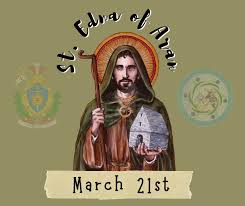
His feast day is 21 March. Enda was a warrior-king of Oriel in Ulster, converted by his sister, Saint Fanchea, an abbess. About 484 he established the first Irish monastery at Killeaney on Inis Mór. St Enda is described as the “patriarch of Irish monasticism”
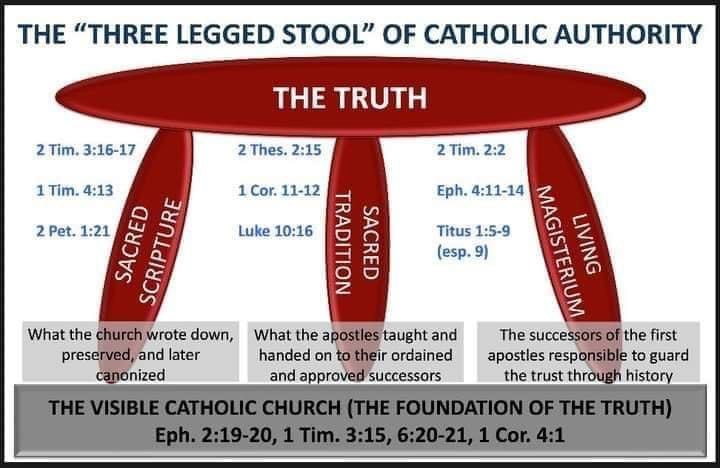
We certainly are. For more information, read “Pillar of Fire, Pillar of Truth.” 👈 this is worth to read long encouraging spiritual words of Sacred Scripture. May God bless your faithful servant walk daily perseverance in Jesus Christ. Amen! 🤟🙏💜🔥🕊️📿
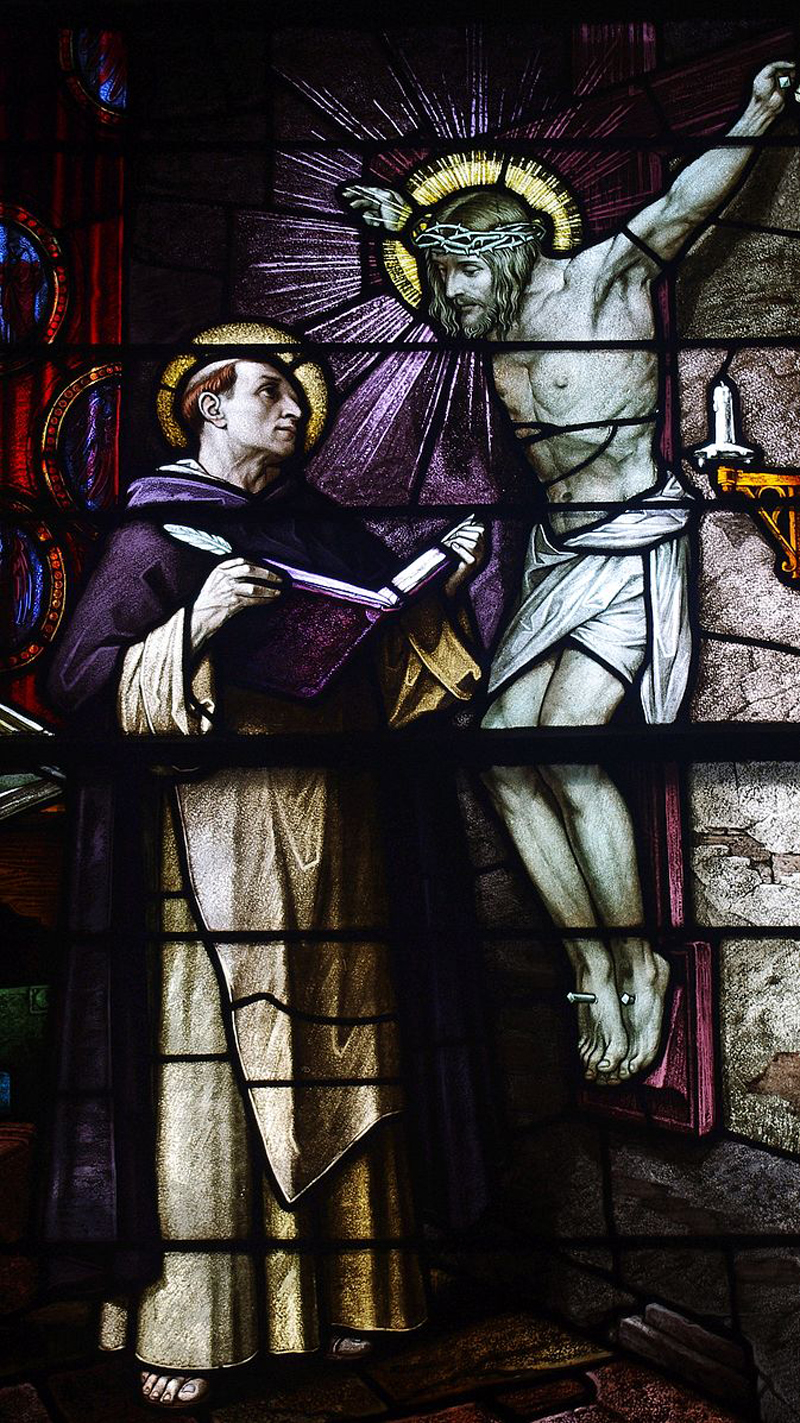
Jesus speaks to Saint Thomas Aquinas from the Crucifix
St. Thomas Aquinas, who lived from 1224 or 1225 or 1226 to March 7, 1274 AD
First we read Hebrews 5 Revised Standard Version Catholic Edition
5 For every high priest chosen from among men is appointed to act on behalf of men in relation to God, to offer gifts and sacrifices for sins. 2 He can deal gently with the ignorant and wayward, since he himself is beset with weakness. 3 Because of this he is bound to offer sacrifice for his own sins as well as for those of the people. 4 And one does not take the honor upon himself, but he is called by God, just as Aaron was.
5 So also Christ did not exalt himself to be made a high priest, but was appointed by him who said to him,
“Thou art a priest for ever, after the order of Melchiz′edek.”
7 In the days of his flesh, Jesus[b] offered up prayers and supplications, with loud cries and tears, to him who was able to save him from death, and he was heard for his godly fear. 8 Although he was a Son, he learned obedience through what he suffered; 9 and being made perfect he became the source of eternal salvation to all who obey him, 10 being designated by God a high priest after the order of Melchiz′edek.
Warning against Falling Away
11 About this we have much to say which is hard to explain, since you have become dull of hearing. 12 For though by this time you ought to be teachers, you need some one to teach you again the first principles of God’s word. You need milk, not solid food; 13 for every one who lives on milk is unskilled in the word of righteousness, for he is a child. 14 But solid food is for the mature, for those who have their faculties trained by practice to distinguish good from evil.
Footnotes
5.1-5 If Jesus was to be mediator, he had to have a human nature like ours, and, moreover, he could not appoint himself, but had to be appointed by God.
258. – Having listed three things which pertain to a high priest and showed that two of them were verified, namely, the office and the proper way of attaining it, the Apostle now considers the third thing which a high priest should have, namely, mercy and compassion. In regard to this he does two things: first, he shows what He suffered; secondly, what benefits accrued even to others (v. 9). 259. – He says, therefore: I have stated that a high priest should be such as to be able to have compassion. But Christ is such a high priest. For since He is the Son of God from all eternity, and, therefore, could not suffer or have compassion, He assumed a nature in which He would suffer and even have compassion. And this is what He says, namely, although he was a Son from all eternity, He learned obedience from time. But only the ignorant can learn; whereas Christ, being God from all eternity, had fullness of knowledge from the very instant of His conception as man. Therefore, He was not ignorant of anything; consequently, He could not learn. I answer that knowledge is of two sorts: the first is that of simple recognition, according to which the objection is valid, because He was not ignorant of anything. But there is also the knowledge gained by experience, according to which He learned obedience; hence, he says, He learned obedience through what he suffered, i.e., experienced. And the Apostle speaks thus, because one who learns something comes voluntarily to learn it. But Christ accepted our weakness voluntarily; consequently, he says that ‘he learned obedience’, i.e., how difficult it is to obey, because He obeyed in the most difficult matters, even to the death of the cross (Phil. 2:8). This shows how difficult the good of obedience is, because those who have not experienced obedience and have not learned it in difficult matters, believe that obedience is very easy. But in order to know what obedience is, one must learn to obey in difficult matters, and one who has not learned to subject himself by obeying does not know how to rule others well. Therefore, although Christ knew by simple recognition what obedience is, He nevertheless learned obedience from the things He suffered, i.e., from difficult things, by suffering and dying: ‘By the obedience of one many shall be made just’ (Rom. 5:19). 260. – Then when he says, and being made perfect he became the source of eternal salvation to all who obey him, he mentions the fruit of His Passion, namely, in Christ and in His members. In Christ the fruit was glorification; hence, he says, and being made perfect, for from the instant of His conception He was perfectly consummated as to the happiness of His soul, inasmuch as it was drawn to God; but he still had a nature that could suffer, although after His Passion He could not suffer. Therefore, because in this respect He was altogether perfect, He could perfect others. For it is the nature of a perfect thing to be able to engender its like. Therefore, he says that He was perfect. For since He arrived at that consummation by the merit of obedience: ‘The obedient man shall speak of victory’ (Pr. 21:28), he became the source of eternal salvation to all who obey him, not temporal salvation but eternal: ‘Israel is saved by the Lord with an eternal salvation (Is. 45:17). 🤟🙏💜🕊️🔥📿
261. – Therefore he says, being designated by God a high priest after the order of Melchizedech. 262. – Then (v. 11) he prepares the souls of his hearers for what is to follow. In regard to this he does two things: first, he shows their slowness; secondly, his intention (chap. 6). In regard to the first he does two things: first, he shows the importance of what is to be said; secondly, their slowness to understand (v. 11b). 263. – He says, therefore: Thus I have said that He was called a high priest: About this we have much to say: ‘Hear, for I will speak of great things’ (Pr. 8:6). They are great, because they deal with the salvation of souls: ‘A faithful saying and worthy of all acceptation, that Jesus Christ came into the world to save sinners’ (1 Tim. 1:15). About this we have much to say which is hard to explain, meaning that it cannot be perfectly explained, for no words can express the things of Christ: ‘Glorify the Lord as much as you ever can, for he will yet far exceed, and his magnificence is wonderful. Blessing the Lord, exalt him as much as you can, for he is above all praise’ (Sir. 43:32). Or, we have much to say which is hard to explain, i.e., it needs to be interpreted because of its height and magnitude and depth: ‘He shall understand a parable and the interpretation, the words of the wise and their mysterious saying’ (Pr. 1:6). For the interpretation of Scripture is listed among the gifts of the Spirit (1 Cor. 12:10). 264. – It also needs to be interpreted because of our slowness: you have become dull of hearing. Those who are weak of intellect cannot understand profound things, unless they are explained in detail: ‘I have yet many things to say to you: but you cannot bear them now’ (Jn. 16:12); ‘I could not speak to you as unto spiritual, but as unto carnal’ (1 Cor. 3:1). 265. – Then (v. 12) he shows that their slowness is culpable. In regard to this he does three things: first, he mentions the sin of slowness; secondly, he applies a simile (v. 12c); thirdly, he explains it (v. 13). 266. – For it is a sin, when a person has listened a long time, if he is still slow; but not if he is a recent hearer. For negligence is not without sin; hence, he says, for though by this time you ought to be teachers, namely, of others, for this time during which they had heard the law and the prophets: ‘Search the Scriptures, for you thing in them to have life everlasting’ (Jn. 5:31); and Christ Himself and the apostles and many converted by them: ‘Have I been so long a time with you, and have you not known me?’ (Jn. 14:9), you need someone to teach you again the first principles of God’s word. For the principles are the first things taught in grammar, i.e., the letters themselves. Therefore, the beginnings of the words of God, the first principles and elements, are the articles of faith and the precepts of the Decalogue. If a person, therefore, had studied theology a long time and failed to learn these, time would be running against him. Therefore, he says, you need someone to teach you again the first principles of God’ word, i.e., the elements: ‘Ever learning and never attaining to the knowledge of the truth’ (2 Tim. 3:7); ‘For the child shall die one hundred years old, and the sinner being a hundred years old shall be left accursed’ (Is. 65:20). 267. – Then (v. 12b) he describes their situation with a smile. Therefore, it should be noted that sacred doctrine is, as it were, the food of the soul: ‘With the bread of life and understanding she shall feed him’ (Sir. 15:3) and in (24:29): ‘They that eat me shall yet hunger, and they that drink me shall yet thirst.’ Sacred doctrine, therefore, is food and drink, because it nourishes the soul. For the other sciences only enlighten the soul, but this one enlightens: ‘The commandment of the Lord is lightsome, enlightening the eyes’ (Ps. 18:9) and nourishes and strengthens the soul. But in bodily food there is a difference: for children make use of one food and the perfect of another. For children use milk as being thinner and more connatural and easily digestible; but adults use more solid food. So in Sacred Scripture, those who are beginners should listen to easy things, which are like milk; but the learned should hear more difficult things. Therefore, he says, you need milk, namely, as children: ‘As newborn babes, desire the rational milk without guile, that thereby you may grown unto salvation’ (1 Pt. 2:2); ‘I give you milk to drink, not meat’ (1 Cor. 3:2). And this is what follows, and not solid food, i.e., lofty doctrine, which is concerned with the mysteries and secrets of God, which strengthen and confirm. 268. – Then (v. 13) he explains the simile: first he explains what he said about milk; secondly, about solid food: (v. 14). In regard to the first he does two things: first, he gives the explanation; secondly, the reason behind the explanation (v. 13b). 269. – He says, therefore: So I say that you need milk as little children: for everyone who lives on milk is unskilled in the word of righteousness, i.e., everyone that must be nourished with milk is unskillful, i.e., cannot have part in understanding the words of justice perfectly: ‘unless your justice about more than that of the Scribes and Pharisees, you shall not enter into the kingdom of heaven’ (Mt. 5:20); ‘In abundant justice there is the greatest strength’ (Pr. 15:55). But children are not partakers of such things: ‘Whom shall he teach knowledge’ and whom shall he make to understand the hearing? Them that are weaned from the milk, that are drawn away from the breasts’ (Is. 28:9). 270. – But the Apostle had delivered many difficult things to them, namely, the mystery of the Trinity and the sacrament of the Incarnation, and many other lofty things. Therefore, either they were not children, or such things ought not have been delivered to children. I answer, according to Augustine, that in the teachings of faith we should not suppose that some things are taught to the perfect and other things to the imperfect, for there is not such a difference between them: for the same things should be delivered to both. But they should be merely proposed to little ones and not explained or enlarged upon, because their minds would falter instead of being elevated. 271. – According to a Gloss, an example of milk would be that the Word was made flesh. But that seems to be just as hard to understand as that the Word was with God. Hence Augustine says that the latter is found in Plato’s works, but not the former. But he, said Augustine, could not have suspected something contained in the mystery of the Word made flesh. I answer that to know by simple faith that the Word was made flesh is quite easy, because it can be imagined and to a certain extent sensed; but that the Word was with God is something that transcends all sensing and can be grasped by reason alone, and that with great difficulty. 272. – Then he assigns the reason when he says, for he is a child, not in age but in sense: For someone is a little child in humility: ‘You have revealed them to little ones’ (Mt. 11:25); in age: ‘As long as the heir is a child, he differs nothing from a servant’ (Gal. 4:1); in sense: ‘Do not become children in sense, but in malice be children and in sense be perfect’ (1 Cor. 14:20). This is the way children is taken here. 273. – Then when he says, but solid food is for the mature, he explains what he had said about solid food. For this is evident in bodily food: when a man reaches maturity, he uses stronger and nobler and more solid food. But a spiritual man, when he has reached spiritual perfection, should have a more solid doctrine proposed to him. But perfection is of two kinds: one is perfection of intellect, when a person has the wisdom to discern and judge correctly about matters proposed to him; the other is perfection of love, which charity produces, and it is present when a person adheres entirely to God. Hence, after laying down the precepts of charity, the Lord continues: ‘Be you, therefore, perfect, as your heavenly father is perfect’ (Mt. 5:48). But perfection of charity, as Augustine says, is present when there is no covetousness. For the closer a person comes to God, the more he scorns temporal things: ‘For what have I in heaven? and besides you what do I desire upon earth. For you my flesh and my heart have fainted away: you are the God of my heart, and the God that is my portion for ever’ (Ps. 73:25-26). For the doctrine of Sacred Scripture contains matters not only for speculation, as in geometry, but also matters to be accepted by the will; hence it is stated in Matthew (5:19): ‘He that shall do and teach, he shall be called great in the kingdom of heaven.’ Therefore, in the other sciences it is enough that they perfect man’s intellect, but in this one it is required that he be perfected in intellect and will. Therefore, lofty mysteries should be proposed to the perfect: ‘Howbeit we speak wisdom among the perfect’ (1 Cor. 2:6). For a person judges things according to his condition; thus, an angry person judges things one way when he is angry, and another way when he is calm. Similarly, an incontinent person judges that something is good when he is passionate, and otherwise when the passion has subsided. Consequently, the Philosopher says that a person is, so his end appears to be. And because the things taught in Sacred Scripture pertain to the will and not only to the intellect, a person must be perfect in both. Consequently, the Apostle, desiring to show who are the mature, to whom solid food should be given, says that they are the ones who have their faculties trained [senses exercised]. 274. – And he is speaking properly, because, as the Philosopher says, the intellect, inasmuch as it judges about things to be desired and to be done, is considered a sense, because it is related to something particular. Hence the word, sense, is not taken here as referring to an external sense. Therefore, one who senses the things of God is perfect: ‘Let us, therefore, as many as are perfect, be thus minded’ (Phil. 3:15); ‘But we have the sense of Christ’ (1 Cor. 2:16) But those who sense only carnal things cannot be pleasing to God, as is clear in Rom. (chap. 8). The second thing to be considered is the disposition of the one in whom it is, because he should be exercised: ‘Exercise yourself unto godliness’ (1 Tim. 4:7). For one who is not exercised cannot form a correct judgment, which is required for perfection: ‘A man that has much experience shall think of many things’ (Sir. 34:9); on the other hand, one who is inexperienced knows few things. Thirdly, the cause of this exercise is custom, not idleness but abundance of activity; hence, he says, by custom, namely, of acting properly: ‘A young man according to his way, even when he is old, he will not depart from it’ (Pr. 22:6). Therefore, if you wish to be perfect, do not give yourself to idleness, but accustom yourself to what is good from your youth. Fourthly, the end of this exercise, namely, to distinguish good from evil. For a person is perfect, when he discerns between good and evil, between good and better, and between evil and worse. For many things seem good but are really evil: ‘There is a way which seems just to a man: but the ends thereof lead to death’ (Pr. 14:12). It is in these matters, therefore, that correct judgment is needed.
Today, Sister and I enjoying watched ETWN show on March 17, 2024 in Knock, Ireland at Our Lady of Knock Chapel and finding out very interesting what we learned:
Wow! The Sanctuary of Our Lady of Knock, commonly referred to as Knock Shrine, is a Roman Catholic pilgrimage site and national shrine in the village of Knock, County Mayo, Ireland, where locals claimed to have seen an apparition in 1879 of the Blessed Virgin Mary, Saint Joseph, Saint John the Evangelist, angels, and Jesus Christ (The Lamb of God).
We all see in Latin: Agnus Dei, designation of Jesus Christ. St. John the Baptist proclaimed Jesus Christ:
“Behold, the Lamb of God, who takes away the sin of the world!” (John 1:29). My old blog on May 5, 2023 about Latin: Agnus Dei (Lamb of God). 👈🤟🙏💜🕊️🔥📿
Maundy Thursday (Holy Thursday) is on March 28, 2024 here is excellent article Maundy Thursday.
Recorded around 1250–1300, the word maundy comes from the Old French mande, in turn from the Latin mandātum, which means “mandate or command.” As you may have guessed, this Latin word is the source of the English mandate.
The specific mandate or command at hand refers to the words Jesus is believed to have spoken after washing the feet of his disciples during the Last Supper. In the Gospel of John, chapter 13, verse 34, Jesus said:
“A new commandment I give you, that you love one another; even as I have loved you, that you also love one another.” Newcommandment, in the Latin of the Vulgate, is novum mandātum.
First we read this day is referred to as Maundy Thursday, derived from the first Latin word of John 13:34:
Mandatum novum do vobis ut diligatis invicem sicut dilexi vos: I give you a new commandment: love one another
Please click my old blog on February 1, 2020 YHVH/INRI
Jesus the Nazarene, King of the Jews
The initialism INRI (Latin: Iesus Nazarenus, Rex Iudaeorum) represents the Latin inscription (in John 19:19 and Matthew 27:37), which in English translates to “Jesus the Nazarene, King of the Jews”, and John 19:20 states that this was written in three languages—Hebrew, Latin, and Greek—during the crucifixion of Jesus.
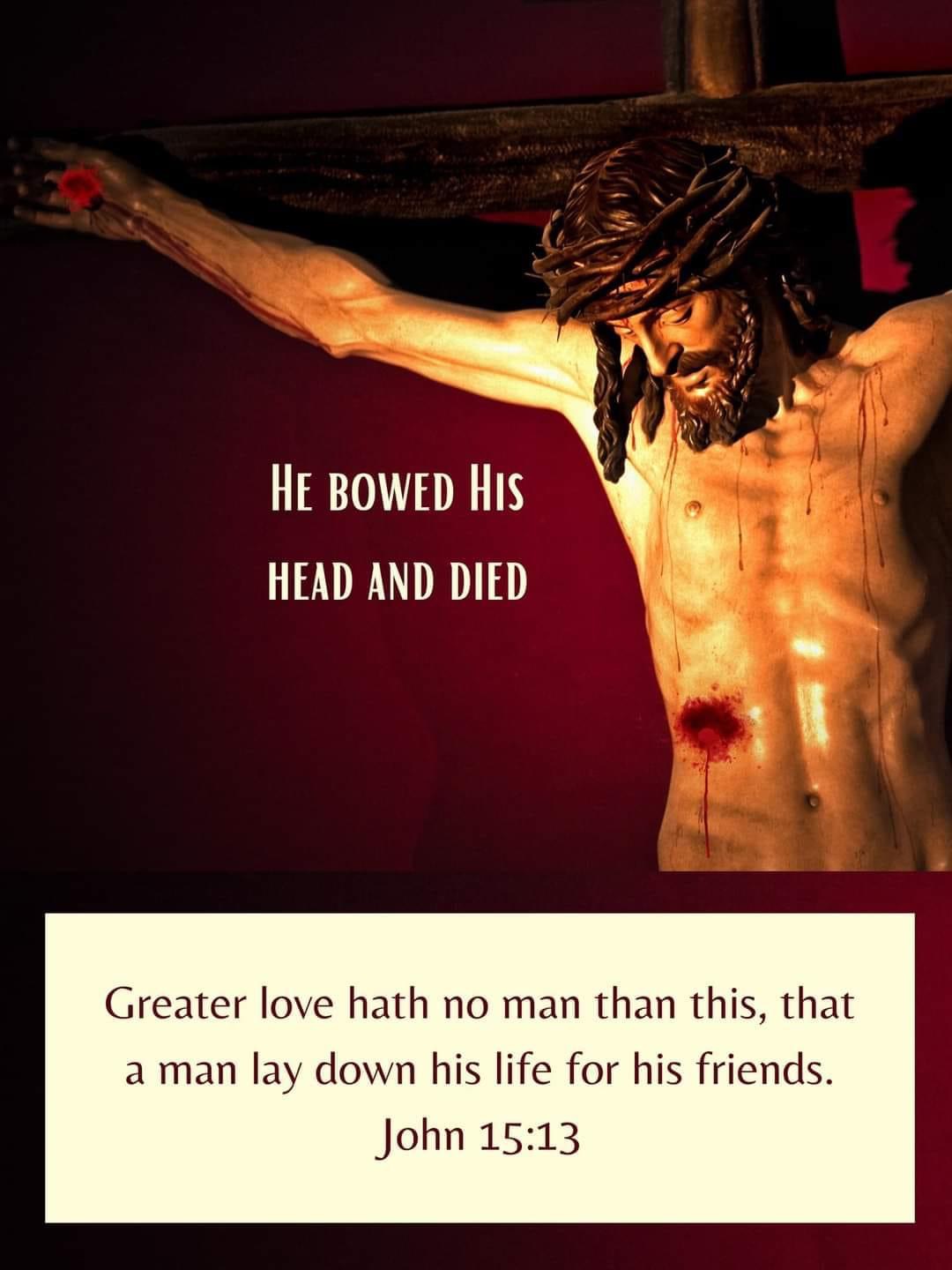


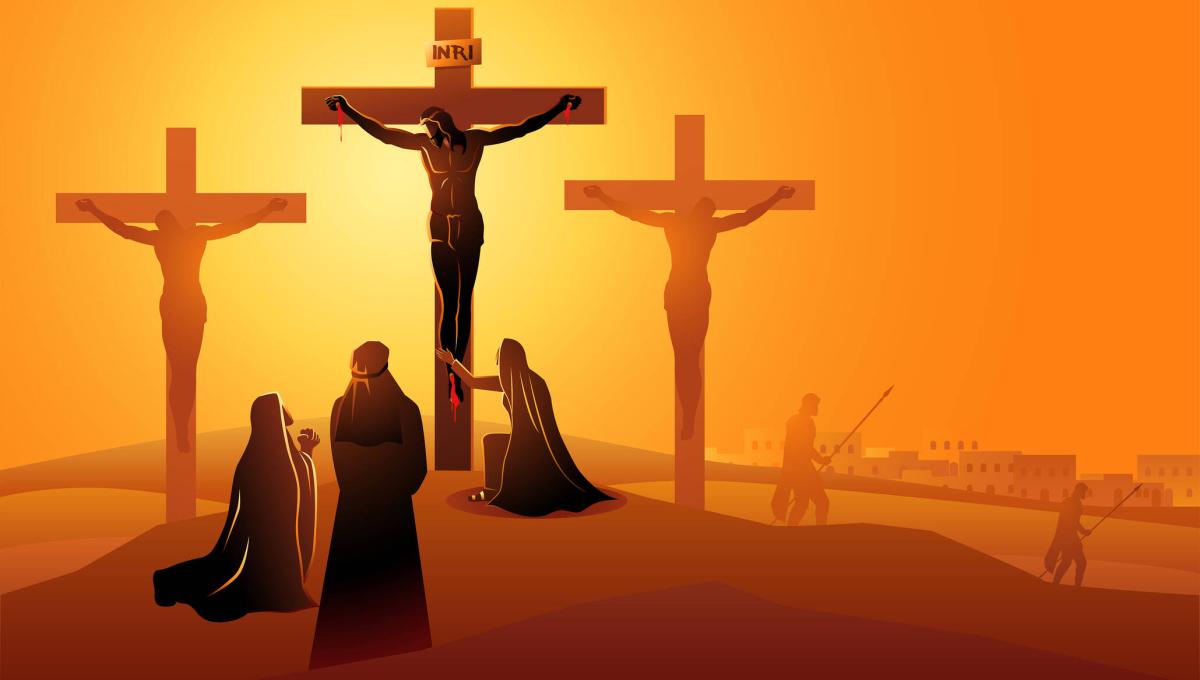
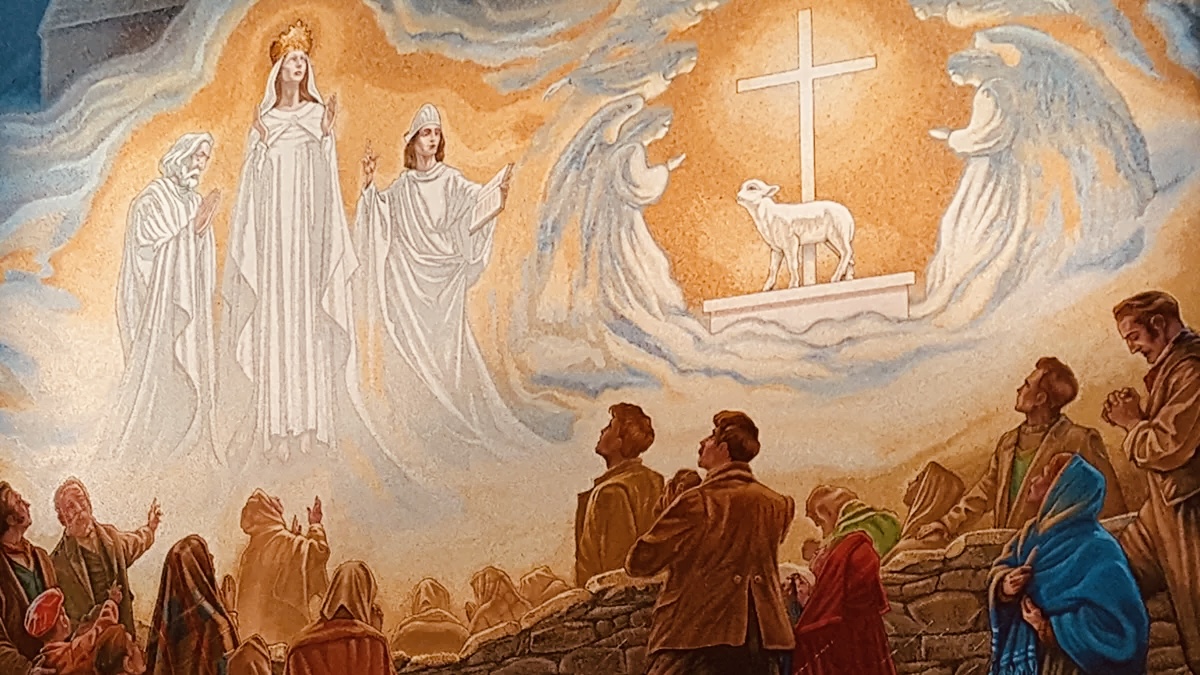
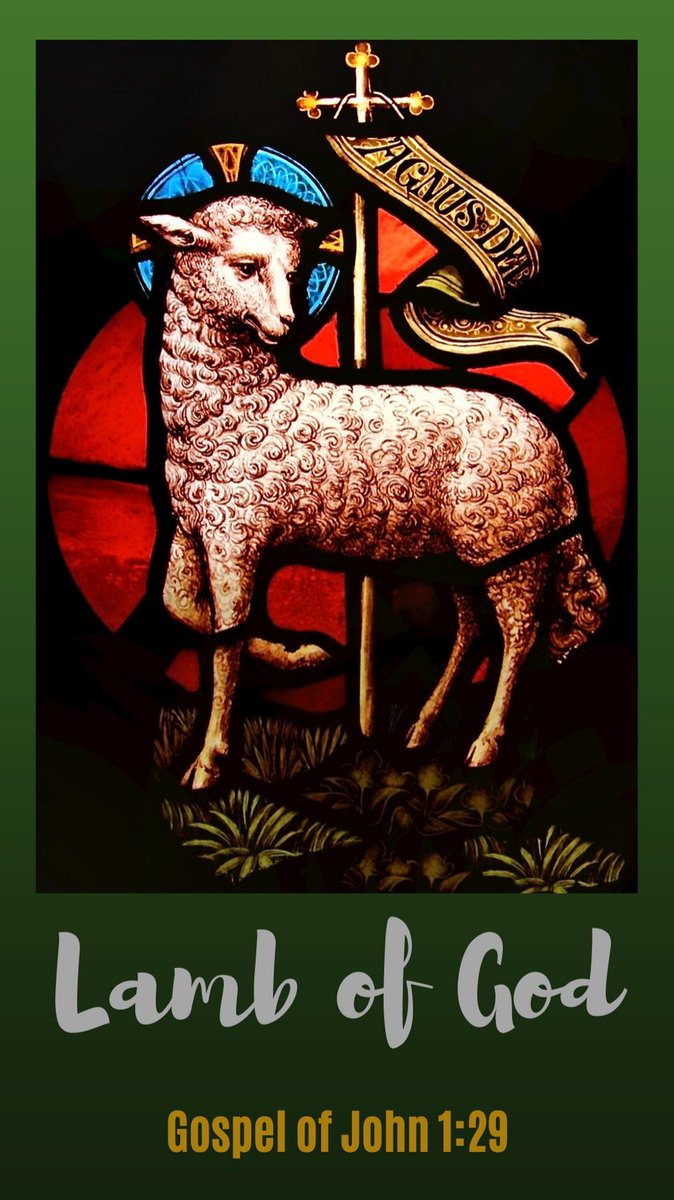



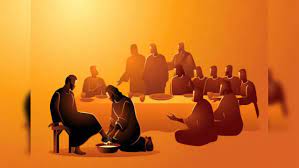
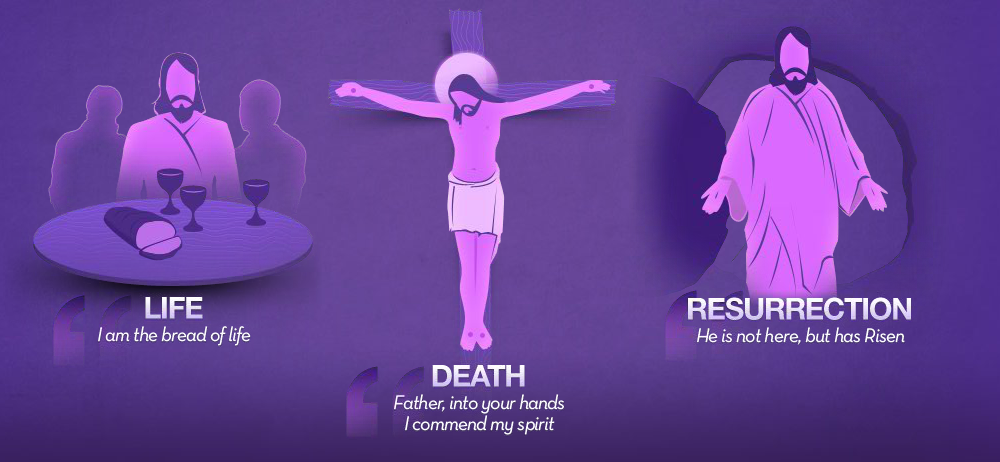
 Jesus Christ is New Paschal Lamb of God
You must be logged in to post a comment.