Please click on SOLEMNITY OF THE EPIPHANY OF THE LORD
and also please click on
St Peter’s Basilica
Saturday, 6 January 2024
Jesus Christ is New Paschal Lamb of God
On September 16, 2023 (1 Tishri 5784) Rosh haShanah same time I received new Confirmation and new Eucharist into the Presence of Christ is The Body, Blood, Soul and Divinity at Most Blessed Sacrament Catholic Church.
Please click on SOLEMNITY OF THE EPIPHANY OF THE LORD
and also please click on
St Peter’s Basilica
Saturday, 6 January 2024

Today is Lectio Divina for the Solemnity of the Epiphany of the Lord on January 6th.
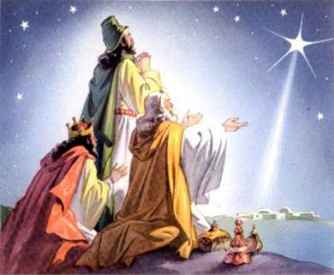
THE VISIT OF THE MAGI FULFILLED 3 PROPHECIES OF THE OLD TESTAMENT:
Balaam prophesied about the coming Messiah marked by a star:8
“I see him, though not now; I behold him, though not near: A star shall advance from Jacob and a staff shall rise from Israel…”. (Numbers 24:17).
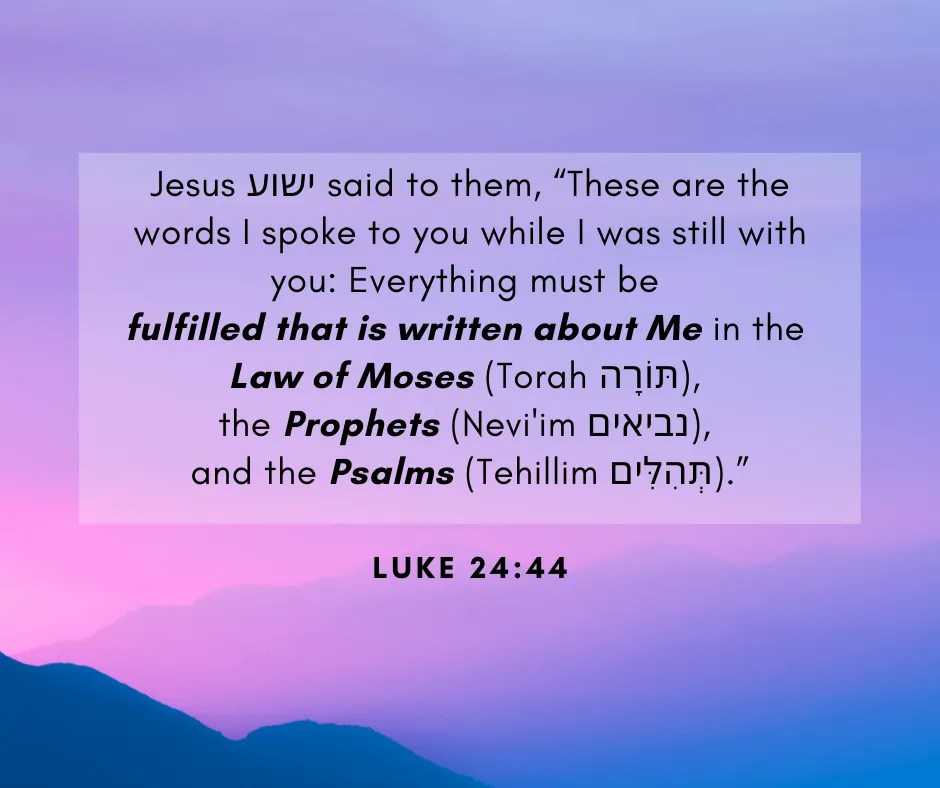
Above photo: We read on Luke 24:44 noticing …and the Psalms (Tehillim) Luke 24:44 quoted from Psalms 72. Please read and enjoy this!
Psalm 72 speaks of how the Gentiles will come to worship the Messiah:
“The kings of Tarshish and the Isles shall offer gifts, the kings of Arabia and Seba shall bring tribute. All kings shall pay Him homage, all nations shall serve Him” (Ps 72:10-11).
Isaiah also prophesied the gifts:
“Caravans of camels shall fill you, dromedaries from Midian and Ephah; all from Sheba shall come bearing gold and frankincense, and proclaiming the praises of the Lord” (Is 60:6).
Happy New Year 2024! May God bless you have a safe joyous beginning spiritual seeker and diver in The Eternal Word is Lord Jesus Christ You are my daily prayer.
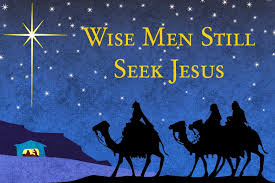
Reminder: The Solemnity of the Epiphany of the Lord on January 6
Please click https://www.usccb.org/prayer-and-worship/liturgical-year/christmas/christmas-january-6
Epiphany in Latin word literally means manifestation, striking appearance.
The Three Wise Men were members of an order of Persian priestly-astronomers known as Magi, that would study and interpret the stars.
The Three Wise Men have names:
Caspar (Latin) or Galalath (Hebrew)
Balthazar (Latin) or Malgalat (Hebrew)
Melchior (Latin) or Sarachin (Hebrew)
They searched for Jesus and found bowed presence with reverence and gratitude bestowing Gold, Frankincense, and Myrrh toward baby Jesus in manger of King of kings and Lord of lords.
The name Epiphany comes from the Greek epiphaneia, meaning “appearance” or “manifestation,” and refers to the manifestation of Jesus Christ to the world.
CATECHISM OF THE CATHOLIC CHURCH SECOND EDITION
528 The Epiphany is the manifestation of Jesus as Messiah of Israel, Son of God and Savior of the world. The great feast of Epiphany celebrates the adoration of Jesus by the wise men (magi) from the East, together with his baptism in the Jordan and the wedding feast at Cana in Galilee. In the magi, representatives of the neighboring pagan religions, the Gospel sees the first-fruits of the nations, who welcome the good news of salvation through the Incarnation. The magi’s coming to Jerusalem in order to pay homage to the king of the Jews shows that they seek in Israel, in the messianic light of the star of David, the one who will be king of the nations. Their coming means that pagans can discover Jesus and worship him as Son of God and Savior of the world only by turning towards the Jews and receiving from them the messianic promise as contained in the Old Testament. The Epiphany shows that “the full number of the nations” now takes its “place in the family of the patriarchs”, and acquires Israelitica dignitas (is made “worthy of the heritage of Israel”). 🙏💜🕊️🔥
Interesting I read through Google:
The Epiphany is the manifestation of Jesus as Messiah of Israel, Son of God and Savior of the world. The great feast of Epiphany celebrates the adoration of Jesus by the wise men (magi) from the East, together with his baptism in the Jordan and the wedding feast at Cana in Galilee.212 In the magi, representatives of the neighboring pagan religions, the Gospel sees the first-fruits of the nations, who welcome the good news of salvation through the Incarnation. The magi’s coming to Jerusalem in order to pay homage to the king of the Jews shows that they seek in Israel, in the messianic light of the star of David, the one who will be king of the nations.213 Their coming means that pagans can discover Jesus and worship him as Son of God and Savior of the world only by turning towards the Jews and receiving from them the messianic promise as contained in the Old Testament.214 The Epiphany shows that “the full number of the nations” now takes its “place in the family of the patriarchs”, and acquires Israelitica dignitas215 (is made “worthy of the heritage of Israel”).
Please click December 27 We all read together Feast of St. John, Apostle and Evangelist
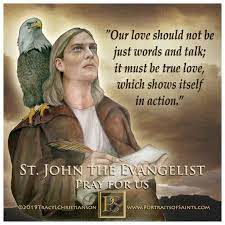

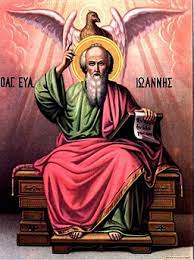
St. John is next to St. Stephen in his love of Christ, the only apostle to stand at the foot of the cross.
Why do we all read St. John on December 27 after St. Stephen, the First Martyr on December 26? Interesting I found out today after reading real awesome elaboration of St. John because of St. Andrew Daily Missal Reading:
First of all, some commentators have pointed out St. John’s emphasis on the divinity of Christ in his Gospel as being an apt reason for celebrating him in the Christmas octave.
The St. Andrew Daily Missal makes this point in its description of the feast.
It is God whom we adore at Bethlehem during Christmas time. Thus it was natural that St. John, the chief evangelist of the divinity of Christ, should be found beside the crib, to disclose the greatness of the Infant who reposes therein. 👏🙏💜🕊️
Please click: Why St. John the Evangelist is celebrated after Christmas also please click Why is December 27 the feast of St. John the Evangelist? 🙏💜🕊️
Today is December 27: The Feast Day of St. John the Evangelist after Christ’s Mass (Christmas). We all always read Christmas Octave: Since at least the fourth century, Christians have celebrated the most important liturgical feasts with “octaves” — eight days of celebration. Christmas has been celebrated as an octave since at least the seventh century, and is today one of two octaves celebrated by the Church — the other is Easter.
We all see word “octave” comes from a Latin root meaning “eight”. Clarifies means The eighth day is referred to as either the “octave” or “octave day”. Interesting?
Deep interesting read two articles about “the eighth day” regarding Old Testament and New Testament.
Please click on The Octave of Christmas: What is Is and Why We Celebrate it
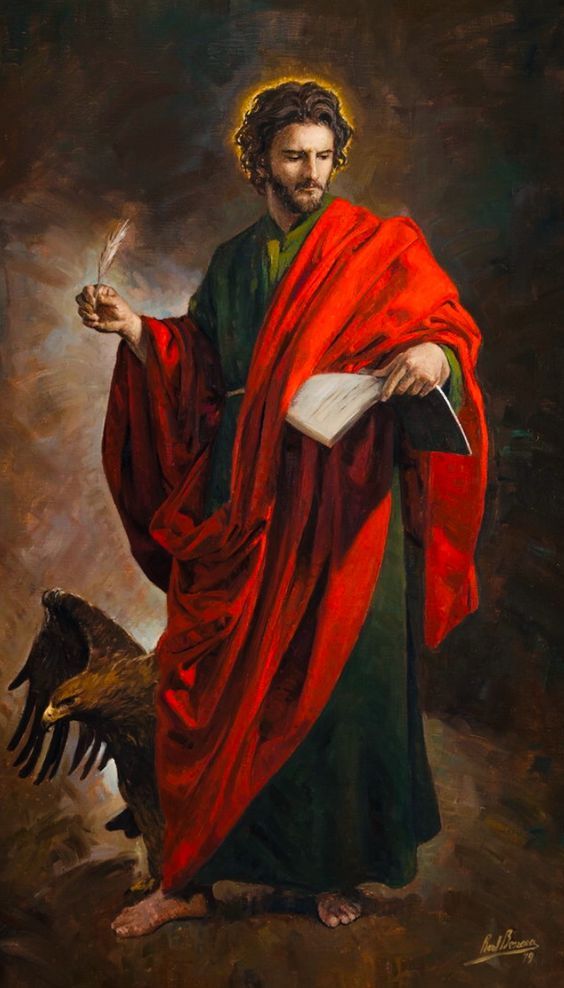
Read ETWN St. John and Catholic.org about St. John the Evangelist
Read St. John and his background
Excellent Catholic Copy of The Armor of God:
SAINT JOHN THE EVANGELIST.
APOSTLE AND EVANGELIST.
(c. 6 AD – c. 100 AD)
St. John, the Evangelist, who is styled in the Gospel, “the beloved disciple”, was a Galilean, son of Zebedee and Salome, and brother to St. James the Greater, both of whom were fishermen. The two were called by Jesus to be disciples as they were mending their nets by the Sea of Galilee.
Jesus showed St. John particular instances of kindness and affection above all the rest. He had the happiness to be present with Peter and James at the Transfiguration of Christ, and was permitted to witness His agony in the Garden. He was allowed to rest on Our Savior’s bosom at the Last Supper, and to him Jesus confided the care of His holy Mother as He hung dying on the Cross.
St. John was the only one of the Apostles who did not forsake the Savior in the hour of His Passion and Death.
It seems that St. John remained for a long time in Jerusalem, but that his later years were spent at Ephesus, whence he founded many churches in Asia Minor. St. John wrote his Gospel after the other Evangelists, about sixty-three years after the Ascension of Christ; also three Epistles, and the wonderful and mysterious Book of the Apocalypse or Revelation. He was brought to Rome and, according to tradition, was cast into a caldron of boiling oil by order of Emperor Domitian. Like the Three Children in the fiery furnace of Babylon, he was miraculously preserved unhurt.
He was later exiled to the Island of Patmos, where he wrote the Apocalypse, but afterwards returned to Ephesus.
In his extreme old age he continued to visit the churches of Asia. St. Jerome relates that when age and weakness grew upon him so that he was no longer able to preach to the people, he would be carried to the assembly of the faithful by his disciples, with great difficulty; and every time said to his flock only these words: “My dear children, love one another.”
St. John died in peace at Ephesus in the third year of Trajan (as seems to be gathered from Eusebius’ history of the Saint); that is, the hundredth of the Christian era, or the sixty-sixth from the crucifixion of Christ, St. John then being about ninety-four years old, according to St. Epiphanus.
PATRON: Against poison; art dealers; authors; bookbinders; booksellers; burns; compositors; editors; engravers; friendships; lithographers; painters; papermakers; poisoning; printers; publishers; tanners; theologians; typesetters; writers; Asia Minor; Taos, New Mexico; Umbria, Italy; diocese of Cleveland, Ohio; diocese of Milwaukee, Wisconsin.
PRAYER: O God, who through the blessed Apostle John have unlocked for us the secrets of your Word, grant, we pray, that we may grasp with proper understanding what he has so marvelously brought to our ears. Through our Lord Jesus Christ, your Son, who lives and reigns with you in the unity of the Holy Spirit, one God, for ever and ever. Amen.
POPE FRANCIS
ANGELUS
Saint Peter’s Square
Tuesday, 26 December 2023
Early First Century–c. 33–36
Patron Saint of altar servers, builders, casket makers, deacons, horses, masons, and quarrymen
Invoked against headaches
Pre-Congregation canonization
Liturgical Color: Red
Quote:
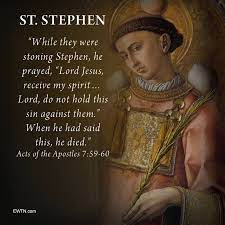
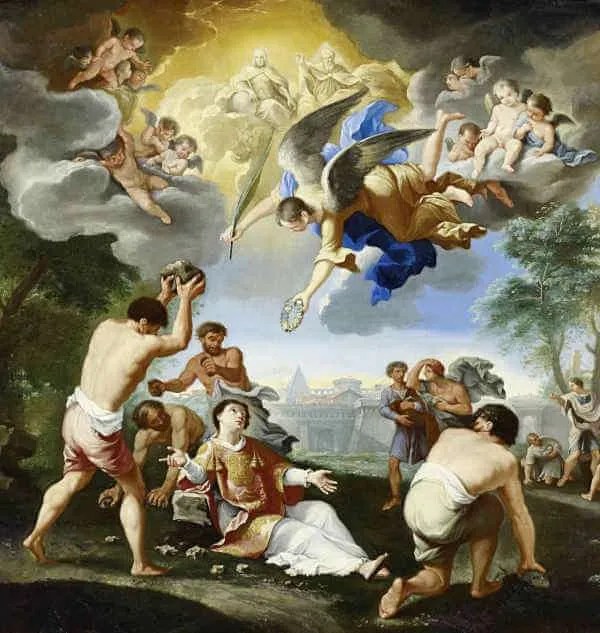
“You stiff-necked people, uncircumcised in heart and ears, you always oppose the Holy Spirit; you are just like your ancestors. Which of the prophets did your ancestors not persecute? They put to death those who foretold the coming of the righteous one, whose betrayers and murderers you have now become. You received the law as transmitted by angels, but you did not observe it.” When they heard this, they were infuriated, and they ground their teeth at him. But he, filled with the Holy Spirit, looked up intently to heaven and saw the glory of God and Jesus standing at the right hand of God, and he said, “Behold, I see the heavens opened and the Son of Man standing at the right hand of God.” But they cried out in a loud voice, covered their ears, and rushed upon him together. They threw him out of the city, and began to stone him. The witnesses laid down their cloaks at the feet of a young man named Saul. As they were stoning Stephen, he called out, “Lord Jesus, receive my spirit.” Then he fell to his knees and cried out in a loud voice, “Lord, do not hold this sin against them;” and when he said this, he fell asleep. ~Acts 7:51–60Reflection: Saint Stephen, whom we honor today, is the first Christian martyr, thus giving him the unique title “Protomartyr.” All we know about Saint Stephen comes from the Acts of the Apostles, Chapters 6–7. His name is of Greek origin, suggesting that he was a Hellenistic Jew. Nothing else is known about Stephen’s early life. Stephen came on the scene within the early Church in Jerusalem, where he was chosen as a deacon to assist with the fair distribution of daily provisions within the Christian community so as to relieve the Apostles of that responsibility.
As Jesus walked the earth, His community of followers became a close-knit community. In order to devote themselves to following Jesus full-time, some of His disciples provided for the needs of the whole community (see Luke 8:3). After Jesus ascended into Heaven and sent the Holy Spirit, the Apostles remained in Jerusalem, and the community of believers continued to deepen their communal life. They ate together, celebrated the Eucharist, and shared their financial resources with each other.
The community of believers was of one heart and mind, and no one claimed that any of his possessions was his own, but they had everything in common. With great power the apostles bore witness to the resurrection of the Lord Jesus, and great favor was accorded them all. There was no needy person among them, for those who owned property or houses would sell them, bring the proceeds of the sale, and put them at the feet of the apostles, and they were distributed to each according to need (Acts 4:32–35).
The early Jerusalem community was made up of both Hebrew and Hellenistic Jews. Hebrew Jews were native to Judea and primarily spoke Aramaic as their common language. They closely adhered to traditional Jewish customs and used the Hebrew language in religious practices. The Hellenistic Jews typically spoke Greek and were influenced by Greek culture, due to their assimilation into the broader Greco-Roman society throughout the Roman Empire. Both Hellenists and Hebrews were converting to Christ and were living as one united people in Jerusalem. However, biases reportedly remained: “At that time, as the number of disciples continued to grow, the Hellenists complained against the Hebrews because their widows were being neglected in the daily distribution” (Acts 6:1).
Because the Apostles chose to devote themselves to prayer and the preaching of the Word, they asked the community to select “seven reputable men, filled with the Spirit and wisdom” (Acts 6:3). The Apostles then appointed them to the task of overseeing the daily distribution of provisions. The Apostles prayed and laid their hands on these seven men, ordaining them the Church’s first deacons. They were “Stephen, a man filled with faith and the Holy Spirit, also Philip, Prochorus, Nicanor, Timon, Parmenas, and Nicholas of Antioch, a convert to Judaism” (Acts 6:5). Some ancient traditions identify Stephen as the eldest and the leader of the others, making him what has become known as “Archdeacon.” Stephen was likely a Greek, so he might have been chosen, in part, to help ensure that the Hellenistic women, especially the widows, received their share of the daily distribution.
As a deacon, Stephen also preached the Word of God and performed many miracles. Various Hellenistic Jews even debated him in public, “but they could not withstand the wisdom and the spirit with which he spoke” (Acts 6:10). This so agitated them that they dragged him before the Sanhedrin, just as they had done to Jesus. The Sanhedrin was the highest religious, judicial, and legislative body within the Jewish community. The charges brought against Stephen were that he spoke against the Temple and the Law of Moses. As Stephen stood before the angry Sanhedrin, his face appeared like that of an angel.
Acts 7:1–53 presents a lengthy speech Stephen made before the Sanhedrin. It is one of the longest and most significant speeches in the New Testament. In that speech, Stephen traced the history of Israel from Abraham to Solomon, who built the Temple. He emphasized God’s actions that took place outside of the Temple, as well as Israel’s recurring disobedience. Of the Temple, he said, “the Most High does not dwell in houses made by human hands” (Acts 7:48). In other words, the Temple had outlived its purpose. The Most High came to us in the Person of Jesus, and Jesus is the New Temple and the New Priest Who offered Himself as the New and Perpetual Sacrifice. Stephen re-read and reinterpreted the Old Testament in the light of Christ. He was among the first followers of Christ to clearly unite the Old Testament with the unfolding New Testament. He also referred to the members of the Sanhedrin and those accusing him as “stiff-necked people.”
Recall from Jesus’ trial that the Sanhedrin, while under Roman occupation, could not condemn a person to death. The Romans reserved that to themselves. In Stephen’s case, his accusers were so infuriated that they immediately dragged him outside the city (probably the northern gate) and stoned him to death. This horrible situation, however, turned truly beautiful and glorious on account of Stephen’s faith. Before being dragged to the spot of his death, he looked up to Heaven and exclaimed, “Behold, I see the heavens opened and the Son of Man standing at the right hand of God” (Acts 7:56). Once they dragged him out and began stoning him, he prayed, “Lord Jesus, receive my spirit” and “Lord, do not hold this sin against them” (Acts 7:59–60). Notice the similarities to Jesus Who cried out from the Cross, “Father, forgive them…” (Luke 23:34) and “Father, into Your hands I commend my spirit” (Luke 23:46). As the author of the Gospel and the Acts of the Apostles, it is clear from those passages that Saint Luke intended this connection.
Among those who consented to Saint Stephen’s martyrdom was the Pharisee Saul, who would later convert, become the great Apostle to the Gentiles, and go by his Roman name, Paul. After his conversion, Saint Paul built upon the teaching of Saint Stephen, developed it and deepened it, continuing the mission of one whom he helped persecute and kill. It is clear that Saint Stephen’s final prayer was heard by God and especially applied to Saul.
Saint Paul would later write in a letter to the Romans, “We know that all things work for good for those who love God, who are called according to his purpose” (Romans 8:28). Nothing truer could be said about Saint Stephen’s martyrdom. At first, there was great fear and chaos. “On that day, there broke out a severe persecution of the church in Jerusalem, and all were scattered throughout the countryside of Judea and Samaria, except the apostles” (Acts 8:1). The close Christian community scattered, running for their lives. In God’s wisdom, this scattering became the first great means of evangelization. Christians brought Christ within the temple of their souls to people far and wide. One by one, new hearts were converted, and the scattered community shared the New Law of Christ with others.
One tradition states that Saint Stephen was buried in the town of Beit Jimal, about twenty miles west of Jerusalem. Legend has it that in 415, a priest named Lucian had a dream in which Saint Stephen’s burial place was revealed to him. The priest brought his remains back to Jerusalem, and some years later Stephen was buried at the site of his martyrdom, in what is today the Church of Saint Étienne (French for Stephen). In his book, City of God, Saint Augustine says that some of Saint Stephen’s relics were brought to “waters of Tibilis,” which was most likely in North Africa. Augustine then recounts many stories of miracles that took place in the lives of those who encountered his relics.
As we honor the Church’s protomartyr, ponder the profound truth that God always brings good out of suffering when that suffering is prayerfully united to Christ. In honor of Saint Stephen, as you reflect upon his life and death, call to mind any sufferings you endure. Whether those are physical, mental or emotional, are caused by illness, persecution or any other source, seek to unite yourself and your sufferings to Christ. If part of your suffering results from the sins of others, pray the prayer Saint Stephen prayed, “Lord, do not hold this sin against them.” And throughout your life, pray with him, “Lord Jesus, receive my spirit.” Pray, also, for his intercession, especially for courage and strength to fulfill God’s will in your life.
Prayer: Saint Stephen, you were graced to be the first follower of Christ who was martyred for your faith. You did not shy away from the cruelty and hatred of your persecutors but spoke the truth to them and prayed that they be forgiven. Please also pray for me, that I will be forgiven for the sins I have committed against others and will follow you by offering my life wholeheartedly to Christ every day of my life. Saint Stephen, pray for me. Jesus, I trust in You.
We all read Today is USCCB Mass Reading
https://bible.usccb.org/bible/readings/122523-Dawn.cfm
and
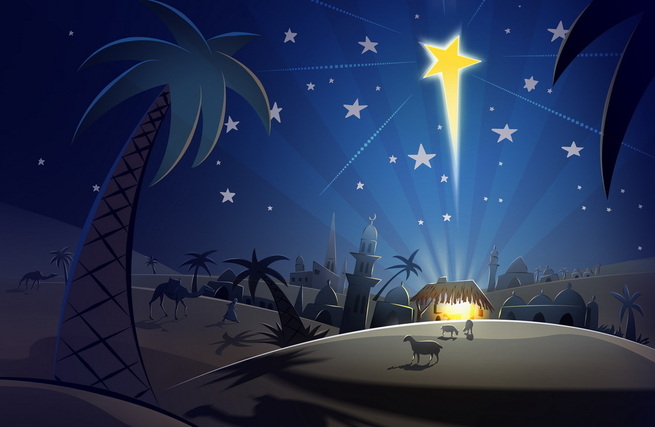
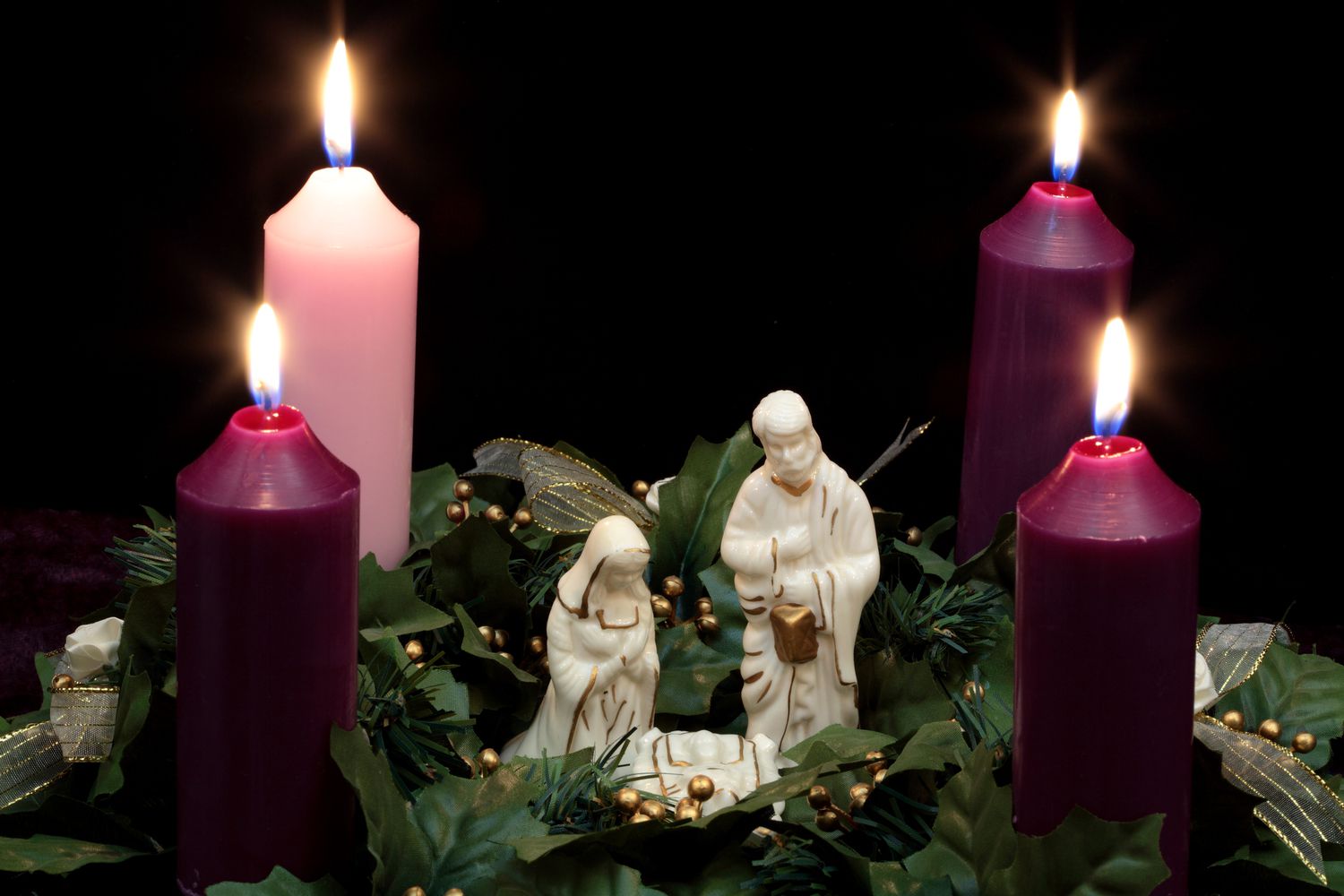
Joyous Seasonal Four Advents 2023 (5784)
Hope
Peace
Joy
Love
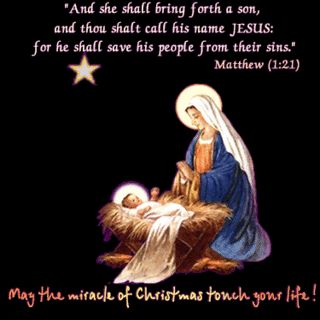
JESUS means The LORD is Salvation!
In Aramaic YESHUA means YHWH is Salvation!
On Chanukah/Hanukkah, we can greet one another with “Hanukkah sameach!” means “Happy Hanukkah!” or “Chag urim sameach” which means “Happy Festival of Lights.” Urim is Hebrew for “lights”. As on any happy holiday or festival, we can say “Chag sameach!” (“Happy holiday!”)
Tonight is 25th Kislev for 8 days, Chanukah begins Thursday evening, December 7, 2023 (5784) and continues through Friday, December 15, 2023 (5784).
Please click on USCCB John 10
* [10:22] Feast of the Dedication: an eight-day festival of lights (Hebrew, Hanukkah) held in December, three months after the feast of Tabernacles (Jn 7:2), to celebrate the Maccabees’ rededication of the altar and reconsecration of the temple in 164 B.C., after their desecration by Antiochus IV Epiphanes (Dn 8:13; 9:27; cf. 1 Mc 4:36–59; 2 Mc 1:18–2:19; 10:1–8).
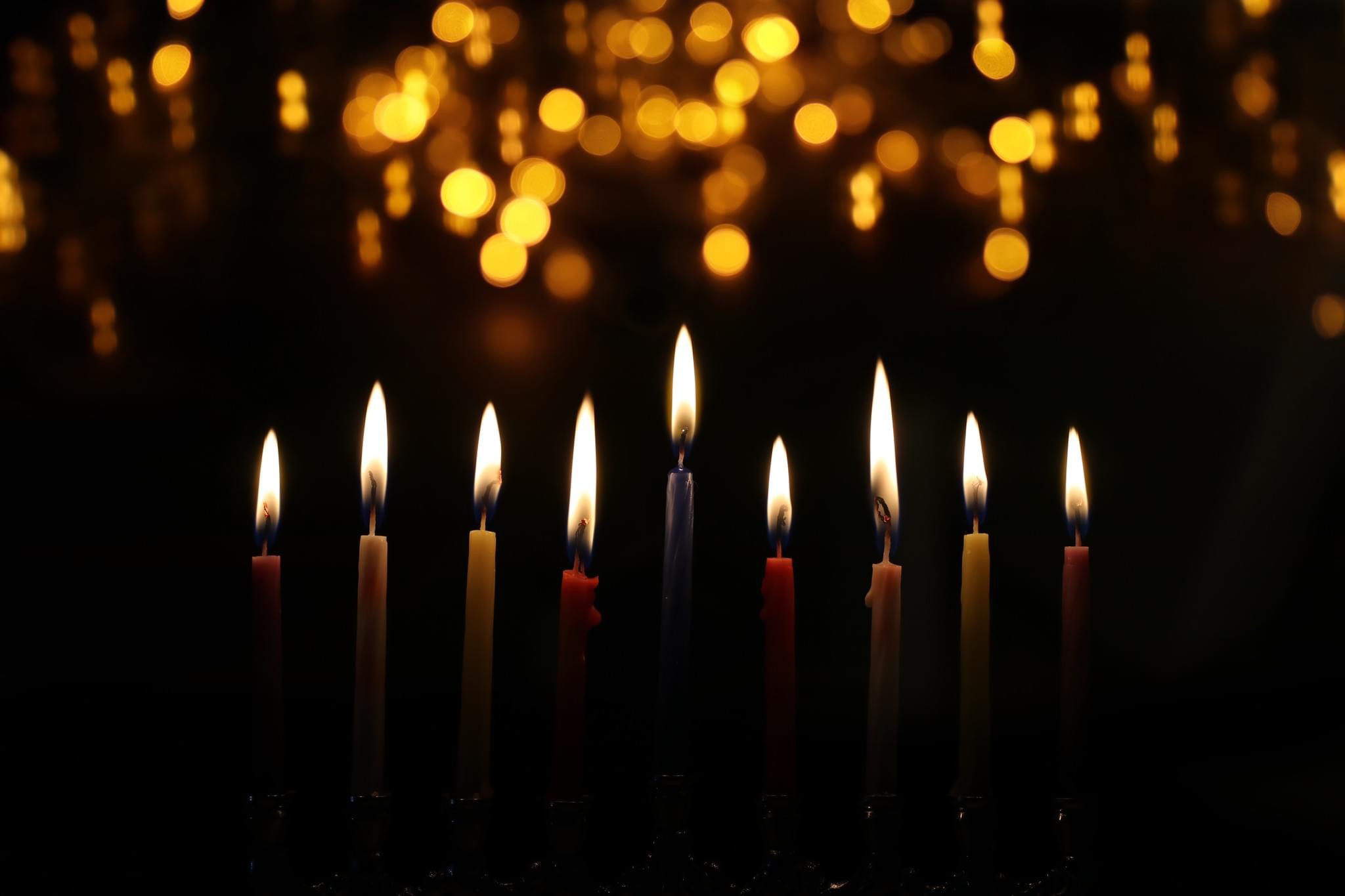
USCCB’s Greeting: The Catholic Bishops of the United States wish our Jewish brothers and sisters a Hanukkah full of light. We are mindful of our friendship, most particularly in times of darkness. חג חנוכה שמח
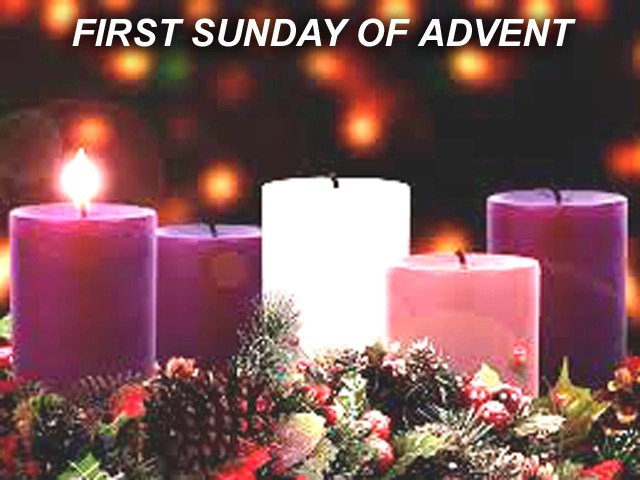
December 3, 2023 First Sunday of Advent: Hope
Advent in Latin: Advent derives from the Latin word, “ad-venire,” which translates to “to come to,” therefore, the Advent season is a time of preparation that directs our hearts and minds to Christ’s coming.
Advent: The word advent is derived from Latin word, adventus, that means “arrival, coming”. Advent, being the season that begins the Catholic Church’s liturgical year, is intended to be a period of preparation for the coming of Jesus.
Advent the Latin word adventus, which means coming. It is a translation of the Greek word parousia, that means coming as well. So that’s one reason the Church chose this passage. It is because in the Latin translation of the Bible you actually would have the word adventus right here. So it is an advent teaching.
We all read on Mark 13:33-37 The Word of God
Beware, keep alert; for you do not know when the time will come. It is like a man going on a journey, when he leaves home and puts his slaves in charge, each with his work, and commands the doorkeeper to be on the watch. Therefore, keep awake – for you do not know when the master of the house will come, in the evening, or at midnight, or at cockcrow, or at dawn, or else he may find you asleep when he comes suddenly. And what I say to you I say to all: Keep awake.” Mark 13:33-37
CCC # 524 When the Church celebrates the liturgy of Advent each year, she makes present this ancient expectancy of the Messiah, for by sharing in the long preparation for the Savior’s first coming, the faithful renew their ardent desire for his second coming.200 By celebrating the precursor’s birth and martyrdom, the Church unites herself to his desire: “He must increase, but I must decrease.”201
200 Cf Rev 22:17.
201 Jn 3:30.
1171 In the liturgical year the various aspects of the one Paschal mystery unfold. This is also the case with the cycle of feasts surrounding the mystery of the incarnation (Annunciation, Christmas, Epiphany). They commemorate the beginning of our salvation and communicate to us the first fruits of the Paschal mystery.
First Advent Candle/Sunday: Hope
“Once in our world, a stable had something in it that was bigger than our whole world.” – C.S. Lewis
It is only fitting that the first candle on the Advent wreath represents Hope – the first Sunday of Advent not only leads us to anticipate the birth of Christ but celebrate the beginning of a new liturgical season as well. The first candle is purple, the primary color of Advent and a color symbolizing royalty. Sometimes called the “Prophecy Candle,” the first candle harkens us back to Isaiah’s foretelling of the birth of Christ and all of the promises God gave us in the Old Testament that would be fulfilled by the birth of Jesus. This Advent, light the first candle on Sunday, December 3, 2023.
Please click Advent 2023
Today is November 25th we all read
First Reading: First Maccabees 6: 1-13
Responsorial Psalm: Psalms 9: 2-3, 4 and 6, 16 and 19
Alleluia: Second Timothy 1: 10
Gospel: Luke 20: 27-40
Please click November 25
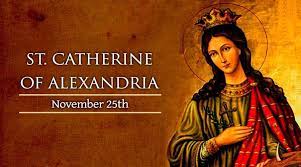
Please click Saint Catherine of Alexandria
We all read together please click on Optional Memorial of Saint Catherine of Alexandria, virgin and martyr
Lectionary: 683C
Below are the readings suggested for today’s Memorial. However, readings for the Memorial may also be taken from the Common of Martyrs (#713-718), or the Common of Virgins (#731-736).
My eye sharp on “See Te Deum” on St. Catherine
See Te Deum 👈💜🙏🕊️
R. Alleluia, alleluia.
We praise you, O God,
we acclaim you as Lord;
the white-robed army of martyrs praises you.
R. Alleluia, alleluia.
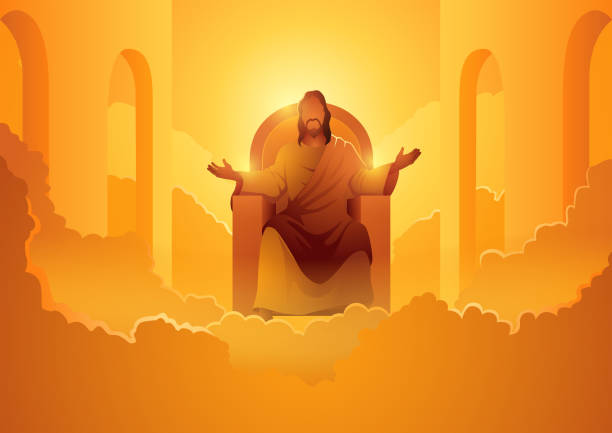
Interesting! I learn something new what I see an incipit on Latin:
“Te Deum Laudamus” means “We Praise you God” and comes from the first line of the hymn.” The below photo:
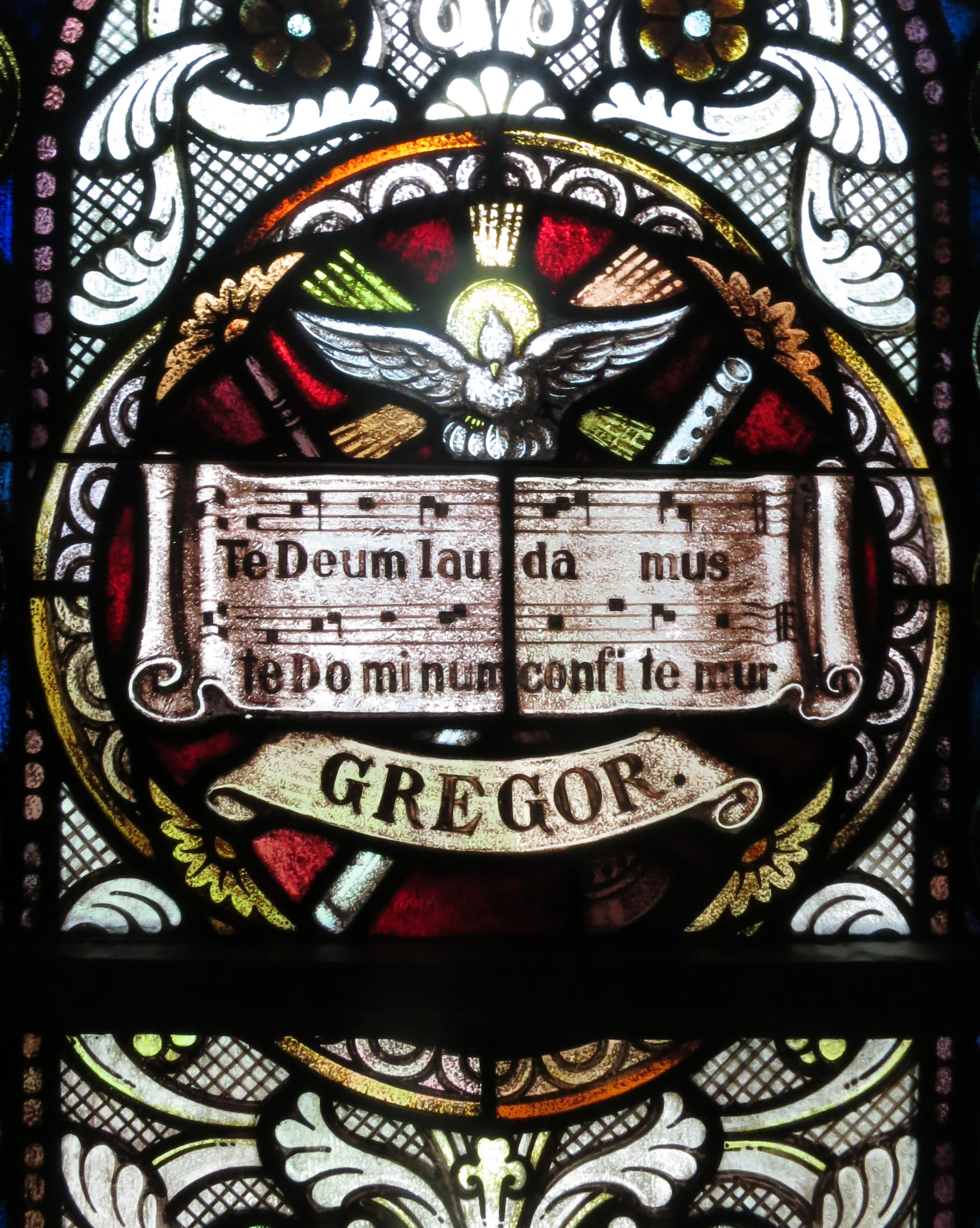
I study and learn deep interesting this Latin song borrows the language of Scripture is an anointing message on Isaiah 6:1 Isaiah’s vision of God on His glorious throne is used. I like this excellent article with beautiful elaboration Te Deum: O, God We Praise Thee
The Te Deum (from its incipit, Te deum laudamus “Thee, O God, we praise”) is a Latin Christian hymn composed in the 4th century. The authorship is traditionally ascribed to Saint Ambrose (d. 397) or Saint Augustine (d. 430), but it is now ascribed to Nicetas, Bishop of Remesiana. This prayer is said at the end of Matins on days when the Gloria is said at Mass. This prayer is partially indulgenced under normal circumstances when said in thanksgiving. A plenary indulgence is granted if the hymn is recited publicly on the last day of the year.
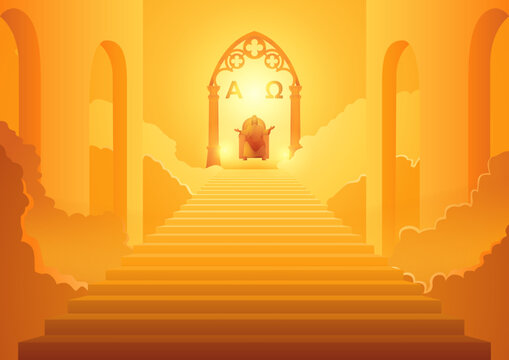
The One who was seated on the throne said:
“Behold, I make all things new.”
Then he said, “Write these words down,
for they are trustworthy and true.”
He said to me, “They are accomplished.
I am the Alpha and the Omega, the beginning and the end.
To the thirsty I will give a gift
from the spring of life-giving water.
The victor will inherit these gifts,
and I shall be his God,
and he will be my son.”
I enjoy reading and click on ETWN “Te Deum”. I pray God bless you all. 💜🙏🕊️
 Jesus Christ is New Paschal Lamb of God
You must be logged in to post a comment.