
Today is Maundy Holy Thursday.
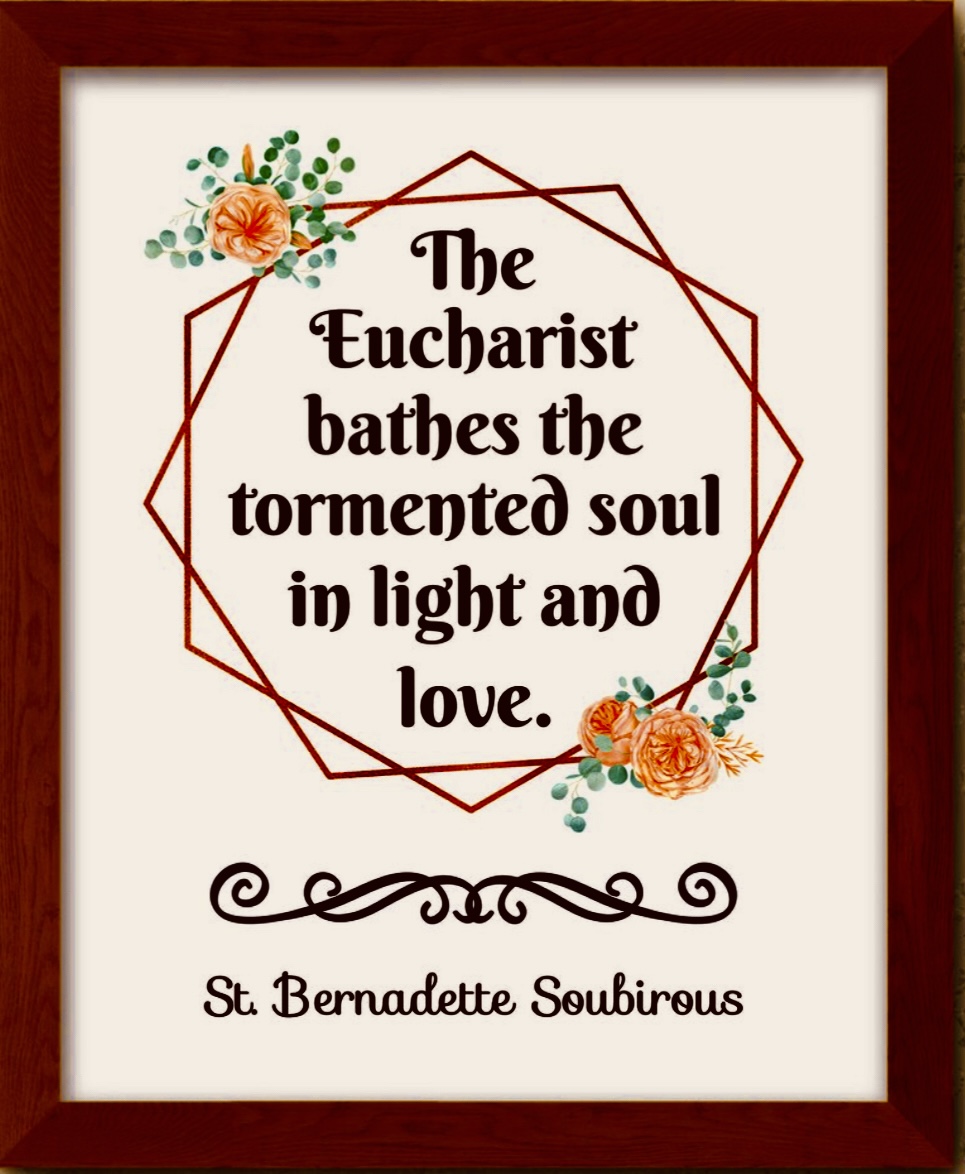
Please click Eucharist and ETWN Eucharist
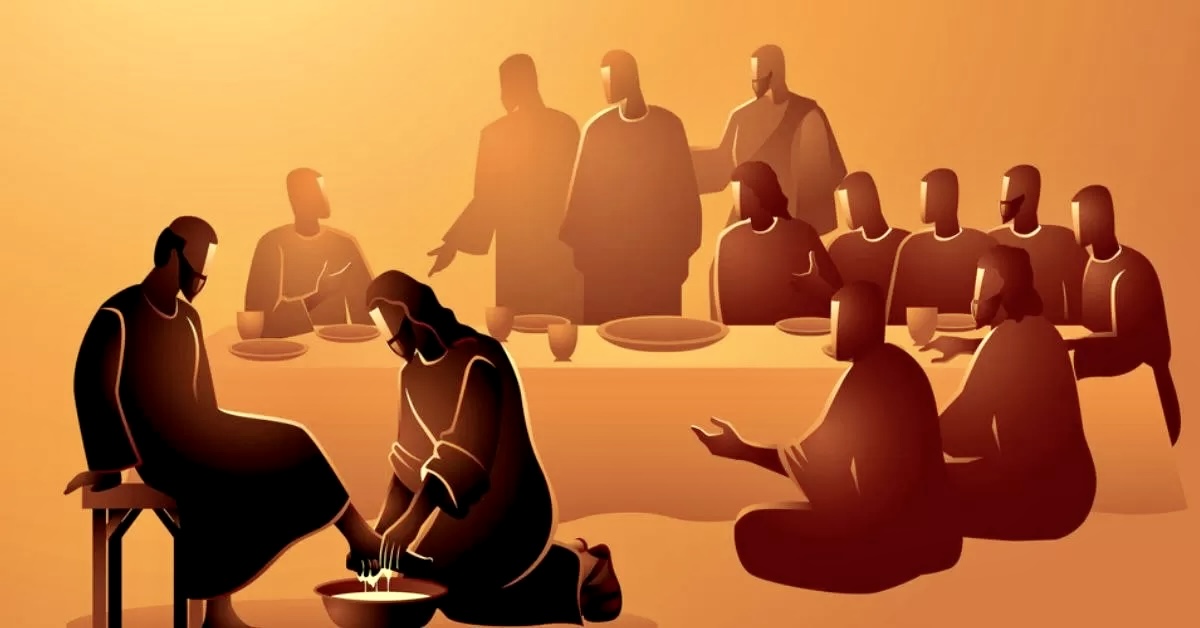
Jesus instituted the Eucharist on Holy Thursday “the night on which he was betrayed” (1 Corinthians 11:23), as he celebrated the Last Supper with his apostles.
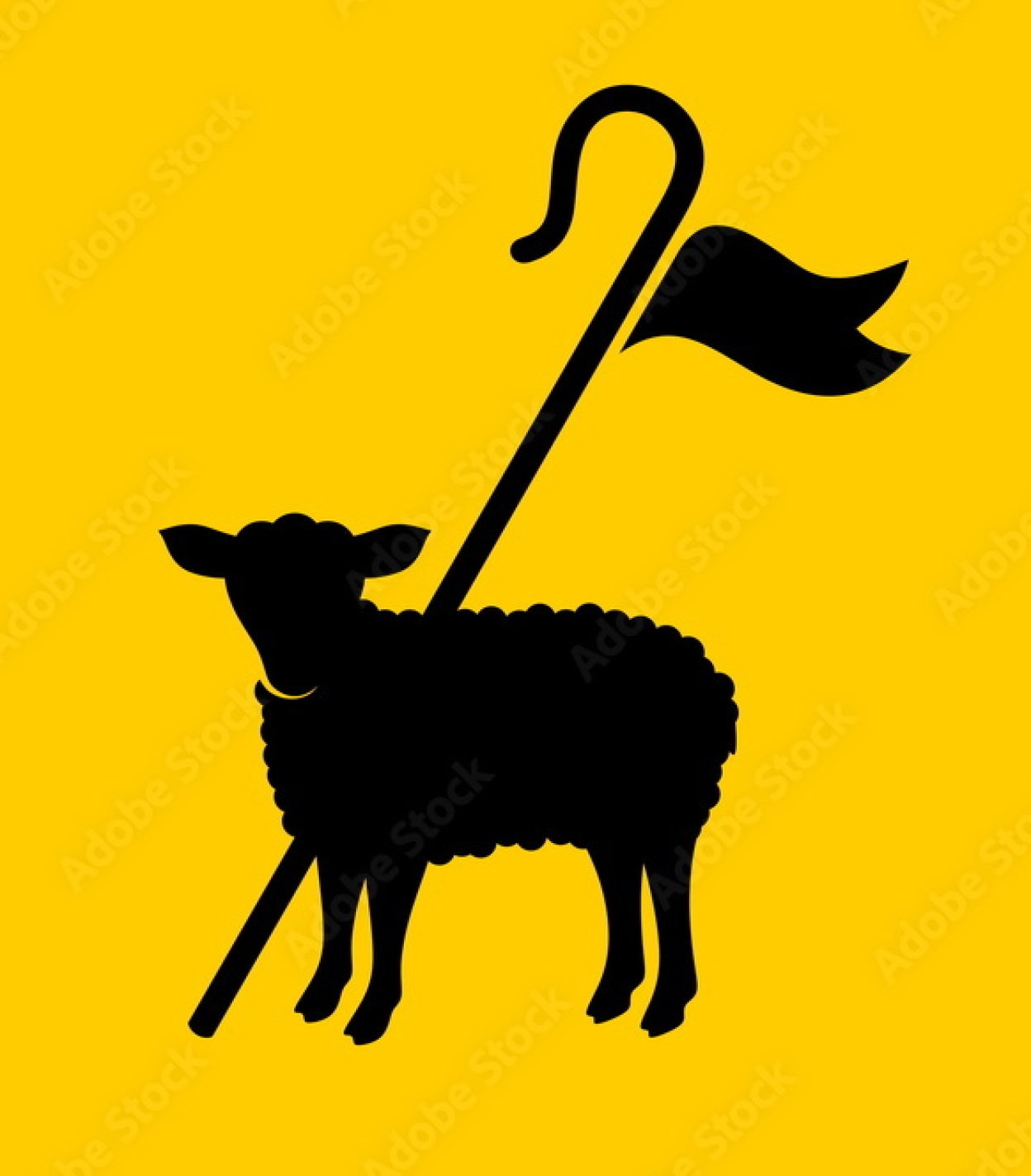
Jesus Christ is New Paschal Lamb of God
On September 16, 2023 (1 Tishri 5784) Rosh haShanah same time I received new Confirmation and new Eucharist into the Presence of Christ is The Body, Blood, Soul and Divinity at Most Blessed Sacrament Catholic Church.
Today is Maundy Holy Thursday.
Please click Eucharist and ETWN Eucharist
Jesus instituted the Eucharist on Holy Thursday “the night on which he was betrayed” (1 Corinthians 11:23), as he celebrated the Last Supper with his apostles.
Today is Maundy Holy Thursday.

Question: What is Maundy Holy Thursday?
Answer: Maundy Thursday’s name is derived from the Latin word mandatum, which means “commandment” or “mandate”. The plural of the Latin word “mandatum” is mandata. This is a reference to the new commandment Jesus gave his disciples at the Last Supper: “Love one another”. The Latin phrase associated with this commandment is “Mandatum novum do vobis” (“A new commandment I give to you”).
The Latin phrase “Mandatum novum do vobis ut diligatis invicem sicut dilexi vos” means “A new commandment I give to you: that you love one another as I have loved you”. St. John 13:34.
Here’s a breakdown:

We read St. John 13:31-35 USCCB
31* When he had left, Jesus said,* “Now is the Son of Man glorified, and God is glorified in him.
32[If God is glorified in him,] God will also glorify him in himself, and he will glorify him at once.r
33My children, I will be with you only a little while longer. You will look for me, and as I told the Jews, ‘Where I go you cannot come,’ so now I say it to you.s
34I give you a new commandment:* love one another. As I have loved you, so you also should love one another.t
35This is how all will know that you are my disciples, if you have love for one another.”

Today is Holy Wednesday.
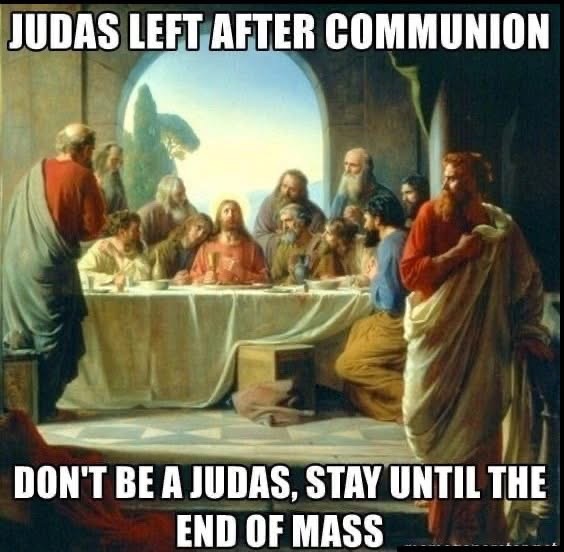
Wow! I read this excellent article The Holy Eucharist and the Treachery of Judas more spiritually comprehend about Eucharist. Hope you enjoy this. May God bless you seek Sacred Scriptures through Holy Spirit I pray Amen.
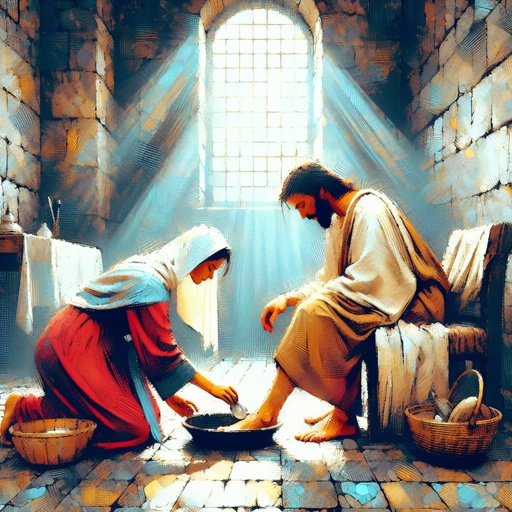
Tonight is Six days before Passover.
Holy Monday
The anointing at Bethany by a penitent woman is Mary of Bethany is the sister of Martha and Lazarus.
Mary of Bethany had deep reconciliation with whole healing presence of Jesus. The strong fragrance of anointing inside house she (Mary) devoutly honor Jesus and His burial.
Lectionary: 257
Here is my servant whom I uphold,
my chosen one with whom I am pleased,
Upon whom I have put my Spirit;
he shall bring forth justice to the nations,
Not crying out, not shouting,
not making his voice heard in the street.
A bruised reed he shall not break,
and a smoldering wick he shall not quench,
Until he establishes justice on the earth;
the coastlands will wait for his teaching.
Thus says God, the LORD,
who created the heavens and stretched them out,
who spreads out the earth with its crops,
Who gives breath to its people
and spirit to those who walk on it:
I, the LORD, have called you for the victory of justice,
I have grasped you by the hand;
I formed you, and set you
as a covenant of the people,
a light for the nations,
To open the eyes of the blind,
to bring out prisoners from confinement,
and from the dungeon, those who live in darkness.
R. (1a) The Lord is my light and my salvation.
The LORD is my light and my salvation;
whom should I fear?
The LORD is my life’s refuge;
of whom should I be afraid?
R. The Lord is my light and my salvation.
When evildoers come at me
to devour my flesh,
My foes and my enemies
themselves stumble and fall.
R. The Lord is my light and my salvation.
Though an army encamp against me,
my heart will not fear;
Though war be waged upon me,
even then will I trust.
R. The Lord is my light and my salvation.
I believe that I shall see the bounty of the LORD
in the land of the living.
Wait for the LORD with courage;
be stouthearted, and wait for the LORD.
R. The Lord is my light and my salvation.
Hail to you, our King;
you alone are compassionate with our faults.
Six days before Passover Jesus came to Bethany,
where Lazarus was, whom Jesus had raised from the dead.
They gave a dinner for him there, and Martha served,
while Lazarus was one of those reclining at table with him.
Mary took a liter of costly perfumed oil
made from genuine aromatic nard
and anointed the feet of Jesus and dried them with her hair;
the house was filled with the fragrance of the oil.
Then Judas the Iscariot, one of his disciples,
and the one who would betray him, said,
“Why was this oil not sold for three hundred days’ wages
and given to the poor?”
He said this not because he cared about the poor
but because he was a thief and held the money bag
and used to steal the contributions.
So Jesus said, “Leave her alone.
Let her keep this for the day of my burial.
You always have the poor with you, but you do not always have me.”
The large crowd of the Jews found out that he was there and came,
not only because of him, but also to see Lazarus,
whom he had raised from the dead.
And the chief priests plotted to kill Lazarus too,
because many of the Jews were turning away
and believing in Jesus because of him.
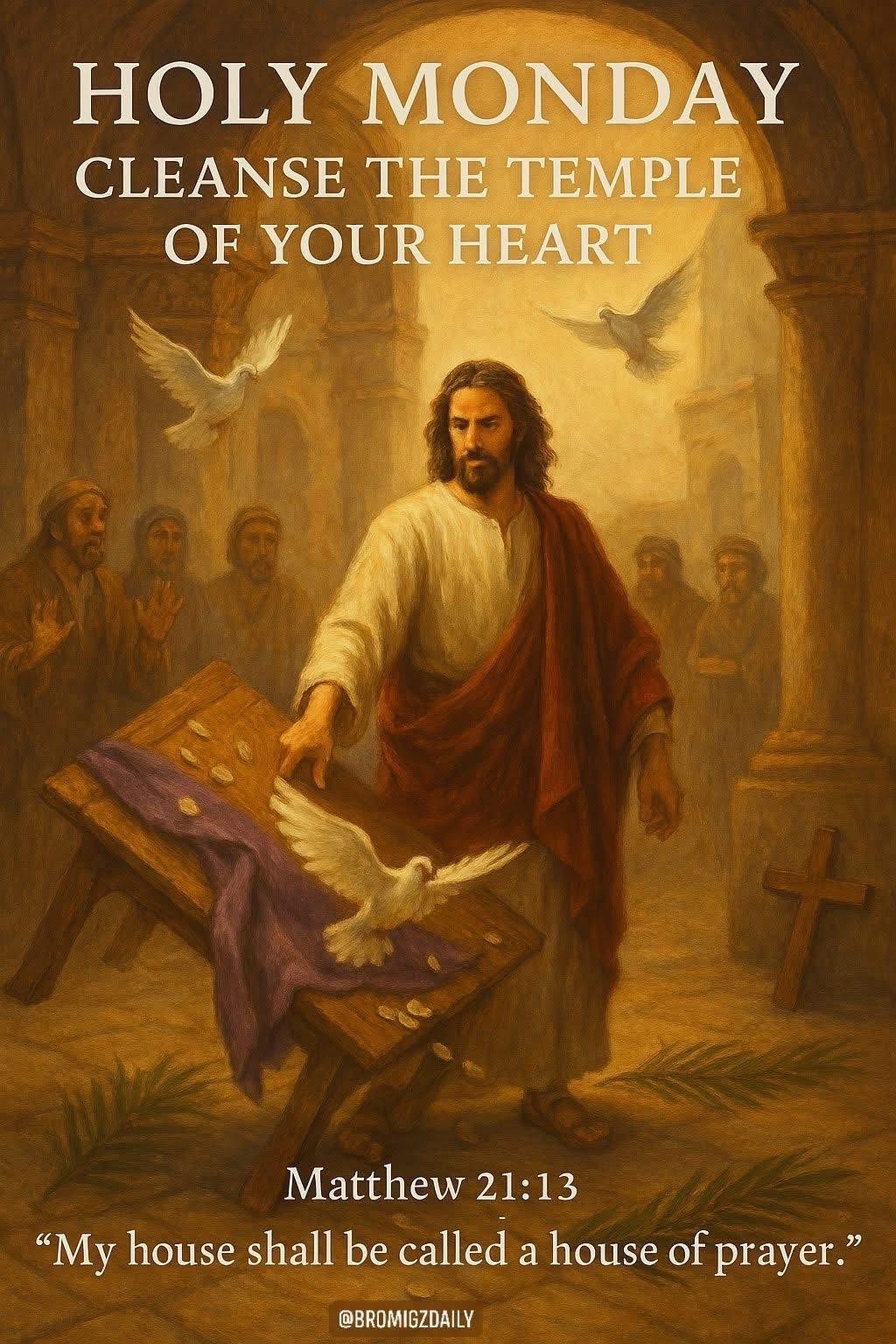
Matthew 21:12-17 USCCB
The Cleansing of the Temple.[j] 12 Jesus entered the temple area and drove out all those engaged in selling and buying there. He overturned the tables of the money changers and the seats of those who were selling doves.[k] 13 And he said to them, “It is written:
‘My house shall be a house of prayer,’[l]
but you are making it a den of thieves.”
14 The blind and the lame[m] approached him in the temple area, and he cured them. 15 When the chief priests and the scribes saw the wondrous things[n] he was doing, and the children crying out in the temple area, “Hosanna to the Son of David,” they were indignant 16 [o]and said to him, “Do you hear what they are saying?” Jesus said to them, “Yes; and have you never read the text, ‘Out of the mouths of infants and nurslings you have brought forth praise’?” 17 And leaving them, he went out of the city to Bethany, and there he spent the night.
Footnotes
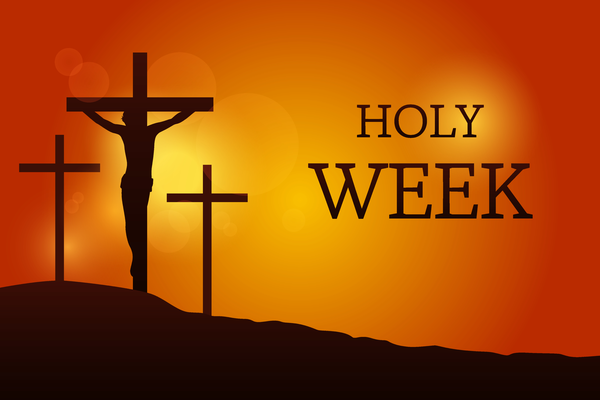
The Sunday is on Holy Week is Passion Sunday, also known as Palm Sunday. It marks the arrival of Christ in Jerusalem just days before His crucifixion.
Messianic Fulfillment on Zechariah 9:9
Rejoice greatly, O daughter of Zion! Shout, O daughter of Jerusalem! Behold, your King is coming to you; He is just and having salvation, Lowly and riding on a donkey, A colt, the foal of a donkey.
Matthew 21:1-11 NABRE

The Entry into Jerusalem.[a] 1 When they drew near Jerusalem and came to Bethphage[b] on the Mount of Olives, Jesus sent two disciples, 2 saying to them, “Go into the village opposite you, and immediately you will find an ass tethered, and a colt with her.[c] Untie them and bring them here to me. 3 And if anyone should say anything to you, reply, ‘The master has need of them.’ Then he will send them at once.” 4 [d]This happened so that what had been spoken through the prophet might be fulfilled:
5 “Say to daughter Zion,
‘Behold, your king comes to you,
meek and riding on an ass,
and on a colt, the foal of a beast of burden.’”
6 The disciples went and did as Jesus had ordered them. 7 [e]They brought the ass and the colt and laid their cloaks over them, and he sat upon them. 8 [f]The very large crowd spread their cloaks on the road, while others cut branches from the trees and strewed them on the road. 9 The crowds preceding him and those following kept crying out and saying:
“Hosanna[g] to the Son of David;
blessed is he who comes in the name of the Lord;
hosanna in the highest.”
10 And when he entered Jerusalem the whole city was shaken[h] and asked, “Who is this?” 11 And the crowds replied, “This is Jesus the prophet,[i] from Nazareth in Galilee.”

Easter (Paschal) is on Sunday, April 20, 2025:
Jesus and His Day of Resurrection. ❤️🤟🙏📿
Hebrew and Aramaic are sisters. The Aramaic word פסחא, Paschal literally means from Latin Paschalis, associated with Passover (or Easter in English), from Hebrew Pesach.
St. Paul spiritually comprehended writing from Ephesus that “Christ our Pascha (Passover) has been sacrificed for us”, quoting and suggesting an early interpretation of Exodus 12 as referring to the crucifixion of Jesus on 1 Corinthians 5:7-8 USCCB. ❤️🤟🙏📿
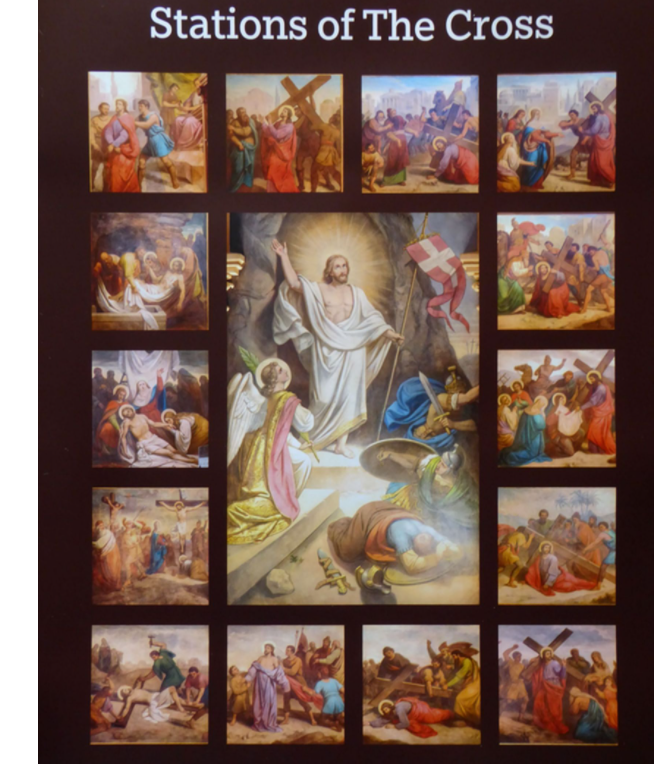
The Stations of the Cross traditionally focus on Jesus’ suffering and death, culminating in his burial, and are commonly practiced during Lent and Holy Week, therefore Easter begins at the tomb, with the promise of resurrection.
The Catholic Encyclopedia
The Way of the Cross (Stations of the Cross). 🙏📿
Explains more beautiful elaboration prayers in Mass:
Way of the Cross (Stations of the Cross)
I agree with A1 through Google: Read below.
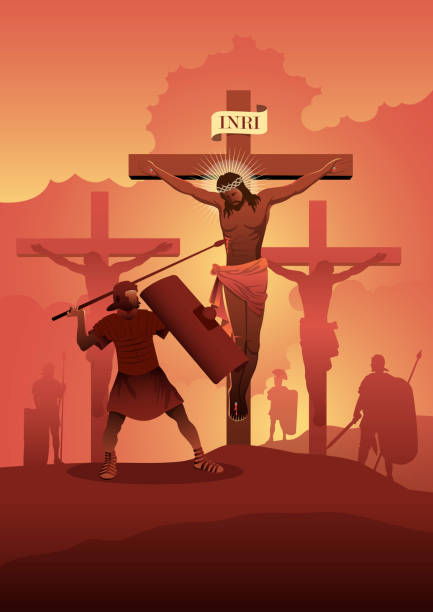
The “Paschal Mystery” in Latin is “Mysterium Paschale,” referring to Christ’s Passion, Death, Resurrection, and Ascension, which are seen as central to Christian salvation and the foundation of the liturgy.
Here’s a more detailed explanation:
 Jesus Christ is New Paschal Lamb of God
You must be logged in to post a comment.