November in Latin “Nine”

Today is November. Why do we see November on Calendar?

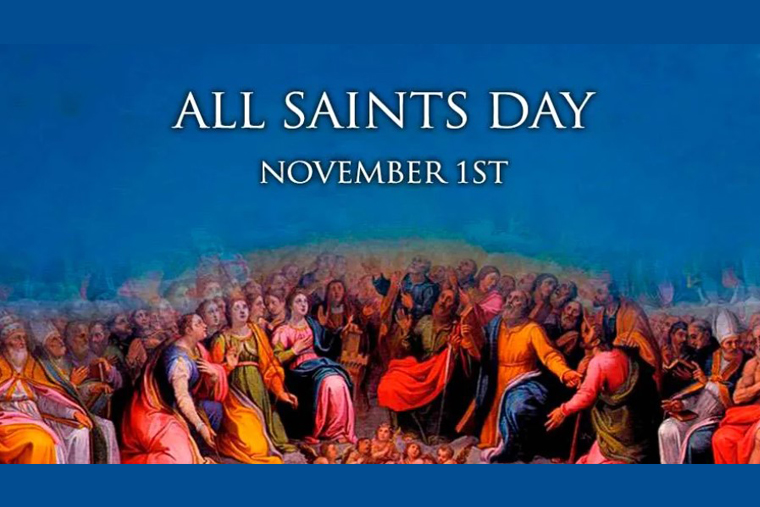
November 1st ….

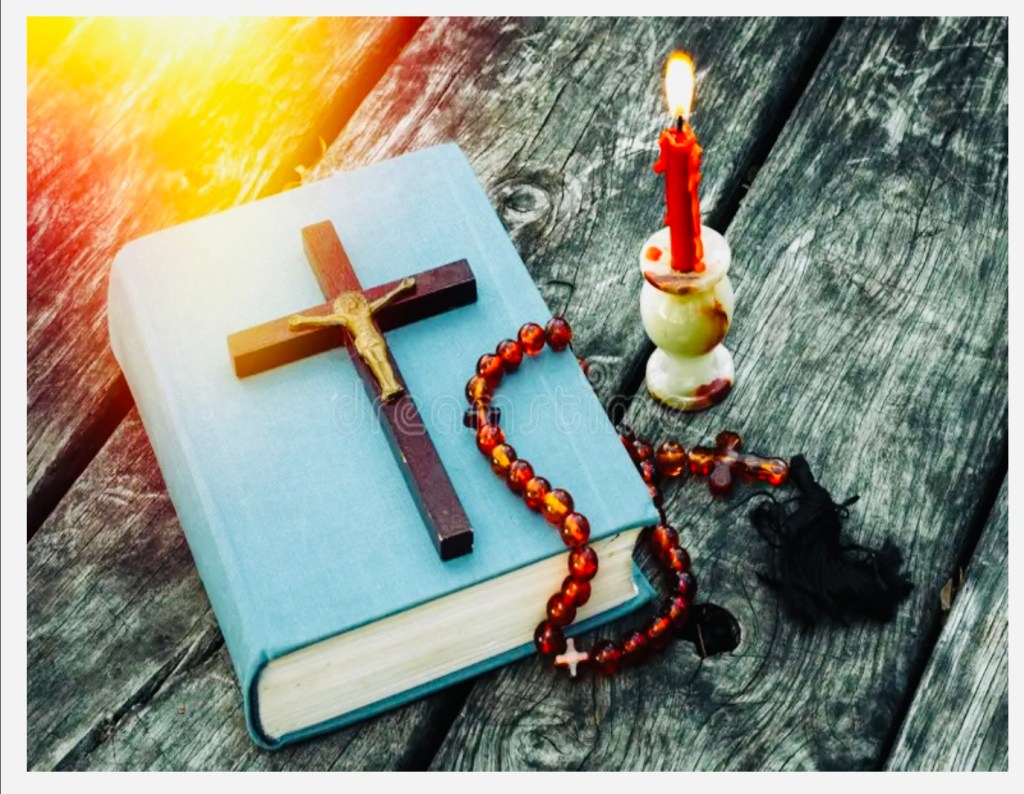
🕯️ Lit Novem [Novena] Candle 🕯️

The Latin word novem means “nine” and is the root of the Catholic tradition of the novena, which is a nine-day period of prayer:

Novenas are a traditional Catholic practice where people pray privately or in public for nine days in a row to ask for special favors, make petitions, or obtain graces. Catholics often pray novenas during times of need.

Some examples of novenas include:
Novena to St. Peregrine, prayed by cancer patients and their families
Novena to the Holy Spirit, which is said to have Biblical roots
Novena to the Miraculous Medal
Novena to the Sacred Heart of Jesus
Novena to St. Joseph
Novena to St. Jude

❤️🙏📿 🤟The tradition of the novena may have originated from the nine days between the Feast of the Ascension and Pentecost, when the disciples prayed together in the upper room. ❤️🙏📿🤟

The Church considers the novena to be a pious exercise that strengthens faith, and it grants a partial indulgence to those who take part in a public novena before certain feasts.

🙏📿 Novena is derived from the Latin “novem”, meaning nine. A novena is when a series of private or public prayer to obtain special graces, to implore special favors, or to make special petitions. The prayers are given for nine days straight for the special intention. The novena is offered as a sacrifice to God.🙏📿

The Greatest Commandment

We begin our prayer:
In the name of the Father, and of the Son, and of the Holy Spirit. Amen.
Almighty and merciful God,
by whose gift your faithful offer you
right and praiseworthy service,
grant, we pray,
that we may hasten without stumbling
to receive the things you have promised.
Through our Lord Jesus Christ, your Son,
who lives and reigns with you in the unity of the
Holy Spirit,
God, for ever and ever.
(Collect, Thirty-first Sunday in Ordinary Time)

Read the following Scripture two or three times.❤️🙏📿🙏

Mark 12:28b-34
One of the scribes came to Jesus and asked him,
“Which is the first of all the commandments?” Jesus
replied, “The first is this: Hear, O Israel! The Lord
our God is Lord alone! You shall love the Lord your
God with all your heart, with all your soul, with all
your mind, and with all your strength. The second is
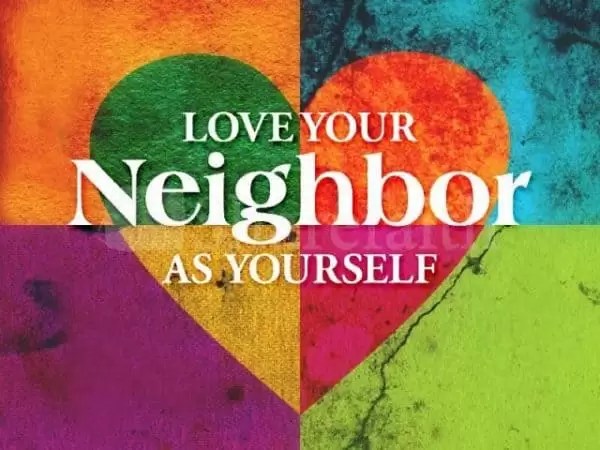
this: You shall love your neighbor as yourself.
There is no other commandment greater than these.”
*

The scribe said to him, “Well said, teacher. You are
right in saying, ‘He is One and there is no other than
he.’ And ‘to love him with all your heart, with all
your understanding, with all your strength, and to
love your neighbor as yourself’ is worth more than
all burnt offerings and sacrifices.” And when Jesus
saw that he answered with understanding, he said to
him, “You are not far from the kingdom of God.”
And no one dared to ask him any more questions.

*Mark 12:31 refers Lv 19:18Rom 13:9Gal 5:14Jas 2:8.

The New Commandment on John 13:31-35

When he had gone out, Jesus said, “Now is the Son of man glorified, and in him God is glorified; if God is glorified in him, God will also glorify him in himself, and glorify him at once. Little children, yet a little while I am with you. You will seek me; and as I said to the Jews so now I say to you, ‘Where I am going you cannot come.’ A new commandment* I give to you, that you love one another; even as I have loved you, that you also love one another. By this all men will know that you are my disciples, if you have love for one another.” – John 13:31-35


*The verse 34 I give you a new commandment: this puts Jesus on a par with Yahweh. The commandment itself is not new; cf. Lv 19:18 and the note there.

The Hebrew transliteration words for “Love your neighbor as yourself” is Ve’ahavta le’reyakha kamokha. It appears in the Bible in Leviticus 19:17-18. 🙏📿🙏❤️

Catholic Hallowtide Triduum 🙏📿

🙏📿🧡🎃🍁🍂
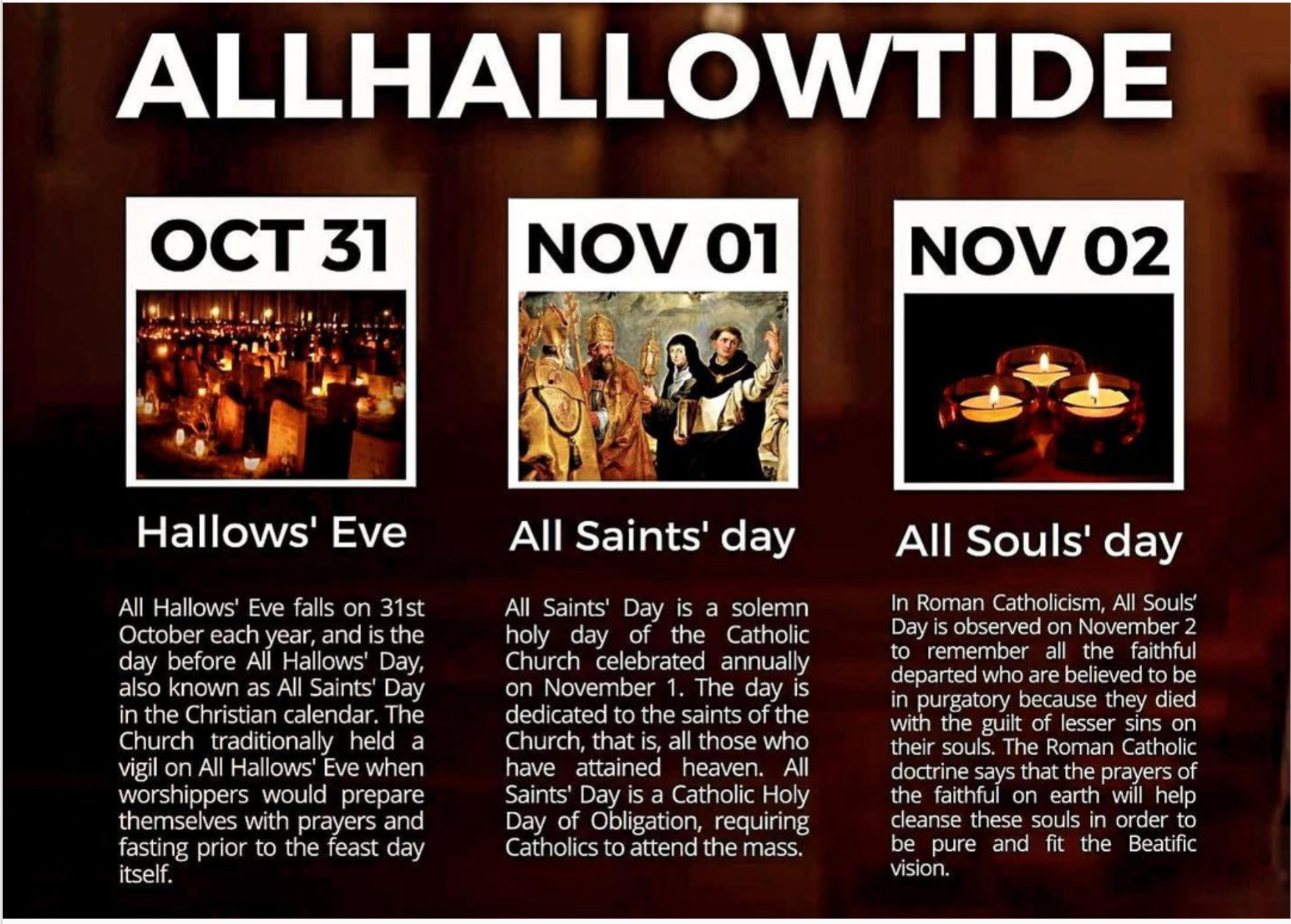
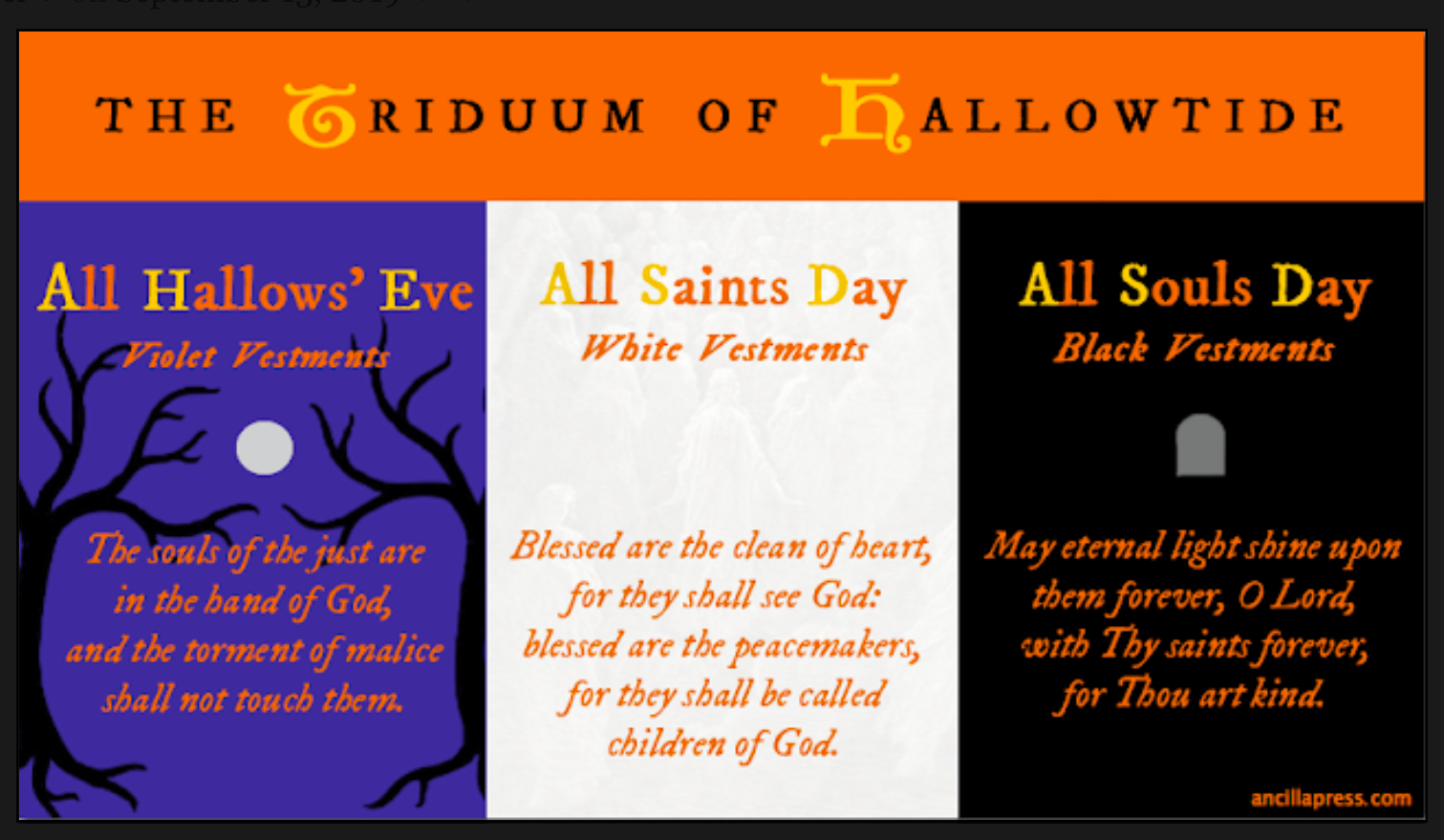
The Catholic Hallowtide triduum is a three-day period of prayer and celebration that includes All Hallows’ Eve (Halloween), All Saints’ Day, and All Souls’ Day:

All Hallows’ Eve: Also known as All Saints’ Eve, this day is celebrated on October 31. Catholics remember those who have passed away and entered heaven.

All Saints’ Day: Celebrated on November 1, this is a Holy Day of Obligation.

All Souls’ Day: Celebrated on November 2, the Church commemorates the faithful departed in Purgatory and prays for them.

The Hallowtide season is a time to remember the dead, including martyrs, saints, and all faithful departed Christians. It is also a time to reflect on Christ’s triumph over sin and death, and to meditate on our own mortality and relationship with God.

The liturgical colors associated with the Hallowtide triduum are violet for All Hallows’ Eve, white or gold for All Saints’ Day, and black for All Souls’ Day.

Commentary on Galatians 5:18-25

Catholic Daily Readings

Catholic Daily Readings

This morning I read one of beautiful sermons with commentary applying my deep meditation diving into the Word of God through Holy Spirit transform my life digest more moisture into The Divine Word (Jesus Christ) …. 🤟❤️🙏📿

Please click (hopefully works) on Here is Living Space on October 16th …

Wednesday of Week 28 of Ordinary Time – First Reading

Commentary on Galatians 5:18-25

In our final reading from Galatians today we have a magnificent passage where Paul once again touches on the Spirit-given freedom which is the characteristic of the true Christian.

He begins with a statement which we Catholics should have engraved on our hearts: 

But if you are led by the Spirit, you are not subject to the law.

In the Letter to the Romans Paul had also said: 

For all who are led by the Spirit of God are children of God.(Rom 8:14)

And just prior to these verses, he had said to the Galatians: 

Live by the Spirit, I say, and do not gratify the desires of the flesh. (Gal 5:16)

By putting oneself under the Spirit, one is not under the bondage of trying to please God by minute observance of the law for salvation or sanctification.

The sign of the Spirit’s presence is love (agape). If we are genuinely filled with the Spirit of truth and love, then we really have no need of law. As we read in the First Letter of John: 

God is love, and those who abide in love abide in God, and God abides in them. (1 John 4:16)

And as St Teresa of Calcutta (Mother Teresa) once said:

Where there is (agape) love, there is God.

St Augustine put it: 

Love and do what you like.

If we were able to be truly loving, we could not commit sin, even though in certain circumstances we might violate the letter of a particular law. On the other hand, a person who meticulously carries out the smallest detail of a law may be a very unloving person, an intolerant bigot or a person full of hate.

In practice, of course, every institution or organisation needs some kinds of rules which help members to live according to the spirit of the group. Ignatius of Loyola realised this when he wrote his detailed Constitutions for the Society of Jesus. But the principle enunciated by Paul here must remain paramount. The rules are to help advance the spirit and goals of the group; any rule or any application of a rule that frustrates that spirit or goal is to be set aside.

Paul illustrates the difference between a life which is purely self-directed (lived according to the “flesh”) and one lived in the Spirit by describing two kinds of people. These are diametrically opposed to each other and mutually exclusive.

One kind consists of those who act in a spirit of total self-indulgence, those who do what they like whenever they feel like it. It is a description of the self-centred hedonistic, individualistic, person.

He gives a partial list of 15 kinds of behaviour: 

Now the works of the flesh are obvious: sexual immorality, impurity, debauchery, idolatry, sorcery, enmities, strife, jealousy, anger, quarrels, dissensions, factions, envy, drunkenness, carousing, and things like these.

These emerge from our lower instincts and are destructive both of others and oneself. Such lists of vices and virtues were common in the ancient world, and others can be found in the New Testament. This type of behaviour is clearly at odds with what one expects in a world where God’s way is paramount.

On the other hand, those who live in the Spirit of the Father and Christ behave in a very different way. The presence and power of the Spirit in such people results in very different characteristics. Paul says:

By contrast, the fruit of the Spirit is love, joy, peace, patience, kindness, generosity, faithfulness, gentleness, and self-control. There is no law against such things.

Christian character is produced by the Holy Spirit, not by the mere moral discipline of trying to live by following the laws. Paul makes it clear that justification by faith does not result in a law-less life. The indwelling Holy Spirit produces Christian virtues in the believer’s life. These are not just ‘virtues’ which I can acquire by constant practice. Much more they are the natural outcome of a life lived in close relationship with Jesus through his Spirit, and allowing the Way of Jesus to guide one’s life. It is not a question of self-discipline or self-control, but rather of having a vision of where the good life really is and following that path.

We might notice that Paul contrasts “works of the flesh” with the “fruit” (not ‘works’) of the Spirit. It is the Spirit, not the following of laws, which lead to such qualities in a person. And, as Paul points out, there is no law covering such characteristics. They are above and beyond any law and, when they are operative, the keeping of the law is more than adequately looked after.

The only way, then, to belong to Christ is by letting go of all—for us to:

…have crucified the flesh with its passions and desires.

The Spirit of Jesus directs such lives. As stated in the NIV Bible:

“Christian character is produced by the Holy Spirit, not by the mere moral discipline of trying to live by law.”

On the other hand, absence of law does not mean lawlessness or spiritual anarchy. On the contrary, our deepening relationship with Jesus, our prayerful reflection on his teaching and our acceptance of that teaching, points us firmly in the direction of truth, love and freedom.

The Letter to the Galatians, although it seems to be dealing with a very specific problem of a very specific group of people, in fact has a great deal of relevance for Christians of every age and every place. The lesson about the freedom of the Christian is of the greatest importance. It is very sad if we see our being Christian as a restricted form of being human, with limitations set as a condition for ‘salvation’ in a future existence. It is not a means of ‘numbing’ the lower classes to accepting an unjust existence as the price for a future happiness.

To the contrary, it is the person who is a world unto himself, with no thought of the needs of others, who becomes the slave of his own passions and fantasies. And when society is full of such people, then we see the kind of behaviour that Paul deplores in today’s passage. Paradoxically, it is the loving person, the one who lives for the genuine well-being of others, who becomes the most enriched. The best society is one where, when everyone gives, then everyone gets.

St. Francis of Assisi

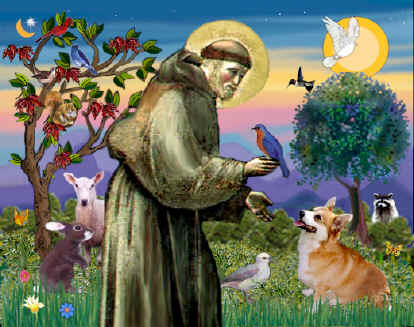
Many Catholics worldwide celebrate the Feast of St Francis of Assisi on October 4 each year. The feast commemorates the life of St Francis, who was born in the 12th century and is the Catholic Church’s patron saint of animals and the environment.

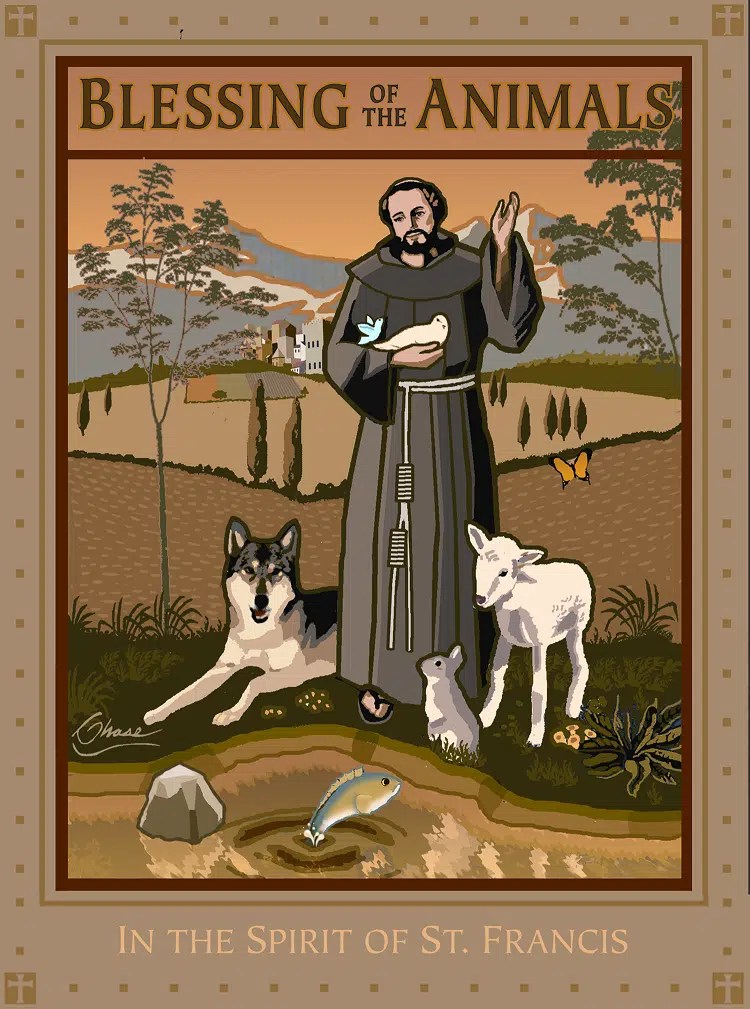
The Feast of St. Francis of Assisi is celebrated on October 4th, and it is a day to commemorate the life of the patron saint of animals and the environment. On this day, people often bring their pets and other animals to church for blessings. 

The prayer of Saint Francis for animals is a prayer to bless pets and ask for God’s healing power for animals

  • Prayer for the Blessing of Pets”Blessed are you, Lord God, maker of all living creatures. You called forth fish in the sea, birds in the air and animals on the land. You inspired Saint Francis to call all of them his brothers and sisters. We ask you to bless this pet. By the power of your love, enable it to live according to your plan. May we always praise you for all your beauty in creation. Blessed are you, Lord our God, in all your creatures! Amen”.

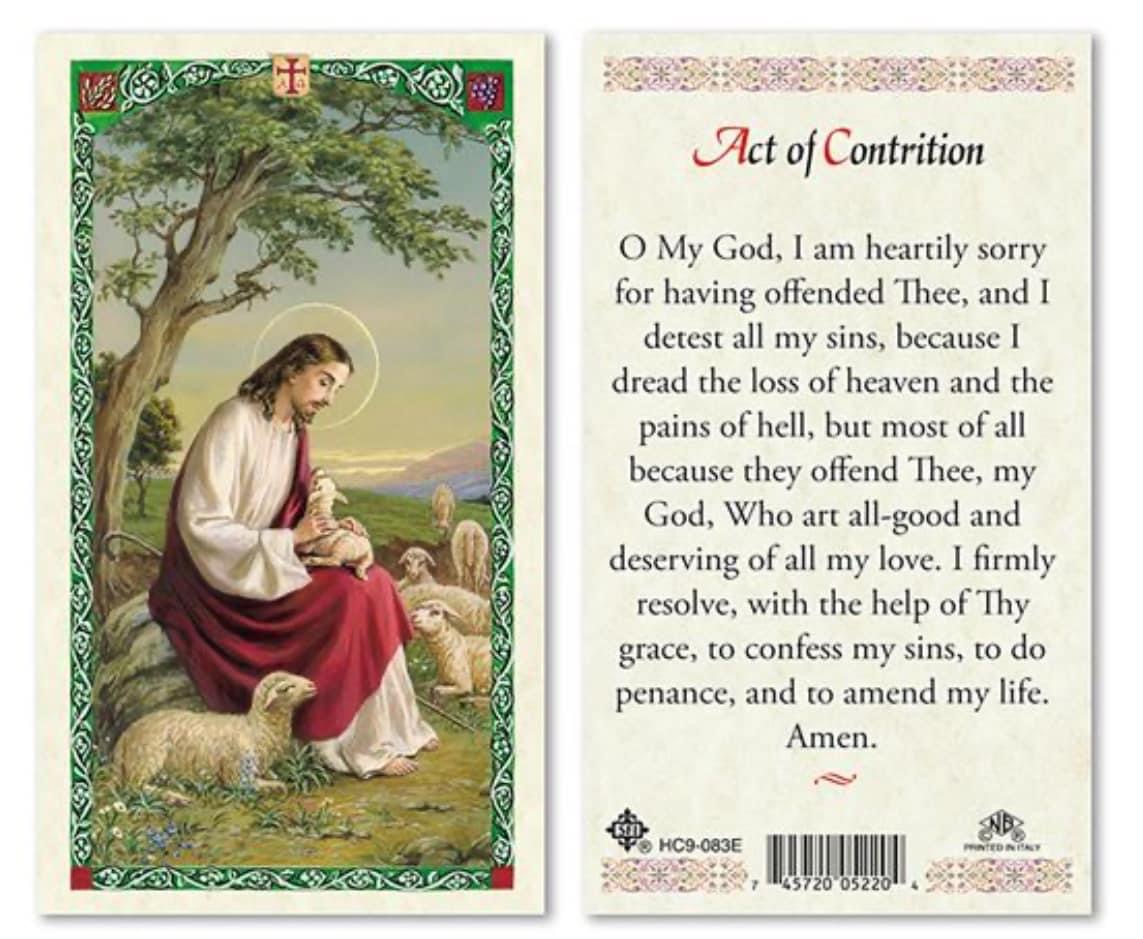
The Act of Confiteor Prayer

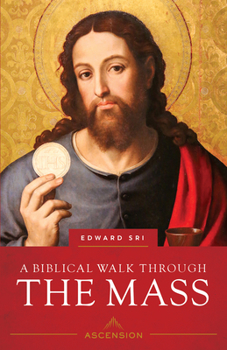
Please click A Biblical Walk Through The Mass

Hello! I recommend you read this book A Biblical Walk Through The Mass by Edward Sri and still read slowly deep meditation.

The Act of Confiteor Prayer in Latin literally means “I confess” challenges us to consider seriously four areas in which we may have fallen into sin:

  1. “In my thoughts and
  2. In my word,
  3. In what I have done and
  4. In I have failed to do.”

https://www.usccb.org/prayers/act-contrition

🤟🙏❤️✝️📿

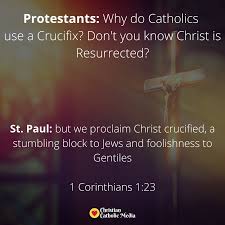
St. Paul: by proclaiming Christ — The Risen Christ crucified

First of you all I pray you all have a safe Labor’s Day weekend, and share you all my belief is receiving in The True Eucharist is Presence of Christ (Messiah means Anointed One) is The Body, Blood, Soul and Divinity according Sacred Scriptures and Traditions of Jesus Christ chose 12 Apostles followed His Sacredness Teachings founded Catholic Church since 33 AD.

St. Paul we read Scriptures is the key by proclaiming Christ — The Risen Christ is always the one who has been crucified. Amen? I suggest you all click read and pray ask Holy Spirit reveal you more spiritually comprehend what Mystery of Lord Jesus Christ is New Paschal Lamb of God:

Catholics celebrate the True Sacred Paschal (Passover) meal every week at Mass when we receive Christ is the Lamb of God, in the Eucharist.

Please click Paul Focuses on the Cross