Women of Grace by Johnnette Benkovic Williams:
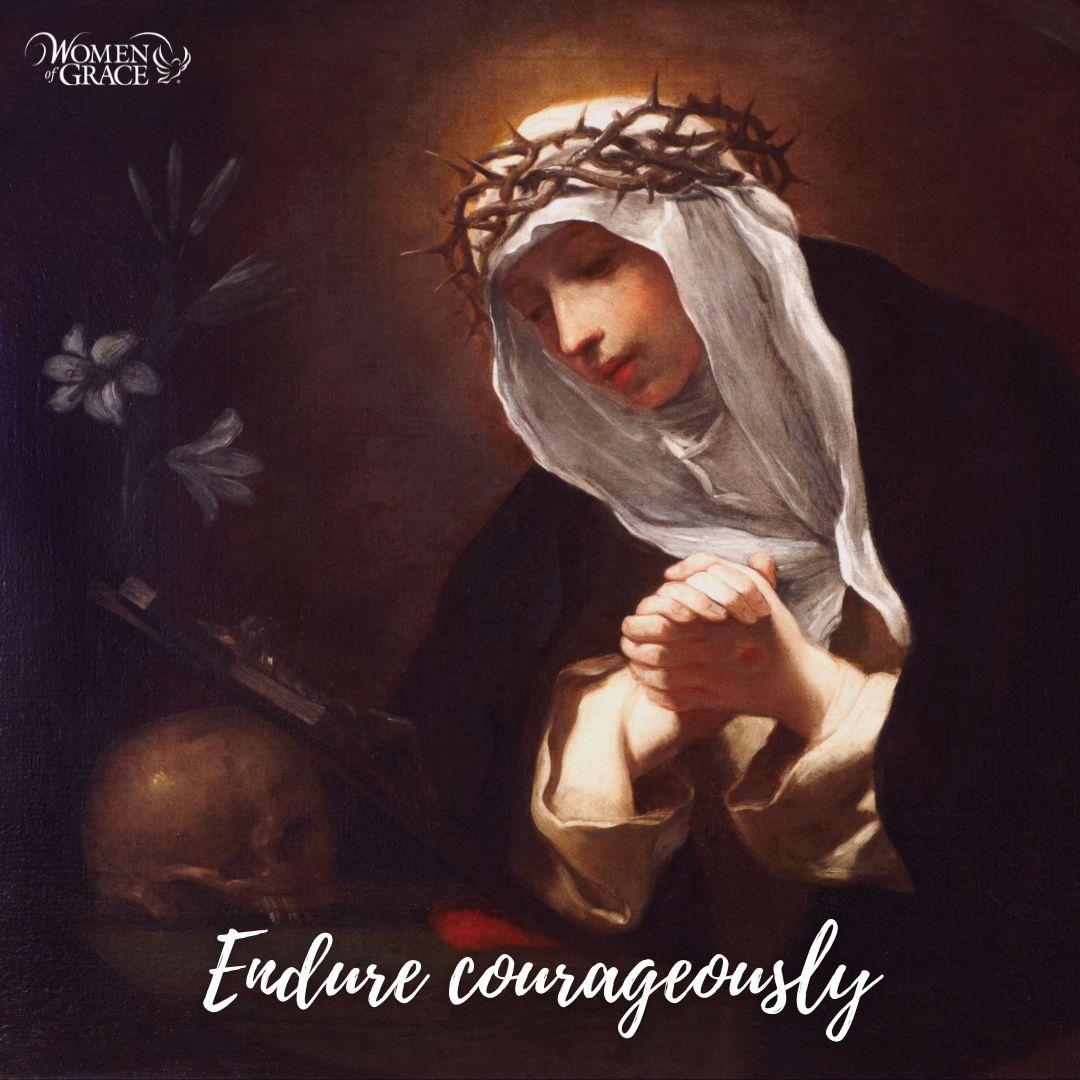
April 29
Feast of St. Catherine of Siena (1347 – 1380)
“You asked for suffering…You were, in effect, asking for love and light and knowledge of the truth. For suffering and sorrow increase in proportion to love. When love grows, so does sorrow … Endure courageously, then.”
-From The Dialogue of St. Catherine of Siena
Today’s Reflection:
What trial are you enduring courageously? Take consolation in God’s love for you and His constant presence with you in every difficulty.
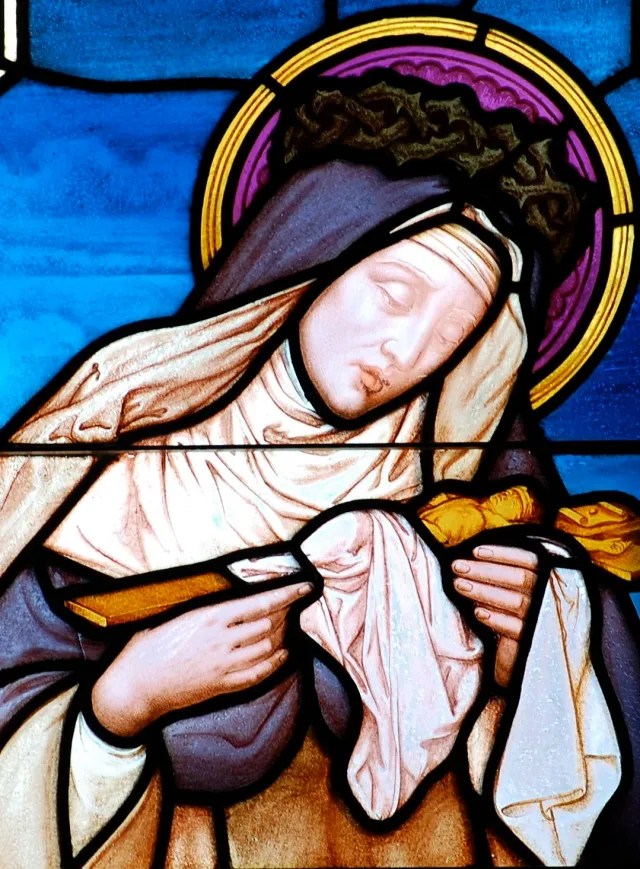
My research update who is St. Catherine of Siena?
APRIL 29 + Today is the Feast Day of Spiritual Warrior Saint Catherine of Siena + Pray for us
Catherine ranks high among the mystics and spiritual writers of the Church. She remains a greatly respected figure for her writings and political boldness to “speak truth to power” — it is exceptional for a woman, in her time period, to have had such influence in politics and on world history. She is one of the most influential writers in Catholicism, to the point that she was the first woman and one of only four women to be declared a Doctor of the Church.
Catherine was born during the outbreak of the plague in Siena, Italy on March 25, 1347. She was the 25th child born to her mother, although half of her brothers and sisters did not survive childhood. Catherine herself was a twin, but her sister did not survive infancy.
She joined the Third Order of St. Dominic when she was a teenager and received the stigmata and the Crown of Thorns at twenty-eight years of age. Catherine endured an intense pain in her head, caused by the miraculous hidden thorns which continually pierced it.
Catherine often visited hospitals and homes where the poor and sick were found. Her activities quickly attracted followers who helped her in her mission to serve them. She was drawn further into the world as she worked, and eventually she began to travel, calling for reform of the Church and for people to confess and to love God totally. She became involved in politics and was key in working to keep city states loyal to the Pope. She petitioned for peace and became involved in the fractured politics of her time, but was instrumental in restoring the Papacy to Rome and in brokering peace deals during a time of conflict and war between the Italian city states.
By 1380, the 33-year-old mystic had become ill and her illness accelerated her inability to eat and drink. Within weeks, she was unable to use her legs. She died on April 29, following a stroke just a week prior.
She died while in Rome, but her hometown, Siena, wanted to have her body. When a few of her followers from home realized they would not be able to smuggle her whole body past the guards in Rome, they took only her head, hidden in a paper bag. They were stopped by the guards and the smugglers prayed to Catherine to protect them. When the guards looked in the bag, they saw not the small, beautiful head of the saint, but hundreds of rose petals. When they returned to Siena, her head had re-materialized … Saint Catherine’s final miracle. Her head was placed in a splendid reliquary, where it remains today. The rest of her incorrupt body is preserved in the magnificent Dominican Church of Santa Maria Della Minerva in Rome.
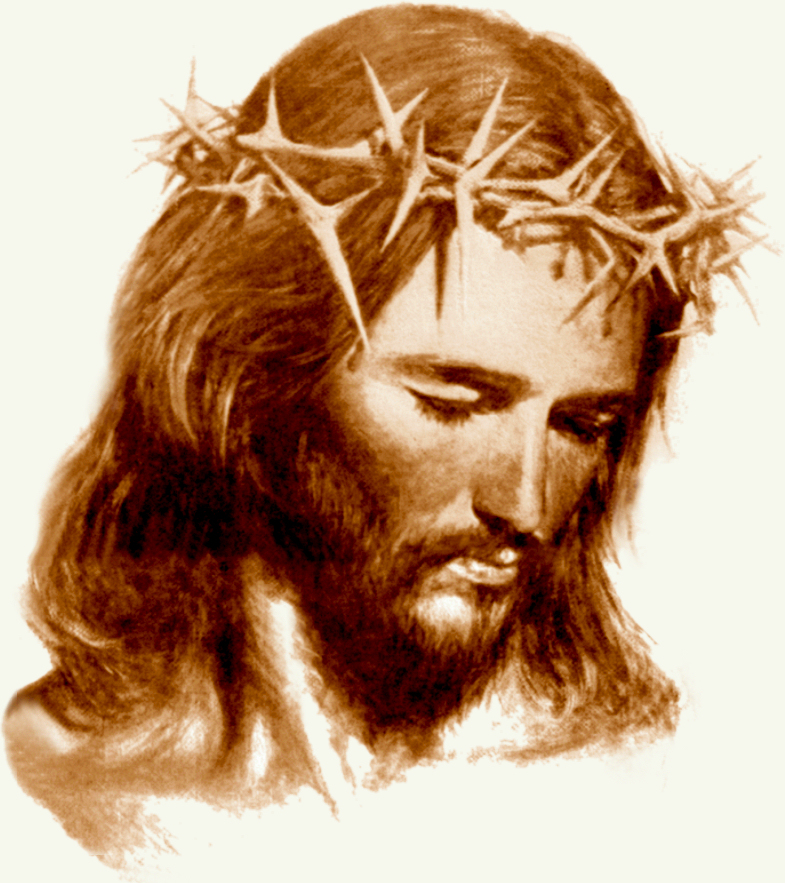
St. Catherine of Siena: Crown of Thorns
This great Saint was born in Siena, an ancient city of Tuscany, Italy, in the year 1347. She joined the third Order of St. Dominic when very young. This holy religious received the sacred stigmata of the Five Wounds and the Crown of Thorns at twenty-eight years of age. On this occasion, the Saint being sorely afflicted on account of various calumnies raised against her honor and reputation, our Divine Savior appeared to her with a crown of gold, all inlaid with pearls and precious stones in His right hand, and holding in His left a Crown of Thorns, and affectionately said to her: know my dear daughter that you must of necessity be crowned some time or other, with one of these two crowns. Therefore take your choice; either the Crown of Thorns in this transitory life, and have the other reserved for your everlasting glory; or take the crown of gold at present and hereafter that of thorns. “It is a long time, O Lord, answered the holy virgin, since I have made an entire renunciation of my own will to follow but Yours, and consequently, it is not for me to choose anything. If, however, You will have me to answer, I desire to select that which is most acceptable to Your Divine Heart: and the better to imitate Your example, I do most willingly accept the crown of suffering and ignominy.” Having said this, St. Catherine took from our Savior’s left hand the Crown of Thorns and placed it upon her head, she fervently pressed it down with such force, that from that time this illustrious Saint always endured an intense pain in her head, caused by the miraculous hidden thorns which continually pierced it.
During her short life, this admirable servant of God worked hard and suffered much for the welfare of the Church in general, and for her native country in particular. She died in Rome while on her mission of charity, April 29th, 1380, when scarcely thirty-three years old. St. Catherine was canonized by Pope Pius II, 80 years after her holy death. Her body is preserved incorrupt in the magnificent Dominican Church of Santa Maria Della Minerva in the Eternal City, of which she has been declared by the present Pope Pius IX, one of its principal patron Saints. The left hand of this holy religious is kept in a rich reliquary in the convent of St. Sixtus and St. Dominic on the Palatine hill in Rome, and her left foot is preserved as a precious relic in the city of Venice, on both of which members the miraculous impressions of the sacred stigmas are at this moment plainly visible. [Bolland. Acta s.s 55. 30th April]


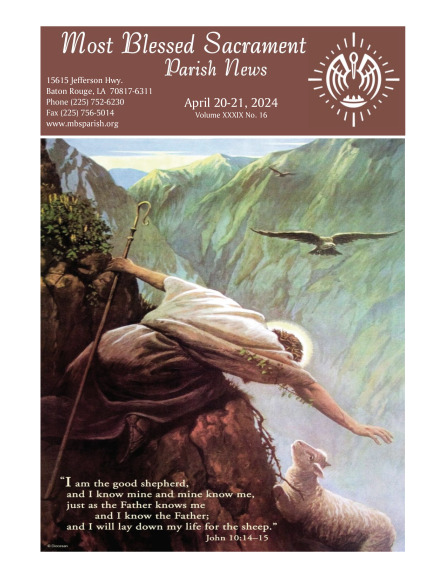






 Jesus Christ is New Paschal Lamb of God
You must be logged in to post a comment.