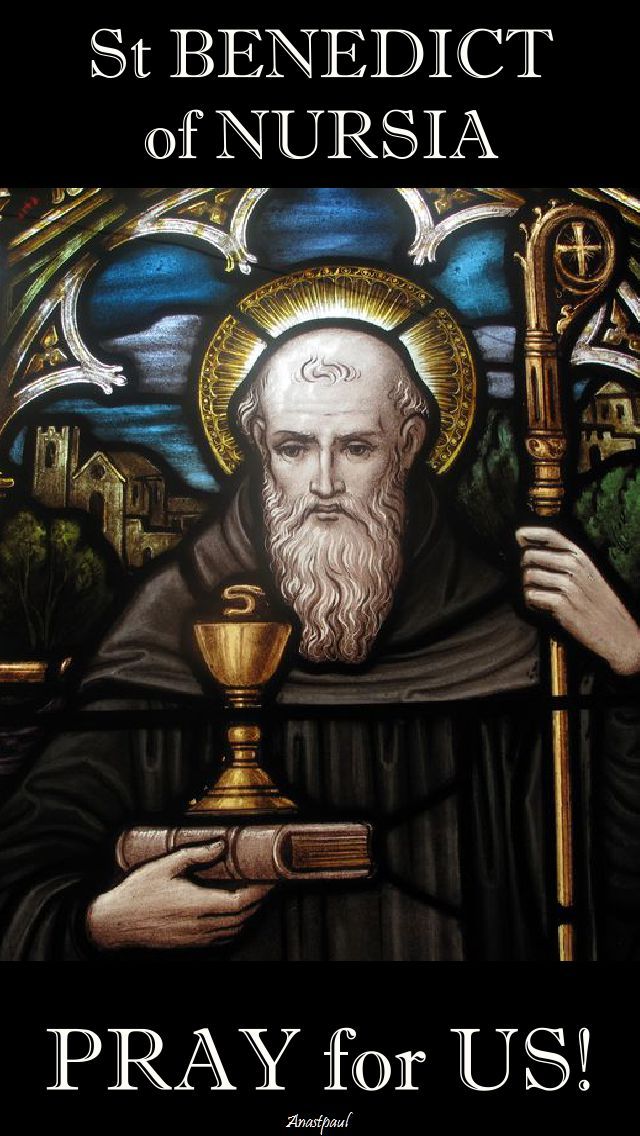
Saint Benedict

Feast is on July 11 of Saint Benedict, Abbot—Memorial

c. 480–c. 547
Patron Saint of Europe, monks and religious orders, ​​architects, dying people, cave explorers, schoolchildren, agricultural workers, civil engineers, and coppersmiths
Invoked against erysipelas, fever, gallstones, inflammatory diseases, kidney disease, nettle rash, poison, temptations, and witchcraft
Canonized by Pope Honorius III in 1220
Declared Patron Saint of Europe by Pope Paul VI in 1964
Liturgical Color: White

Quote:
Hearken continually within thine heart, O son, giving attentive ear to the precepts of thy master. Understand with willing mind and effectually fulfill thy holy father’s admonition; that thou mayest return, by the labor of obedience, to Him from Whom, by the idleness of disobedience, thou hadst withdrawn. To this end I now address a word of exhortation to thee, whosoever thou art, who, renouncing thine own will and taking up the bright and all-conquering weapons of obedience, dost enter upon the service of thy true king, Christ the Lord. ~From the Prologue of the Rule of Saint Benedict

Reflection: Benedict was born into Roman nobility in Nursia, central Italy, roughly 100 miles northeast of Rome. His father was a prefect for the Western Roman Empire, which had fallen to the barbarians a decade prior to his birth. He had a twin sister named Scholastica, who also became a saint. As a youth, Benedict was sent to Rome for studies. However, he quickly became disillusioned by the prevalent immorality and disorder, particularly among his classmates. At the age of twenty, to find peace in his soul and avoid the traps that had ensnared many of his peers, he moved to the countryside of the town of Affile, about forty miles from Rome. Accompanying him was his nurse who cared for him like a mother. They moved in with some virtuous men in the Church of Saint Peter. While there, his nurse accidentally broke a dish used to sift wheat and was distraught. Witnessing this, Benedict miraculously mended the dish and returned it to her. News of this miracle spread quickly, and Benedict became the talk of the town.

Benedict wasn’t interested in the praise of men; he sought only holiness. Leaving his nurse behind, he moved closer to the town of Subiaco and took up residence in a cave. Nearby, he met a holy monk, Romanus, whom Benedict consulted for spiritual advice. At Romanus’ encouragement, Benedict took on the monastic habit and lived in the cave for the next three years as a hermit. Romanus visited him frequently, bringing him food as needed. As a hermit, Benedict prayerfully sought to root out all sin in his life, especially the three temptations common to most men: “the temptation of self-affirmation and the desire to put oneself at the center, the temptation of sensuality and, lastly, the temptation of anger and revenge” (Pope Benedict XVI, General Audience, April 9, 2008).

After having conquered these temptations, Benedict was invited by a group of local monks to become their abbot. He reluctantly agreed, recognizing that his form of religious life contrasted sharply with theirs. After a brief time as abbot, the monks so opposed him that, according to legend, they attempted to kill him by poisoning his wine. When Benedict blessed the wine, the glass shattered, and the scheme was revealed. Shortly afterward, Benedict left the monks and returned to his cave before emerging to found monasteries in the area over the following years. Many admired him and were attracted to his radical way of living, while others envied him and sought his life. Numerous miracles are said to have taken place through his intervention, such as raising a monk from the dead, healing a boy, foreseeing future events, multiplying food and wine, expelling demons, and walking across water.

After founding twelve small monasteries in the Subiaco area, Benedict felt it was time for a fresh start. One of the local priests had tried to poison him and was relentless in his persecutions. He even sent a naked woman to one of Benedict’s monasteries to tempt him and the monks. In addition to this persecution, some monks found his way of life challenging, and the locals were more taken with the stories of his miracles than with his devotion to God. Therefore, he moved about sixty miles southeast to the mountaintop of Monte Cassino, where, at the age of fifty, he founded his most famous monastery.

Upon arriving at Monte Cassino, Benedict found a temple built to the Roman god Apollo. He destroyed it, built two chapels in its place, and then constructed a monastery nearby. Before this, most monasteries consisted of loosely associated hermits living independently but also somewhat communally. Having seen the failure of this form of monasticism in Subiaco, Benedict adopted a new approach. Instead of several smaller monasteries, he built one large monastery where numerous monks could live. He wrote a rule, later known as “The Rule of Saint Benedict,” that guided his newly established monastery at Monte Cassino and eventually became the normative rule for Western monasticism for the next 1,500 years. Hence, Saint Benedict is often referred to as the “Father of Western Monasticism.”

The “Rule” consists of seventy-three short chapters that address both the spiritual and administrative aspects of a healthy monastery. The Rule lays out guidelines for monastic living, particularly in areas of stability, conversion of life, obedience, prayer, work, community life, hospitality, and humility. The Rule takes into consideration the fact that most monks governed under the Rule did not engage in extreme penances or other radical charisms. Instead, the Rule fosters a balanced community life in which individual monks can discover a daily rhythm of prayer, work, and study conducive to a deeper and personal calling to holiness.

While Benedict set up his community at Monte Cassino, his sister, Scholastica, helped found a monastery for women. It’s likely that Benedict played a role in this founding and that his Rule guided the nuns’ daily life. Benedict and Scholastica remained close until her death, which he prophesied. Upon her death, Benedict had a vision of Scholastica being taken to Heaven. He brought her body back to Monte Cassino, where she was buried in his future grave, and which they still share.

After fewer than ten years at Monte Cassino, Benedict died, but his influence on the Church and all of Europe was just beginning. Monasteries across Europe, guided by the Rule of Saint Benedict, developed into important centers for education, medicine, culture, and social development. From these monasteries, universities were born. The monasteries helped to preserve ancient texts, stabilize communities, influence nobility, and draw many to Christ. Their liturgies flourished and influenced the wider Church, making many of these monasteries the central teachers of prayer and worship. For these reasons, many have referred to Saint Benedict as not only the father of monasticism but also the father of modern Europe, given the influence that monasteries using his Rule have had on Europe and the world as a whole. For this reason, Pope Paul VI declared Saint Benedict the Patron Saint of Europe in 1964.

As we honor this important figure in Church and world history, reflect on his humble beginnings. He witnessed the immoralities of his day and fled from those temptations to embrace a life of holiness. At that time, it would have been difficult for him to comprehend the influence he would have had on all of Europe and, in fact, upon the whole world for many centuries to come. Reflect on the fact that God also calls you to flee from sin and embrace a life of holiness. When that happens, God can do great things through you in ways you may never comprehend. Follow the example of Saint Benedict and commit yourself to holy daily living, and leave it up to God to use you as He wills.

Prayer: Saint Benedict, you witnessed the moral corruption in Rome at an early age and fled to the wilderness to seek out God’s will. Through your prayerful obedience to God’s will, inestimable good fruit has been borne. Please pray for me that I will always seek out God’s will in my life, leaving behind the many temptations to sin that I encounter, so that God can use me in ways known only to Him. Saint Benedict, pray for me. Jesus, I trust in You.
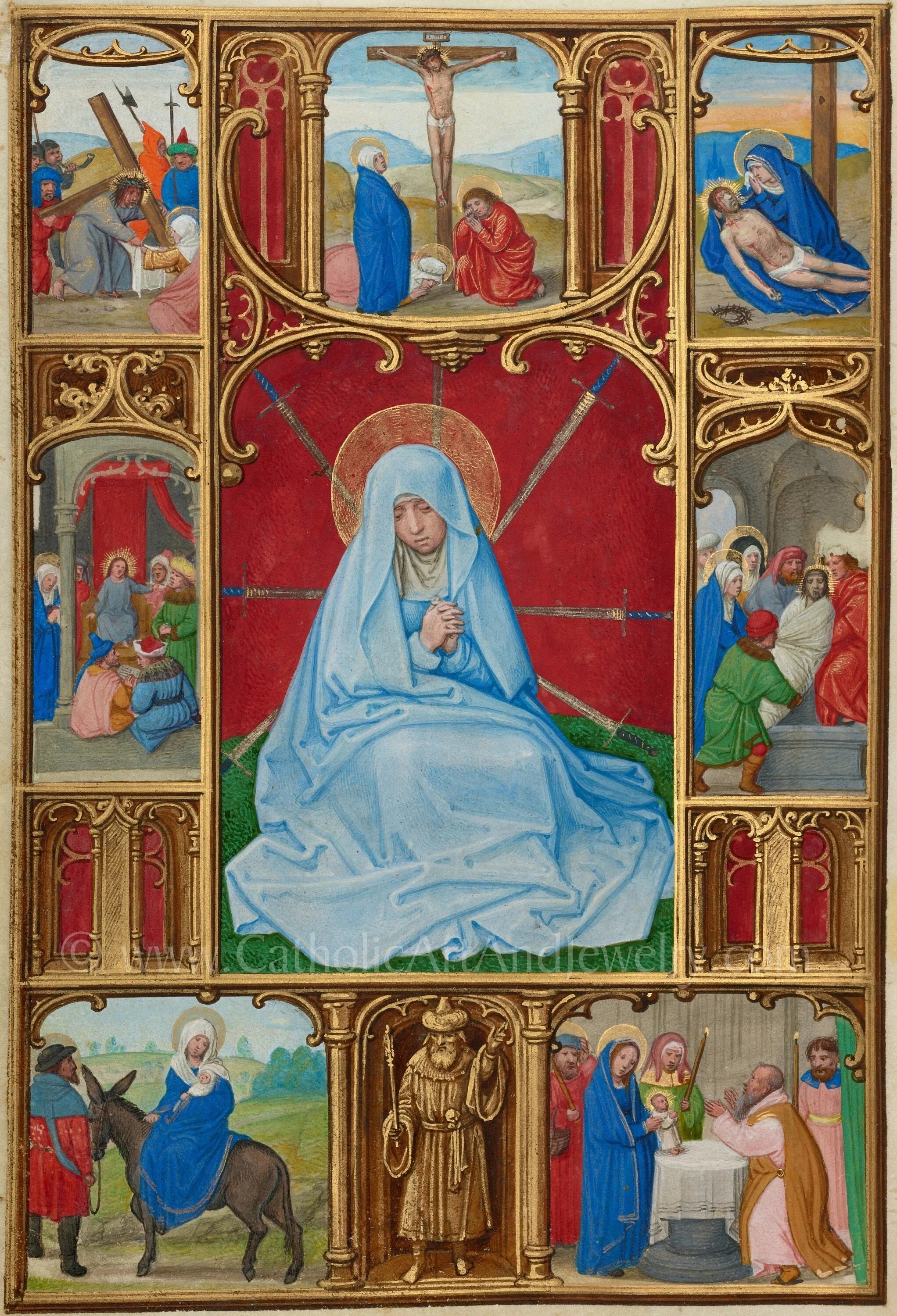
Seven Sorrows of Mary

I enjoy learning about Seven Sorrows of Mary and read excellent article about The Seven Dolors of the Blessed Virgin Mary click on ETWN

https://www.ewtn.com/catholicism/library/seven-dolors-of-the-blessed-virgin-mary-5437

From Hallow: How to Pray: 7 Sorrows Rosary {Shortened Version}

Begin

In the name of The Father, and The Son, and The Holy Spirit. Amen.

O God, come to my assistance.

O Lord, make haste to help me.

Glory be to the Father, and to the Son, and to the Holy Spirit.

As it was in the beginning, is now, and ever shall be, world without end. Amen.

Now, pray 1 Hail Mary.

The First Sword of Sorrow: The Prophecy of Simeon

I grieve for thee, O Mary most sorrowful, in the affliction of thy tender heart at the prophecy of the holy and aged Simeon. Dear Mother, by thy heart so afflicted, obtain for me the virtue of humility and the gift of the holy fear of God.

Now, pray 1 Hail Mary.

The Second Sword of Sorrow: The Flight Into Egypt

I grieve for thee, O Mary most sorrowful, in the anguish of thy most affectionate heart during the flight into Egypt and thy sojourn there. Dear Mother, by thy heart so troubled, obtain for me the virtue of generosity, especially toward the poor, and the gift of piety.

Now, pray 1 Hail Mary.

The Third Sword of Sorrow: The Loss of Jesus in the Temple

I grieve for thee, O Mary most sorrowful, in those anxieties which tried thy troubled heart at the loss of thy dear Jesus. Dear Mother, by thy heart so full of anguish, obtain for me the virtue of chastity and the gift of knowledge.

Now, pray 1 Hail Mary.

The Fourth Sword of Sorrow: Mary Meets Jesus on His Way to Calvary

I grieve for thee, O Mary most sorrowful in the consternation of thy heart at meeting Jesus as he carried His Cross. Dear Mother, by thy heart so troubled, obtain for me the virtue of patience and the gift of fortitude.

Now, pray 1 Hail Mary.

The Fifth Sword of Sorrow: Mary Stands at the Foot of the Cross

I grieve for thee O Mary, most sorrowful, in the martyrdom which thy generous heart endured in standing near Jesus in His agony. Dear Mother, by thy afflicted heart, obtain for me the virtue of temperance and the gift of counsel.

Now, pray 1 Hail Mary.

The Sixth Sword of Sorrow: Jesus is Taken Down From the Cross

I grieve for thee, O Mary most sorrowful, in the wounding of thy compassionate heart, when the side of Jesus was struck by the lance and His Heart was pierced before His body was removed from the Cross. Dear Mother, by thy heart thus transfixed, obtain for me the virtue of fraternal charity and the gift of understanding.

Now, pray 1 Hail Mary.

The Seventh Sword of Sorrow: The Burial of Jesus

I grieve for thee, O Mary most sorrowful, for the pangs that wrenched thy most loving heart at the burial of Jesus. Dear Mother, by thy heart sunk in the bitterness of desolation, obtain for me the virtue of diligence and the gift of wisdom.

Now, pray 1 Hail Mary.

Pray for us, O Virgin most sorrowful, that we may be made worthy of the promises of Christ.

Let us pray: Let intercession be made for us, we beseech Thee, O Lord Jesus Christ, now and at the hour of our death, before the throne of Thy mercy, by the Blessed Virgin Mary, Thy Mother, whose most holy soul was pierced by a sword of sorrow in the hour of Thy bitter Passion. Through Thee, Jesus Christ, Savior of the world, Who with the Father and the Holy Spirit lives and reigns, world without end. In the name of the Father, and of the Son, and of the Holy Spirit. Amen.

Spiritual parallel of King Yeshua on Yom Kippur

Update on May 6, 2025 I am free from bondage of Mosaic Covenant Laws following ceremonial laws from Old Testament (Tanakh) through Hebrew Roots Movement that blog was on October 5, 2022 through my Holy Spirit woke me researching more realization to Jesus (Yeshua) Himself is New Yom Kippur. I spiritually comprehended the Whole Messianic Fulfillment is all about Jesus Christ. The first five books literally is Torah, whole prophets and psalms

On Luke 24 we read Jesus appeared mysteriously two disciples walked Emmaus Road and joined on table for supper, took bread and blessed it and broke it, then gave it to them (two disciples) on Sunday after last week of dawn Sunday The Risen Lord Jesus Christ. Two disciples were amazed at Presence of Jesus Christ is True Eucharist.

‘Then he (Jesus) said to them (disciples), “Don’t you remember the words that I spoke to you when I was still with you? I told you that I would fulfill everything written about me, including all the prophecies from the law of Moses through the Psalms and the writings of the prophets.” ‘

Luke 24:44

God transform my spiritual reawakening more heed to Jesus that’s how I pray researching His Sacred Scriptures and Sacred Traditions. I am Christian endorse Jesus founded the Catholic (Universal) Church on 33 AD and follow His Commandments (Mitzvot) You all are my thoughtful prayers. ❤️🤟🙏📿

Hebrews 9 Chapter TLV Messiah Enters the Heavenly Holies

9 Now even the first one had regulations for worship and the earthly sanctuary. [a] For a tent was prepared: in the outer[b] part were the menorah, the table, and the presentation of the bread[c]—this is called the Holy Place. Beyond the second curtain[d] was a dwelling called the Holy of Holies. [e] It held a golden altar of incense and the ark of the covenant, completely covered with gold. In the ark was a golden jar holding the manna, Aaron’s rod that budded, and the tablets of the covenant[f]— and above it, cherubim of glory overshadowing the mercy seat.[g] But it is not now possible to speak in detail about these things.

Now with these things prepared this way,

the kohanim
    do continually enter
        into the outer tent[h]
            while completing the services;
        but into the inner,[i]
    once a year,

the kohen gadol alone[j]—and not without blood which he offers for himself and for the unintentional sins[k] of the people. By this the Ruach ha-Kodesh makes clear that the way into the Holies has not yet been revealed while the first tent is still standing. It is a symbol for the present time. Accordingly, gifts and sacrifices are being offered that cannot make the worshiper perfect with respect to conscience. 10 These relate only to food and drink and various washings[l]—regulations for the body imposed until a time of setting things straight.

11 But when Messiah appeared as Kohen Gadol of the good things that have now come, passing through the greater and more perfect Tent not made with hands (that is to say not of this creation), 12 He entered into the Holies once for all—not by the blood of goats and calves but by His own blood, having obtained eternal redemption. 13 For if the blood of goats and bulls[m] and the ashes of a heifer sprinkling those who have been defiled[n] sanctify for the cleansing of the flesh, 14 how much more will the blood of Messiah—who through the eternal Spirit offered Himself without blemish to God—cleanse our[o] conscience from dead works to serve the living God?

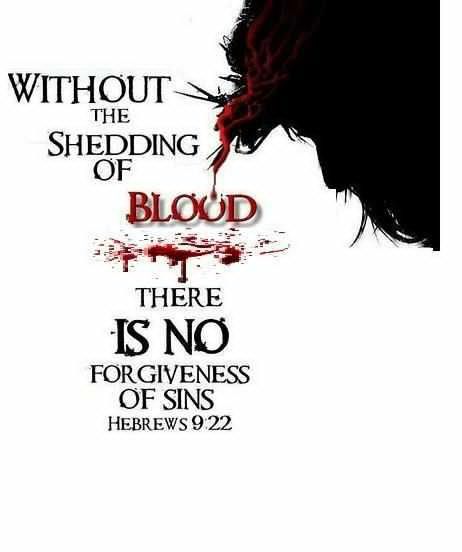
15 For this reason He is the mediator of a new covenant,[p] in order that those called may receive the promised eternal inheritance—since a death has taken place that redeems them from violations under the first covenant. 16 For where there is a covenant, the death of the one who made it must be established. [q] 17 For a covenant is secured upon the basis of dead bodies, since it has no strength as long as the one who made it lives. 18 That is why not even the first covenant was inaugurated without blood. 19 For when every commandment had been spoken by Moses to all the people according to the Torah, he took the blood of the calves and goats, with water and scarlet wool and hyssop, and he sprinkled both the book itself and all the people. 20 He said, “This is the blood of the covenant which God commanded you.” [r] 21 And in the same way, he sprinkled the tabernacle and all the vessels of the ministry with the blood. [s] 22 And nearly everything is purified in blood according to the Torah, and apart from the shedding of blood there is no forgiveness.[t]

23 Therefore it was necessary for the replicas of these heavenly things to be purified with these sacrifices—but the heavenly things themselves with better sacrifices than these. 24 For Messiah did not enter into Holies made with hands—counterparts of the true things—but into heaven itself, now to appear in God’s presence on our behalf. 25 And He did not offer Himself again and again—as the kohen gadol enters into the Holy of Holies year after year with blood that is not his own. 26 For then He would have needed to suffer again and again from the foundation of the world. But as it is, He has been revealed once and for all at the close of the ages—to put away sin by the sacrifice of Himself. 27 And just as it is appointed for men to die once, and after this judgment, [u] 28 so also Messiah, was offered once to bear the sins of many.[v] He will appear a second time, apart from sin, to those eagerly awaiting Him for salvation.[w]

Footnotes

  1. Hebrews 9:2 cf. Exod. 25:823-29.
  2. Hebrews 9:2 Lit. first.
  3. Hebrews 9:2 cf. Lev. 24:5-9.
  4. Hebrews 9:3 Heb. parokhet.
  5. Hebrews 9:4 cf. Exod. 26:31-3340:3.
  6. Hebrews 9:4 cf. Exod. 25:10-161 Kings 8:7.
  7. Hebrews 9:5 cf. Exod. 25:18-19.
  8. Hebrews 9:6 Lit. first tent, i.e. the Holy Place; cf. Exod. 27:20-21.
  9. Hebrews 9:7 Lit. second, i.e. the Holy of Holies; cf. Lev. 16:234.
  10. Hebrews 9:7 cf. Exod. 30:10Lev. 16:1534.
  11. Hebrews 9:7 cf. Num. 15:2230.
  12. Hebrews 9:10 cf. Lev. 11Num. 6:319:13.
  13. Hebrews 9:13 cf. Lev. 16:14-15.
  14. Hebrews 9:13 cf. Num. 19:917-18.
  15. Hebrews 9:14 Some mss. read your.
  16. Hebrews 9:15 Heb. brit hadashah.
  17. Hebrews 9:17 cf. Exod. 24:8(LXX)Ps. 50:5(49:5 LXX); Lk. 22:29.
  18. Hebrews 9:21 Exod. 24:8.
  19. Hebrews 9:22 cf. Exod. 29:12Lev. 8:15.
  20. Hebrews 9:22 Lit. pardon, cancellation, removal; cf. Mt. 6:12Mk. 1:4Lev. 16:26(LXX).
  21. Hebrews 9:28 cf. Gen. 3:19Dan. 12:2.
  22. Hebrews 9:28 cf. Isa. 53:12.
  23. Hebrews 9:28 cf. Mt. 1:21Rom. 11:26-27.

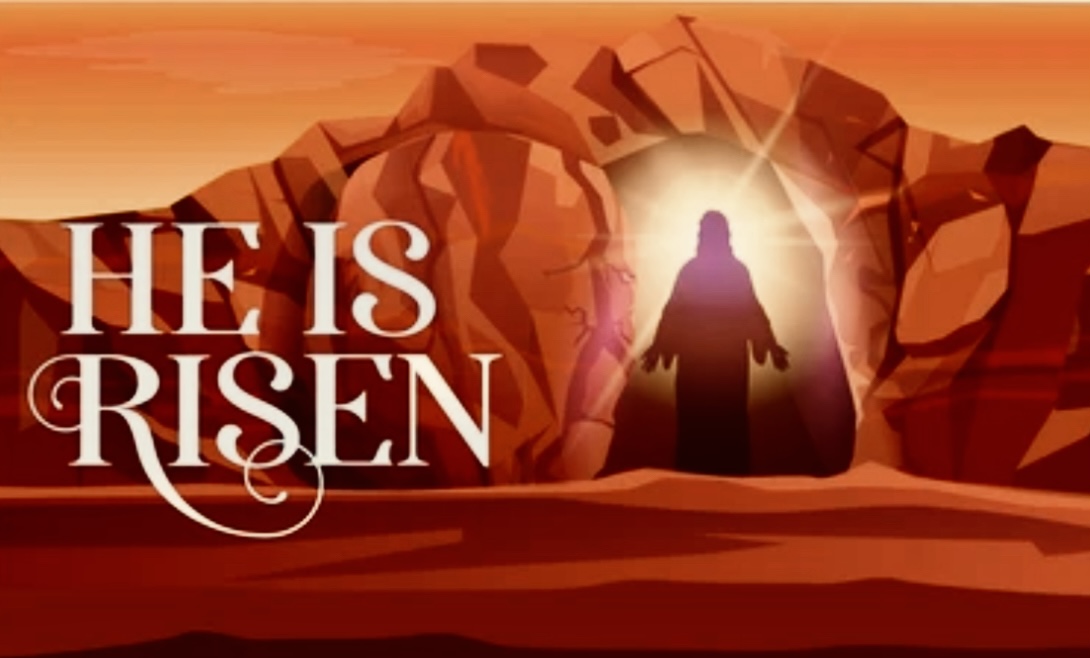
Jesus is risen early dawn on Sunday.

Jesus rose from the dead “on the first day of the week.”* Because it is the “first day,” the day of Christ’s Resurrection recalls the first creation. Because it is the “eighth day” following the sabbath,* it symbolizes the new creation ushered in by Christ’s Resurrection. For Christians it has become the first of all days, the first of all feasts, the Lord’s Day (he kuriake hemera, diesdominica)—Sunday:
We all gather on the day of the sun, for it is the first day [after the Jewish sabbath, but also the first day] when God, separating matter from darkness, made the world; and on this same day Jesus Christ our Savior rose from the dead.* – The Third Commandment, CCC 2174

Chapter 28[a]

The Resurrection of Jesus. After the sabbath, as the first day of the week was dawning,[b] Mary Magdalene and the other Mary came to see the tomb. 

Footnotes

  1. 28:1–20 Except for Mt 28:1–8 based on Mk 16:1–8, the material of this final chapter is peculiar to Matthew. Even where he follows Mark, Matthew has altered his source so greatly that a very different impression is given from that of the Marcan account. The two points that are common to the resurrection testimony of all the gospels are that the tomb of Jesus had been found empty and that the risen Jesus had appeared to certain persons, or, in the original form of Mark, that such an appearance was promised as soon to take place (see Mk 16:7). On this central and all-important basis, Matthew has constructed an account that interprets the resurrection as the turning of the ages (Mt 28:2–4), shows the Jewish opposition to Jesus as continuing to the present in the claim that the resurrection is a deception perpetrated by the disciples who stole his body from the tomb (Mt 28:11–15), and marks a new stage in the mission of the disciples once limited to Israel (Mt 10:5–6); now they are to make disciples of all nations. In this work they will be strengthened by the presence of the exalted Son of Man, who will be with them until the kingdom comes in fullness at the end of the age (Mt 28:16–20).
  2. 28:1 After the sabbath…dawning: since the sabbath ended at sunset, this could mean in the early evening, for dawning can refer to the appearance of the evening star; cf. Lk 23:54. However, it is probable that Matthew means the morning dawn of the day after the sabbath, as in the similar though slightly different text of Mark, “when the sun had risen” (Mk 16:2). Mary Magdalene and the other Mary: see notes on Mt 27:55–5657–61. To see the tomb: cf. Mk 16:1–2 where the purpose of the women’s visit is to anoint Jesus’ body.

Very early when the sun had risen, on the first day of the week, they came to the tomb. 

VIII. The Resurrection Narrative[a]

Chapter 24

The Resurrection of Jesus. But at daybreak on the first day of the week they took the spices they had prepared and went to the tomb.

Footnotes

  1. 24:1–53 The resurrection narrative in Luke consists of five sections: (1) the women at the empty tomb (Lk 23:56b–24:12); (2) the appearance to the two disciples on the way to Emmaus (Lk 24:13–35); (3) the appearance to the disciples in Jerusalem (Lk 24:36–43); (4) Jesus’ final instructions (Lk 24:44–49); (5) the ascension (Lk 24:50–53). In Luke, all the resurrection appearances take place in and around Jerusalem; moreover, they are all recounted as having taken place on Easter Sunday. A consistent theme throughout the narrative is that the suffering, death, and resurrection of Jesus were accomplished in fulfillment of Old Testament promises and of Jewish hopes (Lk 24:19a2126–274446). In his second volume, Acts, Luke will argue that Christianity is the fulfillment of the hopes of Pharisaic Judaism and its logical development (see Acts 24:10–21).

Chapter 20[a]

The Empty Tomb.[b] On the first day of the week,Mary of Magdala came to the tomb early in the morning, while it was still dark,[c] and saw the stone removed from the tomb.

Footnotes

20:1 Still dark: according to Mark the sun had risen, Matthew describes it as “dawning,” and Luke refers to early dawn. Mary sees the stone removed, not the empty tomb.

20:1–31 The risen Jesus reveals his glory and confers the Spirit. This story fulfills the basic need for testimony to the resurrection. What we have here is not a record but a series of single stories.

20:1–10 The story of the empty tomb is found in both the Matthean and the Lucan traditions; John’s version seems to be a fusion of the two.

Passion Sunday aka Palm Sunday

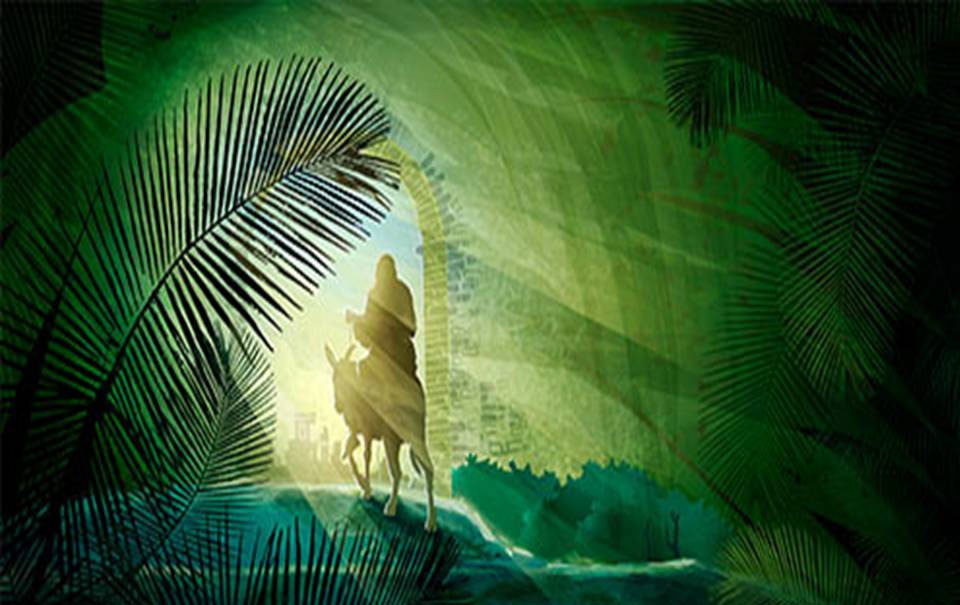
The Sunday is on Holy Week is Passion Sunday, also known as Palm Sunday. It marks the arrival of Christ in Jerusalem just days before His crucifixion.

Messianic Fulfillment on Zechariah 9:9

Rejoice greatly, O daughter of Zion! Shout, O daughter of Jerusalem! Behold, your King is coming to you; He is just and having salvation, Lowly and riding on a donkey, A colt, the foal of a donkey.

Matthew 21:1-11 NABRE

The Entry into Jerusalem.[a] When they drew near Jerusalem and came to Bethphage[b] on the Mount of Olives, Jesus sent two disciples, saying to them, “Go into the village opposite you, and immediately you will find an ass tethered, and a colt with her.[c] Untie them and bring them here to me. And if anyone should say anything to you, reply, ‘The master has need of them.’ Then he will send them at once.” 4 [d]This happened so that what had been spoken through the prophet might be fulfilled:

“Say to daughter Zion,
‘Behold, your king comes to you,
    meek and riding on an ass,
        and on a colt, the foal of a beast of burden.’”

The disciples went and did as Jesus had ordered them. 7 [e]They brought the ass and the colt and laid their cloaks over them, and he sat upon them. 8 [f]The very large crowd spread their cloaks on the road, while others cut branches from the trees and strewed them on the road. The crowds preceding him and those following kept crying out and saying:

“Hosanna[g] to the Son of David;
    blessed is he who comes in the name of the Lord;
hosanna in the highest.”

10 And when he entered Jerusalem the whole city was shaken[h] and asked, “Who is this?” 11 And the crowds replied, “This is Jesus the prophet,[i] from Nazareth in Galilee.”

Footnotes

  1. 21:1–11 Jesus’ coming to Jerusalem is in accordance with the divine will that he must go there (cf. Mt 16:21) to suffer, die, and be raised. He prepares for his entry into the city in such a way as to make it a fulfillment of the prophecy of Zec 9:9 (Mt 21:2) that emphasizes the humility of the king who comes(Mt 21:5). That prophecy, absent from the Marcan parallel account (Mk 11:1–11) although found also in the Johannine account of the entry (Jn 12:15), is the center of the Matthean story. During the procession from Bethphage to Jerusalem, Jesus is acclaimed as the Davidic messianic king by the crowds who accompany him (Mt 21:9). On his arrival the whole city was shaken, and to the inquiry of the amazed populace about Jesus’ identity the crowds with him reply that he is the prophet, from Nazareth in Galilee (Mt 21:1011).
  2. 21:1 Bethphage: a village that can no longer be certainly identified. Mark mentions it before Bethany (Mk 11:1), which suggests that it lay to the east of the latter. The Mount of Olives: the hill east of Jerusalem that is spoken of in Zec 14:4 as the place where the Lord will come to rescue Jerusalem from the enemy nations.
  3. 21:2 An ass tethered, and a colt with her: instead of the one animal of Mk 11:2, Matthew has two, as demanded by his understanding of Zec 9:9.
  4. 21:4–5 The prophet: this fulfillment citation is actually composed of two distinct Old Testament texts, Is 62:11 (Say to daughter Zion) and Zec 9:9. The ass and the colt are the same animal in the prophecy, mentioned twice in different ways, the common Hebrew literary device of poetic parallelism. That Matthew takes them as two is one of the reasons why some scholars think that he was a Gentile rather than a Jewish Christian who would presumably not make that mistake (see Introduction).
  5. 21:7 Upon them: upon the two animals; an awkward picture resulting from Matthew’s misunderstanding of the prophecy.
  6. 21:8 Spread…on the road: cf. 2 Kgs 9:13. There is a similarity between the cutting and strewing of the branches and the festivities of Tabernacles (Lv 23:39–40); see also 2 Mc 10:5–8 where the celebration of the rededication of the temple is compared to that of Tabernacles.
  7. 21:9 Hosanna: the Hebrew means “(O Lord) grant salvation”; see Ps 118:25, but that invocation had become an acclamation of jubilation and welcome. Blessed is he…in the name of the Lord: see Ps 118:26 and the note on Jn 12:13In the highest: probably only an intensification of the acclamation, although Hosanna in the highest could be taken as a prayer, “May God save (him).”
  8. 21:10 Was shaken: in the gospels this verb is peculiar to Matthew where it is used also of the earthquake at the time of the crucifixion (Mt 27:51) and of the terror of the guards of Jesus’ tomb at the appearance of the angel (Mt 28:4). For Matthew’s use of the cognate noun, see note on Mt 8:24.
  9. 21:11 The prophet: see Mt 16:14 (“one of the prophets”) and 21:46.

Merry Christmas to you all!

On December 25th:
Merry Christmas to you all!

From USCCB
Responsorial Psalm
Ps 96: 1-2, 2-3, 11-12, 13.
R. (Lk 2:11) Today is born our Savior, Christ the Lord.
Sing to the LORD a new song;
sing to the LORD, all you lands.
Sing to the LORD; bless his name.
R. Today is born our Savior, Christ the Lord.
Announce his salvation, day after day.
Tell his glory among the nations;
among all peoples, his wondrous deeds.
R. Today is born our Savior, Christ the Lord.
Let the heavens be glad and the earth rejoice;
let the sea and what fills it resound;
let the plains be joyful and all that is in them!
Then shall all the trees of the forest exult.
R. Today is born our Savior, Christ the Lord.
They shall exult before the LORD, for he comes;
for he comes to rule the earth.
He shall rule the world with justice
and the peoples with his constancy.
R. Today is born our Savior, Christ the Lord.

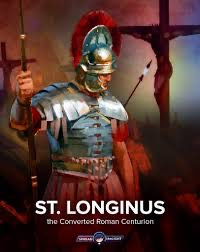
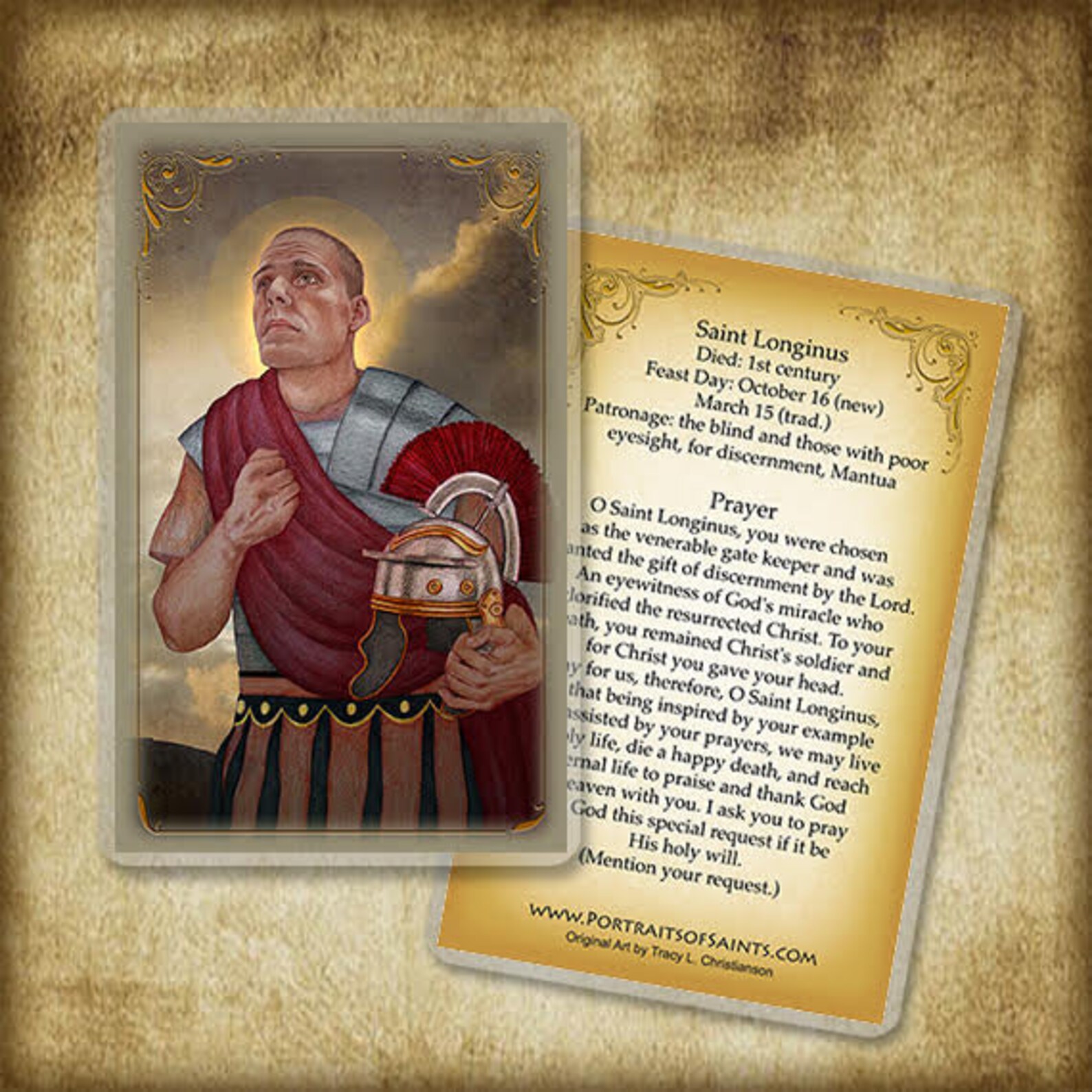
St. Longinus Roman centurion

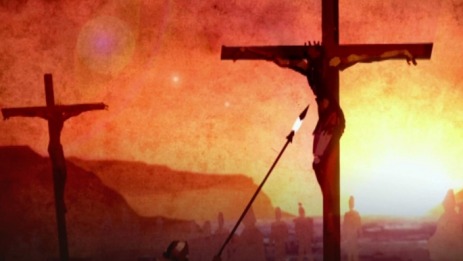
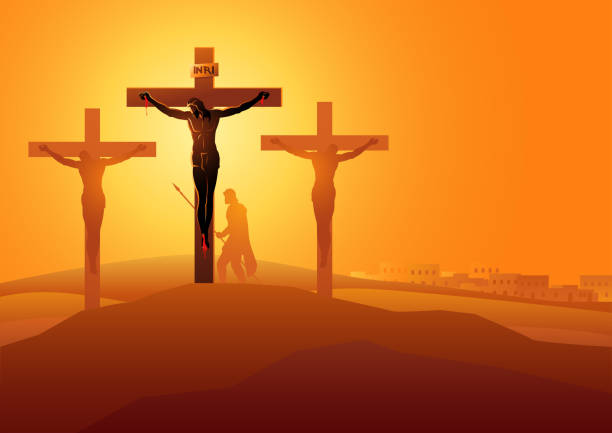
St. Longinus pierced the side of the Lord with his lance:  “One of the soldiers thrust a lance into His side, and immediately blood and water flowed out” (John 19:34).

What affiction or condition of the centurion was healed when Yeshua blood splashed on him?

Longinus was a Roman soldier whose one eye was blind. Before the body of Jesus was taken down from the cross, Longinus thrusted a spear on His side and came forth blood and water. A drop of blood spurted in the blind eye of Longinus, miraculously curing him of his blindness.

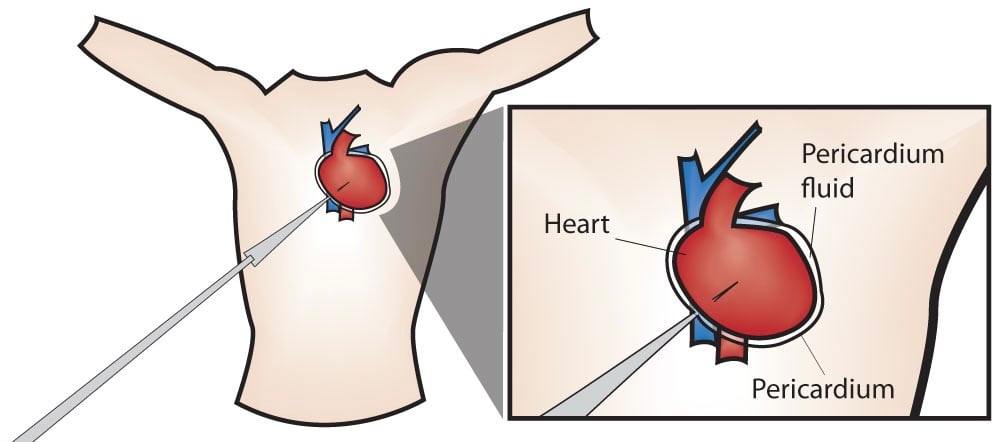
Why did water and blood come out of Yeshua?

When they came to check on Yeshua, He was already dead so they did not break His legs (Numbers 9:11-13, Psalms 34:20, Psalms 22, (John 19:33). Instead, the soldiers pierced His side (John 19:34) to assure (made sure) that He was dead. Isaiah 52:13-53:12 prophesied fulfillment that “blood and water came out” (John 19:34), referring to the watery fluid surrounding the heart and lungs.

DID YOU KNOW?

THE ROMAN SOLDIER WHO PIERCED THE SIDE OF JESUS CONVERTED AND BECAME A SAINT?


St. Longinus is the centurion who pierced the side of Our Lord while He was hanging on the Cross. St. Longinus, who was nearly blind, was healed when some of the blood and water from Jesus fell into his eyes. It was then he exclaimed “Indeed, this was the Son of God!” [Mark 15:39].

St. Longinus then converted, Left the army, took instruction from the apostles and became a monk in Cappadocia. There he was arrested for his faith, his teeth forced out and tongue cut off. However, St. Longinus miraculously continued to speak clearly and managed to destroy several idols in the presence of the governor. The governor, who was made blind by the demons that came from the idols, had his sight restored when St. Longinus was being beheaded, because his blood came in contact with the governors’ eyes.

St. Longinus’ relics are now in the church of St Augustine, in Rome. His Lance is contained in one of the four pillars over the altar in the Basilica of St Peter’s in Rome.

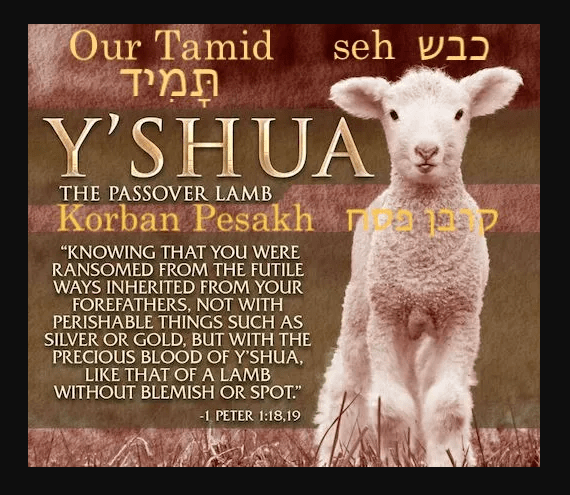
Yeshua Himself Pesach Lamb of God died at 3 pm on 15 Nisan (Second Chagigah) 30 CE according scripture verses.

Behold the blood of Yeshua, who was the High Priest (Cohen HaGadol) of the Brit Chadasha (Renewed Covenant), was also sprinkled before YHWH eight times:

  1. Yeshua perspired drops of blood in the Garden of Gethsemane when He prayed to the Father:  “And being in anguish, He prayed more earnestly, and His sweat was like drops of blood falling to the ground.”  (Luke 22:44)
  2. He was struck in the face until it was “marred beyond recognition.”  (Isaiah 52:14)
  3. His back was scourged with a whip.  (Isaiah 50:6; Matthew 27:26)
  4. The soldiers put a crown of thorns on His head.  (John 19:2)
  5. They plucked out His beard.  (Isaiah 50:6)
  6. They pierced His hands and feet.  (Psalm 22:16; Luke 24:39; John 20:27)
  7. They pierced His side with a spear and blood and water came out. (Psalm 22:14, John 19:34)
  8. Mark 15:39 When the centurion who stood facing him saw how he breathed his last he said, “Truly this man was the Son of God!”

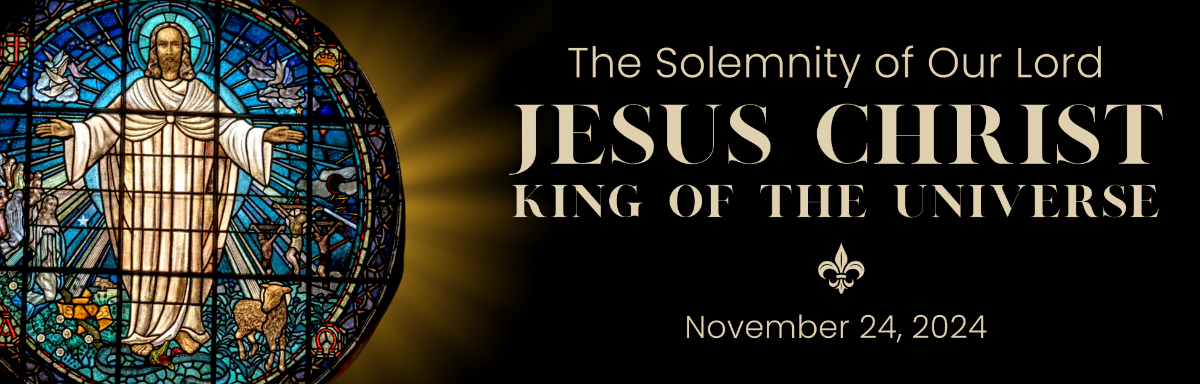
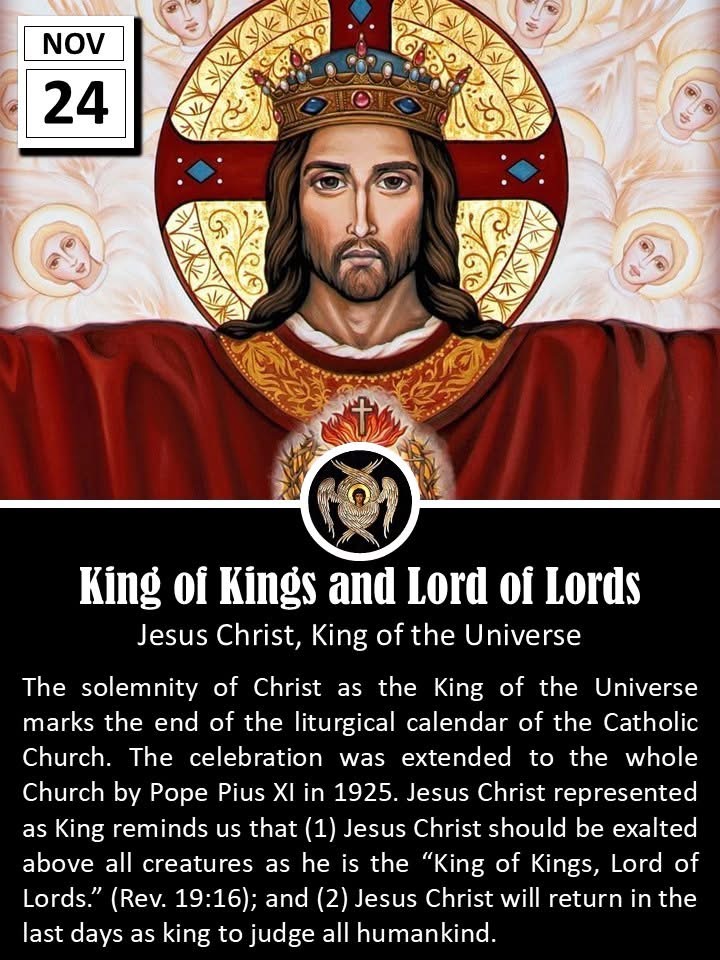
November 24th The Solemnity of Our Lord Jesus Christ, King of the Universe.

Ordinary Time: November 24th
Solemnity of Our Lord Jesus Christ, King of the Universe.

Please click copy and paste very excellent long article:

https://www.catholicculture.org/culture/liturgicalyear/calendar/day.cfm?date=2024-11-24

USCCB Daily Reading on November 24:

The Solemnity of Our Lord Jesus Christ, King of the Universe

Lectionary: 161
Reading I
Dn 7:13-14
As the visions during the night continued, I saw
one like a Son of man coming,
on the clouds of heaven;
when he reached the Ancient One
and was presented before him,
the one like a Son of man received dominion, glory, and kingship;
all peoples, nations, and languages serve him.
His dominion is an everlasting dominion
that shall not be taken away,
his kingship shall not be destroyed.

Responsorial Psalm
Ps 93:1, 1-2, 5
R. (1a) The Lord is king; he is robed in majesty.
The LORD is king, in splendor robed;
robed is the LORD and girt about with strength.
R. The Lord is king; he is robed in majesty.
And he has made the world firm,
not to be moved.
Your throne stands firm from of old;
from everlasting you are, O LORD.
R. The Lord is king; he is robed in majesty.
Your decrees are worthy of trust indeed;
holiness befits your house,
O LORD, for length of days.
R. The Lord is king; he is robed in majesty.

Reading II
Rv 1:5-8
Jesus Christ is the faithful witness,
the firstborn of the dead and ruler of the kings of the earth.
To him who loves us and has freed us from our sins by his blood,
who has made us into a kingdom, priests for his God and Father,
to him be glory and power forever and ever. Amen.
Behold, he is coming amid the clouds,
and every eye will see him,
even those who pierced him.
All the peoples of the earth will lament him.
Yes. Amen.

“I am the Alpha and the Omega, ” says the Lord God,
“the one who is and who was and who is to come, the almighty.”

Alleluia
Mk 11:9, 10
R. Alleluia, alleluia.
Blessed is he who comes in the name of the Lord!
Blessed is the kingdom of our father David that is to come!
R. Alleluia, alleluia.

Gospel
Jn 18:33b-37
Pilate said to Jesus,
“Are you the King of the Jews?”
Jesus answered, “Do you say this on your own
or have others told you about me?”
Pilate answered, “I am not a Jew, am I?
Your own nation and the chief priests handed you over to me.
What have you done?”
Jesus answered, “My kingdom does not belong to this world.
If my kingdom did belong to this world,
my attendants would be fighting
to keep me from being handed over to the Jews.
But as it is, my kingdom is not here.”
So Pilate said to him, “Then you are a king?”
Jesus answered, “You say I am a king.
For this I was born and for this I came into the world,
to testify to the truth.
Everyone who belongs to the truth listens to my voice.”

USCCB click on
https://bible.usccb.org/bible/readings/112424.cfm

❤️🤟🙏📿🕊️

Question: Is Purgatory Biblical?

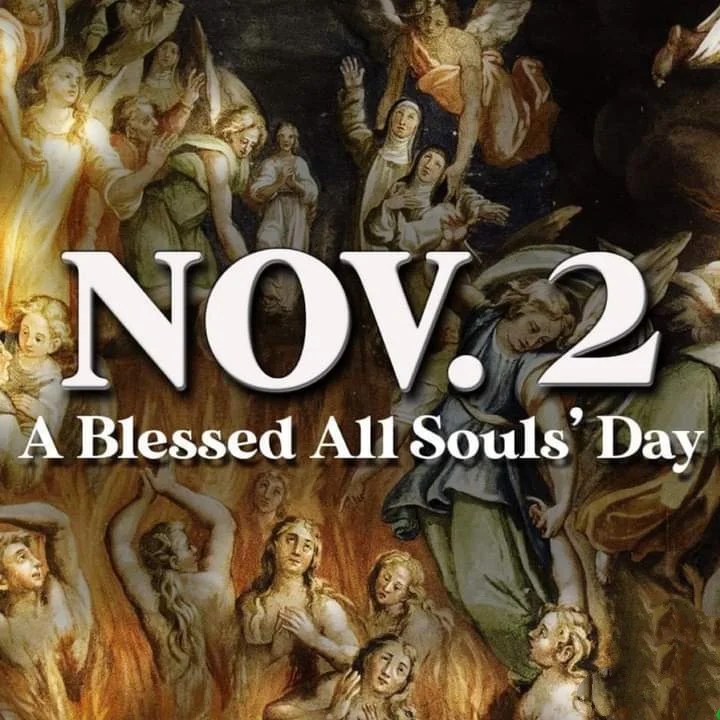
Today is November 2 Pray for All Souls’ Day.

Question: Is Purgatory Biblical?

Answer: Yes and we all read joyous Catholic Sacred Scripture and Tradition.

🙏📿 The word purgatory is derived from the Latin purgation, which means “cleansing” or “purification.” Just as gold is purged of dross in the refining process, so Scripture teaches that we are to be purified of all that is sinful or unclean. For instance, Psalm 51:7-10 USCCB reads:

7Behold, I was born in guilt,

in sin my mother conceived me.*d

8Behold, you desire true sincerity;

and secretly you teach me wisdom.

9Cleanse me with hyssop,* that I may be pure;

wash me, and I will be whiter than snow.e

10You will let me hear gladness and joy;

the bones you have crushed will rejoice.

True Tradition History of Maccabees:

Catholic Church endorse joyfully according to the Bible, Judas Maccabeus prayed for the dead on the day after the Sabbath, following the victory over the men of Gorgias. The true story is told in 2 Maccabees 12:38-46.

Before New Covenant (New Testament) begins, In Old Covenant (Old Testament) we read and find a Jewish hero named Judas Maccabeus, about a century and a half before Jesus Christ is New Covenant, praying for the Jewish warriors dead and specifically asking they be forgiven their sins after they have died (2 Macc. 12:43-46). This practice, known today as the Mourner’s Kaddish, was well established among Jews in Jesus’ own time. (Jews have historically believed, and many still believe, that the souls of the faithful departed undergo a period of purification, which may be aided by the prayers and charity of the living.)

Yes, and Judas Maccabeus prayed for the dead in the Bible, in the book of 2 Maccabees 12:39-42: 

  • Prayer: Judas and his men prayed for the dead to be forgiven for their sins. 
  • Collection: Judas collected silver to send to Jerusalem as a sin offering for the dead. 
  • Sacrifice: Judas ordered sacrifices to be offered in the Temple in Jerusalem for the slain soldiers. 
  • Exhortation: Judas exhorted the people to avoid sin. 

The true story of Judas praying for the dead is interpreted as a biblical justification for the teaching of purgatory. It also shows the belief that prayers from the living can help purify the dead.

2 Maccabees 12;38-46 Expiation for the Dead.

38Judas rallied his army and went to the city of Adullam. As the seventh day was approaching, they purified themselves according to custom and kept the sabbath there.

39On the following day, since the task had now become urgent, Judas and his companions went to gather up the bodies of the fallen and bury them with their kindred in their ancestral tombs.

40But under the tunic of each of the dead they found amulets sacred to the idols of Jamnia, which the law forbids the Jews to wear. So it was clear to all that this was why these men had fallen.f

41They all therefore praised the ways of the Lord, the just judge who brings to light the things that are hidden.

42* Turning to supplication, they prayed that the sinful deed might be fully blotted out. The noble Judas exhorted the people to keep themselves free from sin, for they had seen with their own eyes what had happened because of the sin of those who had fallen.g

43He then took up a collection among all his soldiers, amounting to two thousand silver drachmas, which he sent to Jerusalem to provide for an expiatory sacrifice. In doing this he acted in a very excellent and noble way, inasmuch as he had the resurrection in mind;

44for if he were not expecting the fallen to rise again, it would have been superfluous and foolish to pray for the dead.

45But if he did this with a view to the splendid reward that awaits those who had gone to rest in godliness, it was a holy and pious thought.

46Thus he made atonement for the dead that they might be absolved from their sin.

For no other foundation can any one lay than that which is laid, which is Jesus Christ. Now if any one builds on the foundation with gold, silver, precious stones, wood, hay, straw— each man’s work will become manifest; for the Day* will disclose it, because it will be revealed with fire, and the fire will test what sort of work each one has done. If the work which any man has built on the foundation survives, he will receive a reward. If any man’s work is burned up, he will suffer loss, though he himself will be saved, but only as through fire. – 1 Corinthians 3:11-15

* [3:13] The Day: the great day of Yahweh, the day of judgment, which can be a time of either gloom or joy. Fire both destroys and purifies.

Please click on What is Purgatory?

Please click on Purgatory? Where Is That In The Bible?

The Greatest Commandment

We begin our prayer:
In the name of the Father, and of the Son, and of the Holy Spirit. Amen.
Almighty and merciful God,
by whose gift your faithful offer you
right and praiseworthy service,
grant, we pray,
that we may hasten without stumbling
to receive the things you have promised.
Through our Lord Jesus Christ, your Son,
who lives and reigns with you in the unity of the
Holy Spirit,
God, for ever and ever.
(Collect, Thirty-first Sunday in Ordinary Time)

Read the following Scripture two or three times.❤️🙏📿🙏

Mark 12:28b-34
One of the scribes came to Jesus and asked him,
“Which is the first of all the commandments?” Jesus
replied, “The first is this: Hear, O Israel! The Lord
our God is Lord alone! You shall love the Lord your
God with all your heart, with all your soul, with all
your mind, and with all your strength. The second is
this: You shall love your neighbor as yourself.
There is no other commandment greater than these.”
*

The scribe said to him, “Well said, teacher. You are
right in saying, ‘He is One and there is no other than
he.’ And ‘to love him with all your heart, with all
your understanding, with all your strength, and to
love your neighbor as yourself’ is worth more than
all burnt offerings and sacrifices.” And when Jesus
saw that he answered with understanding, he said to
him, “You are not far from the kingdom of God.”
And no one dared to ask him any more questions.

*Mark 12:31 refers Lv 19:18Rom 13:9Gal 5:14Jas 2:8.

The New Commandment on John 13:31-35

When he had gone out, Jesus said, “Now is the Son of man glorified, and in him God is glorified; if God is glorified in him, God will also glorify him in himself, and glorify him at once. Little children, yet a little while I am with you. You will seek me; and as I said to the Jews so now I say to you, ‘Where I am going you cannot come.’ A new commandment* I give to you, that you love one another; even as I have loved you, that you also love one another. By this all men will know that you are my disciples, if you have love for one another.” – John 13:31-35


*The verse 34 I give you a new commandment: this puts Jesus on a par with Yahweh. The commandment itself is not new; cf. Lv 19:18 and the note there.

The Hebrew transliteration words for “Love your neighbor as yourself” is Ve’ahavta le’reyakha kamokha. It appears in the Bible in Leviticus 19:17-18. 🙏📿🙏❤️