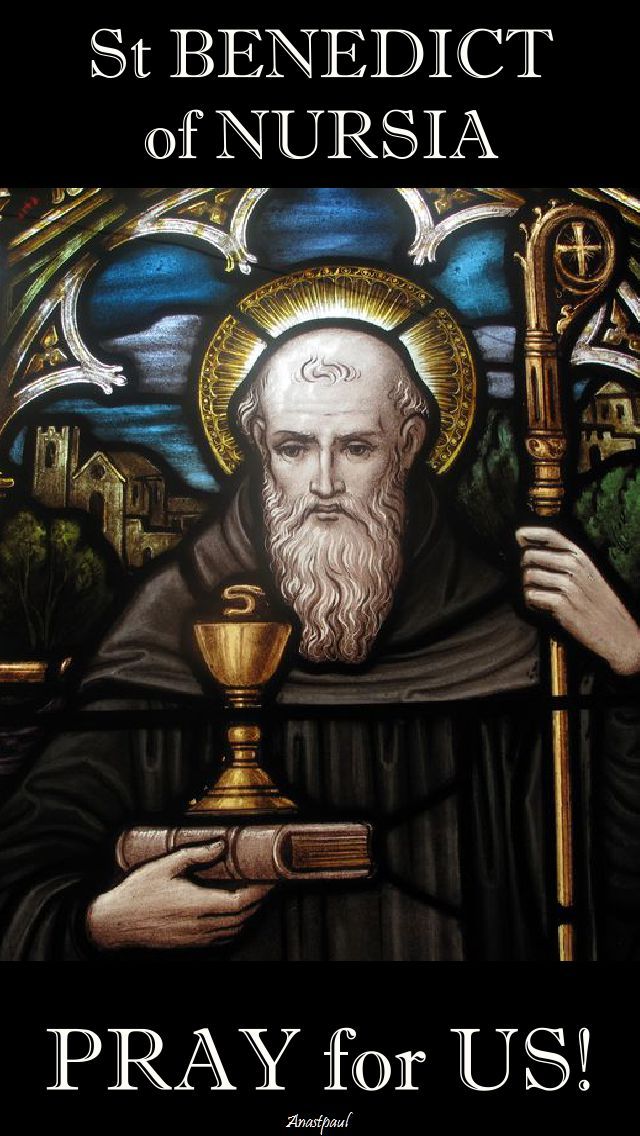
Saint Benedict

Feast is on July 11 of Saint Benedict, Abbot—Memorial

c. 480–c. 547
Patron Saint of Europe, monks and religious orders, ​​architects, dying people, cave explorers, schoolchildren, agricultural workers, civil engineers, and coppersmiths
Invoked against erysipelas, fever, gallstones, inflammatory diseases, kidney disease, nettle rash, poison, temptations, and witchcraft
Canonized by Pope Honorius III in 1220
Declared Patron Saint of Europe by Pope Paul VI in 1964
Liturgical Color: White

Quote:
Hearken continually within thine heart, O son, giving attentive ear to the precepts of thy master. Understand with willing mind and effectually fulfill thy holy father’s admonition; that thou mayest return, by the labor of obedience, to Him from Whom, by the idleness of disobedience, thou hadst withdrawn. To this end I now address a word of exhortation to thee, whosoever thou art, who, renouncing thine own will and taking up the bright and all-conquering weapons of obedience, dost enter upon the service of thy true king, Christ the Lord. ~From the Prologue of the Rule of Saint Benedict

Reflection: Benedict was born into Roman nobility in Nursia, central Italy, roughly 100 miles northeast of Rome. His father was a prefect for the Western Roman Empire, which had fallen to the barbarians a decade prior to his birth. He had a twin sister named Scholastica, who also became a saint. As a youth, Benedict was sent to Rome for studies. However, he quickly became disillusioned by the prevalent immorality and disorder, particularly among his classmates. At the age of twenty, to find peace in his soul and avoid the traps that had ensnared many of his peers, he moved to the countryside of the town of Affile, about forty miles from Rome. Accompanying him was his nurse who cared for him like a mother. They moved in with some virtuous men in the Church of Saint Peter. While there, his nurse accidentally broke a dish used to sift wheat and was distraught. Witnessing this, Benedict miraculously mended the dish and returned it to her. News of this miracle spread quickly, and Benedict became the talk of the town.

Benedict wasn’t interested in the praise of men; he sought only holiness. Leaving his nurse behind, he moved closer to the town of Subiaco and took up residence in a cave. Nearby, he met a holy monk, Romanus, whom Benedict consulted for spiritual advice. At Romanus’ encouragement, Benedict took on the monastic habit and lived in the cave for the next three years as a hermit. Romanus visited him frequently, bringing him food as needed. As a hermit, Benedict prayerfully sought to root out all sin in his life, especially the three temptations common to most men: “the temptation of self-affirmation and the desire to put oneself at the center, the temptation of sensuality and, lastly, the temptation of anger and revenge” (Pope Benedict XVI, General Audience, April 9, 2008).

After having conquered these temptations, Benedict was invited by a group of local monks to become their abbot. He reluctantly agreed, recognizing that his form of religious life contrasted sharply with theirs. After a brief time as abbot, the monks so opposed him that, according to legend, they attempted to kill him by poisoning his wine. When Benedict blessed the wine, the glass shattered, and the scheme was revealed. Shortly afterward, Benedict left the monks and returned to his cave before emerging to found monasteries in the area over the following years. Many admired him and were attracted to his radical way of living, while others envied him and sought his life. Numerous miracles are said to have taken place through his intervention, such as raising a monk from the dead, healing a boy, foreseeing future events, multiplying food and wine, expelling demons, and walking across water.

After founding twelve small monasteries in the Subiaco area, Benedict felt it was time for a fresh start. One of the local priests had tried to poison him and was relentless in his persecutions. He even sent a naked woman to one of Benedict’s monasteries to tempt him and the monks. In addition to this persecution, some monks found his way of life challenging, and the locals were more taken with the stories of his miracles than with his devotion to God. Therefore, he moved about sixty miles southeast to the mountaintop of Monte Cassino, where, at the age of fifty, he founded his most famous monastery.

Upon arriving at Monte Cassino, Benedict found a temple built to the Roman god Apollo. He destroyed it, built two chapels in its place, and then constructed a monastery nearby. Before this, most monasteries consisted of loosely associated hermits living independently but also somewhat communally. Having seen the failure of this form of monasticism in Subiaco, Benedict adopted a new approach. Instead of several smaller monasteries, he built one large monastery where numerous monks could live. He wrote a rule, later known as “The Rule of Saint Benedict,” that guided his newly established monastery at Monte Cassino and eventually became the normative rule for Western monasticism for the next 1,500 years. Hence, Saint Benedict is often referred to as the “Father of Western Monasticism.”

The “Rule” consists of seventy-three short chapters that address both the spiritual and administrative aspects of a healthy monastery. The Rule lays out guidelines for monastic living, particularly in areas of stability, conversion of life, obedience, prayer, work, community life, hospitality, and humility. The Rule takes into consideration the fact that most monks governed under the Rule did not engage in extreme penances or other radical charisms. Instead, the Rule fosters a balanced community life in which individual monks can discover a daily rhythm of prayer, work, and study conducive to a deeper and personal calling to holiness.

While Benedict set up his community at Monte Cassino, his sister, Scholastica, helped found a monastery for women. It’s likely that Benedict played a role in this founding and that his Rule guided the nuns’ daily life. Benedict and Scholastica remained close until her death, which he prophesied. Upon her death, Benedict had a vision of Scholastica being taken to Heaven. He brought her body back to Monte Cassino, where she was buried in his future grave, and which they still share.

After fewer than ten years at Monte Cassino, Benedict died, but his influence on the Church and all of Europe was just beginning. Monasteries across Europe, guided by the Rule of Saint Benedict, developed into important centers for education, medicine, culture, and social development. From these monasteries, universities were born. The monasteries helped to preserve ancient texts, stabilize communities, influence nobility, and draw many to Christ. Their liturgies flourished and influenced the wider Church, making many of these monasteries the central teachers of prayer and worship. For these reasons, many have referred to Saint Benedict as not only the father of monasticism but also the father of modern Europe, given the influence that monasteries using his Rule have had on Europe and the world as a whole. For this reason, Pope Paul VI declared Saint Benedict the Patron Saint of Europe in 1964.

As we honor this important figure in Church and world history, reflect on his humble beginnings. He witnessed the immoralities of his day and fled from those temptations to embrace a life of holiness. At that time, it would have been difficult for him to comprehend the influence he would have had on all of Europe and, in fact, upon the whole world for many centuries to come. Reflect on the fact that God also calls you to flee from sin and embrace a life of holiness. When that happens, God can do great things through you in ways you may never comprehend. Follow the example of Saint Benedict and commit yourself to holy daily living, and leave it up to God to use you as He wills.

Prayer: Saint Benedict, you witnessed the moral corruption in Rome at an early age and fled to the wilderness to seek out God’s will. Through your prayerful obedience to God’s will, inestimable good fruit has been borne. Please pray for me that I will always seek out God’s will in my life, leaving behind the many temptations to sin that I encounter, so that God can use me in ways known only to Him. Saint Benedict, pray for me. Jesus, I trust in You.
Spiritual parallel of King Yeshua on Yom Kippur

Update on May 6, 2025 I am free from bondage of Mosaic Covenant Laws following ceremonial laws from Old Testament (Tanakh) through Hebrew Roots Movement that blog was on October 5, 2022 through my Holy Spirit woke me researching more realization to Jesus (Yeshua) Himself is New Yom Kippur. I spiritually comprehended the Whole Messianic Fulfillment is all about Jesus Christ. The first five books literally is Torah, whole prophets and psalms

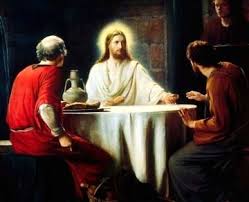
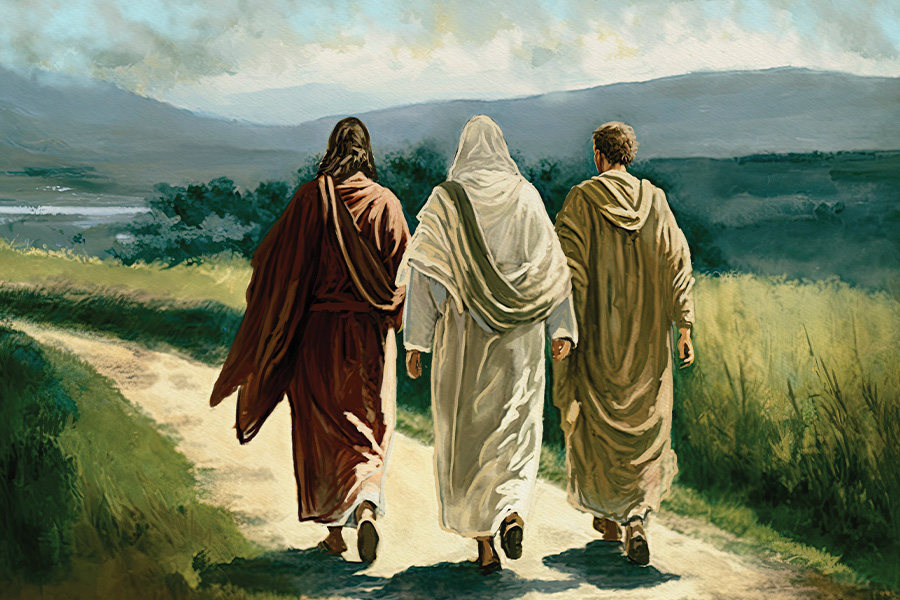
On Luke 24 we read Jesus appeared mysteriously two disciples walked Emmaus Road and joined on table for supper, took bread and blessed it and broke it, then gave it to them (two disciples) on Sunday after last week of dawn Sunday The Risen Lord Jesus Christ. Two disciples were amazed at Presence of Jesus Christ is True Eucharist.

‘Then he (Jesus) said to them (disciples), “Don’t you remember the words that I spoke to you when I was still with you? I told you that I would fulfill everything written about me, including all the prophecies from the law of Moses through the Psalms and the writings of the prophets.” ‘

Luke 24:44

God transform my spiritual reawakening more heed to Jesus that’s how I pray researching His Sacred Scriptures and Sacred Traditions. I am Christian endorse Jesus founded the Catholic (Universal) Church on 33 AD and follow His Commandments (Mitzvot) You all are my thoughtful prayers. ❤️🤟🙏📿

Hebrews 9 Chapter TLV Messiah Enters the Heavenly Holies

9 Now even the first one had regulations for worship and the earthly sanctuary. [a] For a tent was prepared: in the outer[b] part were the menorah, the table, and the presentation of the bread[c]—this is called the Holy Place. Beyond the second curtain[d] was a dwelling called the Holy of Holies. [e] It held a golden altar of incense and the ark of the covenant, completely covered with gold. In the ark was a golden jar holding the manna, Aaron’s rod that budded, and the tablets of the covenant[f]— and above it, cherubim of glory overshadowing the mercy seat.[g] But it is not now possible to speak in detail about these things.

Now with these things prepared this way,

the kohanim
    do continually enter
        into the outer tent[h]
            while completing the services;
        but into the inner,[i]
    once a year,

the kohen gadol alone[j]—and not without blood which he offers for himself and for the unintentional sins[k] of the people. By this the Ruach ha-Kodesh makes clear that the way into the Holies has not yet been revealed while the first tent is still standing. It is a symbol for the present time. Accordingly, gifts and sacrifices are being offered that cannot make the worshiper perfect with respect to conscience. 10 These relate only to food and drink and various washings[l]—regulations for the body imposed until a time of setting things straight.

11 But when Messiah appeared as Kohen Gadol of the good things that have now come, passing through the greater and more perfect Tent not made with hands (that is to say not of this creation), 12 He entered into the Holies once for all—not by the blood of goats and calves but by His own blood, having obtained eternal redemption. 13 For if the blood of goats and bulls[m] and the ashes of a heifer sprinkling those who have been defiled[n] sanctify for the cleansing of the flesh, 14 how much more will the blood of Messiah—who through the eternal Spirit offered Himself without blemish to God—cleanse our[o] conscience from dead works to serve the living God?

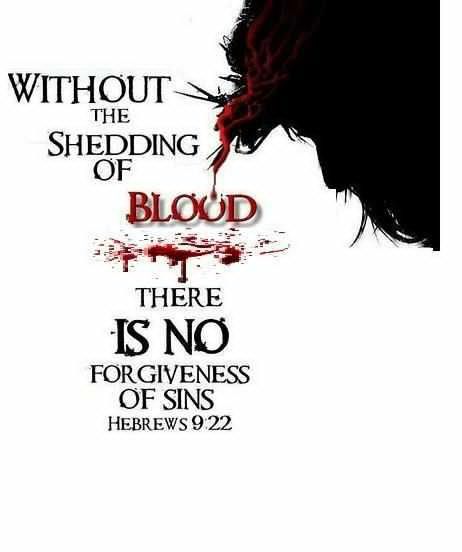
15 For this reason He is the mediator of a new covenant,[p] in order that those called may receive the promised eternal inheritance—since a death has taken place that redeems them from violations under the first covenant. 16 For where there is a covenant, the death of the one who made it must be established. [q] 17 For a covenant is secured upon the basis of dead bodies, since it has no strength as long as the one who made it lives. 18 That is why not even the first covenant was inaugurated without blood. 19 For when every commandment had been spoken by Moses to all the people according to the Torah, he took the blood of the calves and goats, with water and scarlet wool and hyssop, and he sprinkled both the book itself and all the people. 20 He said, “This is the blood of the covenant which God commanded you.” [r] 21 And in the same way, he sprinkled the tabernacle and all the vessels of the ministry with the blood. [s] 22 And nearly everything is purified in blood according to the Torah, and apart from the shedding of blood there is no forgiveness.[t]

23 Therefore it was necessary for the replicas of these heavenly things to be purified with these sacrifices—but the heavenly things themselves with better sacrifices than these. 24 For Messiah did not enter into Holies made with hands—counterparts of the true things—but into heaven itself, now to appear in God’s presence on our behalf. 25 And He did not offer Himself again and again—as the kohen gadol enters into the Holy of Holies year after year with blood that is not his own. 26 For then He would have needed to suffer again and again from the foundation of the world. But as it is, He has been revealed once and for all at the close of the ages—to put away sin by the sacrifice of Himself. 27 And just as it is appointed for men to die once, and after this judgment, [u] 28 so also Messiah, was offered once to bear the sins of many.[v] He will appear a second time, apart from sin, to those eagerly awaiting Him for salvation.[w]

Footnotes

  1. Hebrews 9:2 cf. Exod. 25:823-29.
  2. Hebrews 9:2 Lit. first.
  3. Hebrews 9:2 cf. Lev. 24:5-9.
  4. Hebrews 9:3 Heb. parokhet.
  5. Hebrews 9:4 cf. Exod. 26:31-3340:3.
  6. Hebrews 9:4 cf. Exod. 25:10-161 Kings 8:7.
  7. Hebrews 9:5 cf. Exod. 25:18-19.
  8. Hebrews 9:6 Lit. first tent, i.e. the Holy Place; cf. Exod. 27:20-21.
  9. Hebrews 9:7 Lit. second, i.e. the Holy of Holies; cf. Lev. 16:234.
  10. Hebrews 9:7 cf. Exod. 30:10Lev. 16:1534.
  11. Hebrews 9:7 cf. Num. 15:2230.
  12. Hebrews 9:10 cf. Lev. 11Num. 6:319:13.
  13. Hebrews 9:13 cf. Lev. 16:14-15.
  14. Hebrews 9:13 cf. Num. 19:917-18.
  15. Hebrews 9:14 Some mss. read your.
  16. Hebrews 9:15 Heb. brit hadashah.
  17. Hebrews 9:17 cf. Exod. 24:8(LXX)Ps. 50:5(49:5 LXX); Lk. 22:29.
  18. Hebrews 9:21 Exod. 24:8.
  19. Hebrews 9:22 cf. Exod. 29:12Lev. 8:15.
  20. Hebrews 9:22 Lit. pardon, cancellation, removal; cf. Mt. 6:12Mk. 1:4Lev. 16:26(LXX).
  21. Hebrews 9:28 cf. Gen. 3:19Dan. 12:2.
  22. Hebrews 9:28 cf. Isa. 53:12.
  23. Hebrews 9:28 cf. Mt. 1:21Rom. 11:26-27.

The Eucharist is the holy sacrifice of the Second Mass on Octave Easter…

The Eucharist is the holy sacrifice of the Second Mass is sacrifice on New Octave Easter after Jesus *Himself New Mystery Blood Paschal Lamb of God on Cross rose from dead on Sunday.

*The Cross of Blood Paschal Lamb of God and Mass are one holy same sacrifice.

Yes and sadly Martin Luther ex monk opposed exposed argument accusing Catholic false doctrine to all Protestants believe in Martin Luther doctrines and make fun of Catholics about Mass “transubstantiation.”

Here is Martin Luther’s:

Martin Luther opposed the Catholic Church’s doctrine of transubstantiation. He believed the body and blood of Christ were present “in, with, and under” the bread and wine of the Eucharist, a view often described as consubstantiation. Luther rejected the idea that the bread and wine literally transformed into Christ’s body and blood, which is the core of transubstantiation.

Put your seat belt on! I will do my new next post come soon I pray Amen. Be patient.

The Eucharist is the holy sacrifice of the Second Mass on the Emmaus Road toward Jerusalem about 7.5 miles after Eucharist is indeed a holy sacrifice, Remember always the First Mass was celebrated by Jesus Himself Paschal Lamb of God instituted Eucharist at the Last Supper with his disciples. Please click USCCB Eucharist

The road to Emmaus appearance is one of the early post-resurrection appearances of Jesus after his crucifixion and the discovery of the empty tomb. The Emmaus in the Gospel of Luke reveals about 12.1 km (7.5 mi) from Jerusalem, though a textual minor variant, conserved in Codex Sinaiticus, gives the distance between the New Testament Emmaus and Jerusalem as 160 stadia.

After Jesus rose from the dead for 3 days on Sunday according Sacred Scriptures Matthew 28:1, Mark,16:2, Luke 24:1 and John 20:1.

How we can proof Jesus rose from dead on Sunday?

The answer is

Good news for HRM (Hebrew Roots Movement (Yisraelites, Ephrimates, Hebrew Hebraic, Messianic Judaism, many sects) and their heresy teachings they said Wednesday or Thursday (I was ex “HRM” one of them groups):

Let me tell you all (HRM) are blind I found Sacred Scriptures I agree and endorse Catholic Bible reveals:

👉 day before Sabbath 👈

👇👇👇

Matthew 27:62, Mark 15:42, Luke 23:54, John 19:14

HRM, do your own homework. You all are my prayers.

Emmaus Road: The Latin translation for “Emmaus road” is via Emmaum or iter Emmaum. “Emmaus” itself is Latin for the town of Emmaus mentioned in the New Testament. While “via” means “road” and “iter” means “journey” or “path” in Latin.

“Emmaus” itself is the transliteration of the Greek name “Emmaous,” which likely came from the Hebrew “Hammath” meaning “hot springs”. The Hebrew name Hammath, which refers to hot springs, is derived from the root חמם (hamam), meaning “to be warm.”

Latin: Agnus Dei: Lamb of God on John 1:29 File:AGNUS DEI.jpgIn most liturgies, the Agnus Dei immediately follows the Words of Institution. The Agnus Dei is based on John the Baptist’s short sermon, “Behold, the Lamb of God who takes away the sin of the world.” This short song brings the liturgy of the Divine Service to a sort of fulfillment. In the Kyrie we sang “Lord, have mercy. Christ, have mercy. Lord, have mercy.” In the Agnus Dei, this is repeated: “Lamb of God,… have mercy on us,… have mercy on us,… grant us peace.” In the Gloria in Excelsis we sang most of the words while singing the praise of Christ, “Lord God, Lamb of God, you take away the sin of the world: have mercy on us.” The words of the Agnus Dei also reflect on the words of Jesus in the Lord’s Supper, “Given and poured out for you for the forgiveness of sins.”

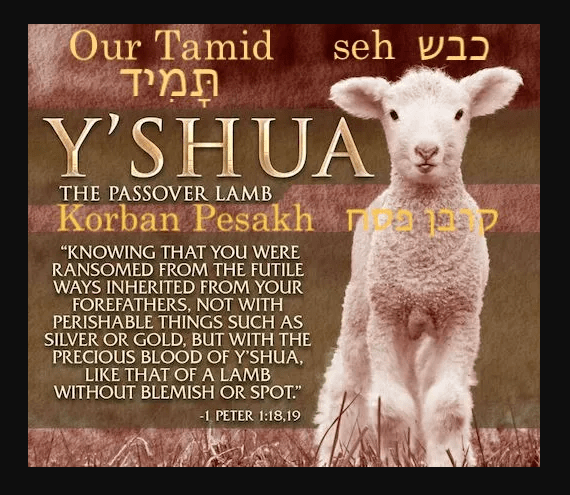
Behold Jesus Christ Our New Mystery Paschal Lamb of God!

The Octave of Easter starts on Easter Sunday and continues for seven more days, ending on the Second Sunday of Easter, also called Divine Mercy Sunday. In the Catholic Church, an octave is an eight-day period of celebration that extends a major feast day. The term “octave” comes from the Latin word for “eighth,” as it involves an additional day of celebration after the initial feast. While the eighth day itself was once the focus, the entire eight-day period is now celebrated with special readings and prayer same parallel reading Old Testament (Tanakh/Tanach) in roots of ancient Jewish’s practices understanding Jesus Christ founded Catholic Church by 33 AD.

It’s all about King Jesus Christ!

Who were two disciples?

Today is April 23th. We beloved Catholic brothers and sisters in Christ read daily readings through USCCB.

Wednesday in the Octave of Easter:

Please click on Who were two disciples?

St. Luke said that one of the disciples was Cleopas, but he doesn’t name the other. Interesting! Some says his wife??? No identity mentioned.

St. John’s Gospel says that Mary the wife of Clopas was among those standing by the cross when Jesus died.

We believe that “Clopas” and “Cleopas” were the same person. Furthermore, we believe that this person was also known as Alphaeus.

  • Clopas (or Cleopas): This name is used in the Gospel of Luke (Luke 24:13) and the Gospel of John (John 19:25) to refer to a man who traveled to Emmaus with another disciple after Jesus’ death. 
  • Alphaeus: This name is found in the New Testament (Matthew 10:3, Mark 3:18, Luke 6:15, Acts 1:13) and is used to identify the father of the apostle James the Less.
  • The Catholic and Eastern Orthodox traditions identify Clopas of Emmaus as the same person as Alphaeus, making him St. Joseph’s younger brother.

Both Catholic and Orthodox traditions believe that Clopas was the younger brother of St. Joseph, the husband of Mary and foster father of Jesus. Clopas, or Cleopas, was Mary’s brother-in-law. This would explain why “Mary the wife of Clopas” was standing by the cross. She was trying to comfort her sister-in-law

Gospel
Luke 24:13-35
❤️ 🤟🙏📿 That very day, the first day of the week,
two of Jesus’ disciples were going
to a village seven miles from Jerusalem called Emmaus,
and they were conversing about all the things that had occurred.
And it happened that while they were conversing and debating,
Jesus himself drew near and walked with them,
but their eyes were prevented from recognizing him.
He asked them,
“What are you discussing as you walk along?”
They stopped, looking downcast.
One of them, named Cleopas, said to him in reply,
“Are you the only visitor to Jerusalem
who does not know of the things
that have taken place there in these days?”
And he replied to them, “What sort of things?”
They said to him,
“The things that happened to Jesus the Nazarene,
who was a prophet mighty in deed and word
before God and all the people,
how our chief priests and rulers both handed him over
to a sentence of death and crucified him.
But we were hoping that he would be the one to redeem Israel;
and besides all this,
it is now the third day since this took place.
Some women from our group, however, have astounded us:
they were at the tomb early in the morning
and did not find his Body;
they came back and reported
that they had indeed seen a vision of angels
who announced that he was alive.
Then some of those with us went to the tomb
and found things just as the women had described,
but him they did not see.”
And he said to them, “Oh, how foolish you are!
How slow of heart to believe all that the prophets spoke!
Was it not necessary that the Christ should suffer these things
and enter into his glory?”
Then beginning with Moses and all the prophets,
he interpreted to them what referred to him
in all the Scriptures.
As they approached the village to which they were going,
he gave the impression that he was going on farther.
But they urged him, “Stay with us,
for it is nearly evening and the day is almost over.”
So he went in to stay with them.
And it happened that, while he was with them at table,
he took bread, said the blessing,
broke it, and gave it to them.
With that their eyes were opened and they recognized him,
but he vanished from their sight.
Then they said to each other,
“Were not our hearts burning within us
while he spoke to us on the way and opened the Scriptures to us?”
So they set out at once and returned to Jerusalem
where they found gathered together
the Eleven and those with them who were saying,
“The Lord has truly been raised and has appeared to Simon!”
Then the two recounted what had taken place on the way
and how he was made known to them in the breaking of the bread. ❤️🤟🙏📿