Question: Is Purgatory Biblical?

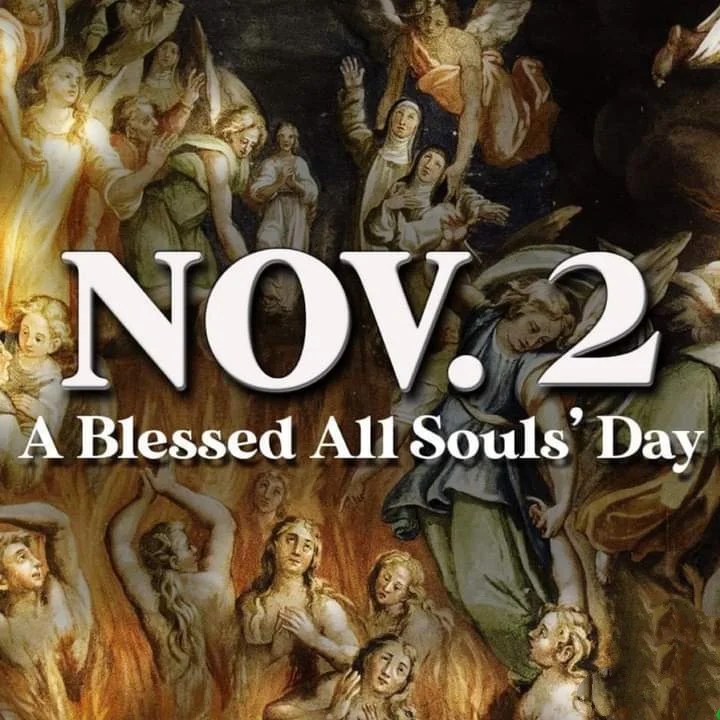
Today is November 2 Pray for All Souls’ Day.

Question: Is Purgatory Biblical?

Answer: Yes and we all read joyous Catholic Sacred Scripture and Tradition.

🙏📿 The word purgatory is derived from the Latin purgation, which means “cleansing” or “purification.” Just as gold is purged of dross in the refining process, so Scripture teaches that we are to be purified of all that is sinful or unclean. For instance, Psalm 51:7-10 USCCB reads:

7Behold, I was born in guilt,

in sin my mother conceived me.*d

8Behold, you desire true sincerity;

and secretly you teach me wisdom.

9Cleanse me with hyssop,* that I may be pure;

wash me, and I will be whiter than snow.e

10You will let me hear gladness and joy;

the bones you have crushed will rejoice.

True Tradition History of Maccabees:

Catholic Church endorse joyfully according to the Bible, Judas Maccabeus prayed for the dead on the day after the Sabbath, following the victory over the men of Gorgias. The true story is told in 2 Maccabees 12:38-46.

Before New Covenant (New Testament) begins, In Old Covenant (Old Testament) we read and find a Jewish hero named Judas Maccabeus, about a century and a half before Jesus Christ is New Covenant, praying for the Jewish warriors dead and specifically asking they be forgiven their sins after they have died (2 Macc. 12:43-46). This practice, known today as the Mourner’s Kaddish, was well established among Jews in Jesus’ own time. (Jews have historically believed, and many still believe, that the souls of the faithful departed undergo a period of purification, which may be aided by the prayers and charity of the living.)

Yes, and Judas Maccabeus prayed for the dead in the Bible, in the book of 2 Maccabees 12:39-42: 

  • Prayer: Judas and his men prayed for the dead to be forgiven for their sins. 
  • Collection: Judas collected silver to send to Jerusalem as a sin offering for the dead. 
  • Sacrifice: Judas ordered sacrifices to be offered in the Temple in Jerusalem for the slain soldiers. 
  • Exhortation: Judas exhorted the people to avoid sin. 

The true story of Judas praying for the dead is interpreted as a biblical justification for the teaching of purgatory. It also shows the belief that prayers from the living can help purify the dead.

2 Maccabees 12;38-46 Expiation for the Dead.

38Judas rallied his army and went to the city of Adullam. As the seventh day was approaching, they purified themselves according to custom and kept the sabbath there.

39On the following day, since the task had now become urgent, Judas and his companions went to gather up the bodies of the fallen and bury them with their kindred in their ancestral tombs.

40But under the tunic of each of the dead they found amulets sacred to the idols of Jamnia, which the law forbids the Jews to wear. So it was clear to all that this was why these men had fallen.f

41They all therefore praised the ways of the Lord, the just judge who brings to light the things that are hidden.

42* Turning to supplication, they prayed that the sinful deed might be fully blotted out. The noble Judas exhorted the people to keep themselves free from sin, for they had seen with their own eyes what had happened because of the sin of those who had fallen.g

43He then took up a collection among all his soldiers, amounting to two thousand silver drachmas, which he sent to Jerusalem to provide for an expiatory sacrifice. In doing this he acted in a very excellent and noble way, inasmuch as he had the resurrection in mind;

44for if he were not expecting the fallen to rise again, it would have been superfluous and foolish to pray for the dead.

45But if he did this with a view to the splendid reward that awaits those who had gone to rest in godliness, it was a holy and pious thought.

46Thus he made atonement for the dead that they might be absolved from their sin.
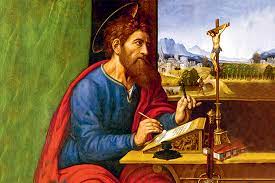
For no other foundation can any one lay than that which is laid, which is Jesus Christ. Now if any one builds on the foundation with gold, silver, precious stones, wood, hay, straw— each man’s work will become manifest; for the Day* will disclose it, because it will be revealed with fire, and the fire will test what sort of work each one has done. If the work which any man has built on the foundation survives, he will receive a reward. If any man’s work is burned up, he will suffer loss, though he himself will be saved, but only as through fire. – 1 Corinthians 3:11-15

* [3:13] The Day: the great day of Yahweh, the day of judgment, which can be a time of either gloom or joy. Fire both destroys and purifies.

Please click on What is Purgatory?

Please click on Purgatory? Where Is That In The Bible?
November in Latin “Nine”

Today is November. Why do we see November on Calendar?

November 1st ….

🕯️ Lit Novem [Novena] Candle 🕯️

The Latin word novem means “nine” and is the root of the Catholic tradition of the novena, which is a nine-day period of prayer:

Novenas are a traditional Catholic practice where people pray privately or in public for nine days in a row to ask for special favors, make petitions, or obtain graces. Catholics often pray novenas during times of need.

Some examples of novenas include:
Novena to St. Peregrine, prayed by cancer patients and their families
Novena to the Holy Spirit, which is said to have Biblical roots
Novena to the Miraculous Medal
Novena to the Sacred Heart of Jesus
Novena to St. Joseph
Novena to St. Jude

❤️🙏📿 🤟The tradition of the novena may have originated from the nine days between the Feast of the Ascension and Pentecost, when the disciples prayed together in the upper room. ❤️🙏📿🤟

The Church considers the novena to be a pious exercise that strengthens faith, and it grants a partial indulgence to those who take part in a public novena before certain feasts.

🙏📿 Novena is derived from the Latin “novem”, meaning nine. A novena is when a series of private or public prayer to obtain special graces, to implore special favors, or to make special petitions. The prayers are given for nine days straight for the special intention. The novena is offered as a sacrifice to God.🙏📿

The Greatest Commandment

We begin our prayer:
In the name of the Father, and of the Son, and of the Holy Spirit. Amen.
Almighty and merciful God,
by whose gift your faithful offer you
right and praiseworthy service,
grant, we pray,
that we may hasten without stumbling
to receive the things you have promised.
Through our Lord Jesus Christ, your Son,
who lives and reigns with you in the unity of the
Holy Spirit,
God, for ever and ever.
(Collect, Thirty-first Sunday in Ordinary Time)

Read the following Scripture two or three times.❤️🙏📿🙏

Mark 12:28b-34
One of the scribes came to Jesus and asked him,
“Which is the first of all the commandments?” Jesus
replied, “The first is this: Hear, O Israel! The Lord
our God is Lord alone! You shall love the Lord your
God with all your heart, with all your soul, with all
your mind, and with all your strength. The second is
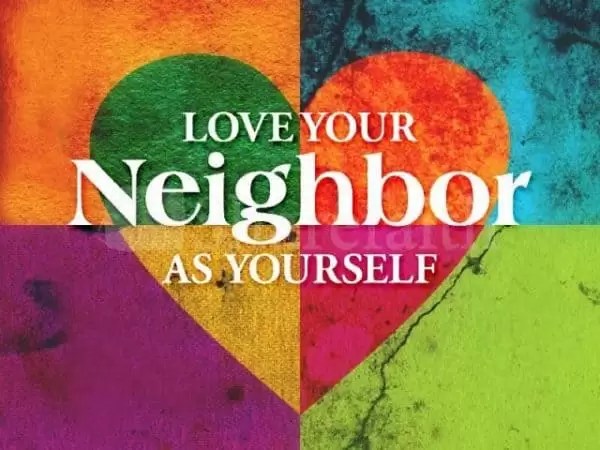
this: You shall love your neighbor as yourself.
There is no other commandment greater than these.”
*

The scribe said to him, “Well said, teacher. You are
right in saying, ‘He is One and there is no other than
he.’ And ‘to love him with all your heart, with all
your understanding, with all your strength, and to
love your neighbor as yourself’ is worth more than
all burnt offerings and sacrifices.” And when Jesus
saw that he answered with understanding, he said to
him, “You are not far from the kingdom of God.”
And no one dared to ask him any more questions.

*Mark 12:31 refers Lv 19:18Rom 13:9Gal 5:14Jas 2:8.

The New Commandment on John 13:31-35

When he had gone out, Jesus said, “Now is the Son of man glorified, and in him God is glorified; if God is glorified in him, God will also glorify him in himself, and glorify him at once. Little children, yet a little while I am with you. You will seek me; and as I said to the Jews so now I say to you, ‘Where I am going you cannot come.’ A new commandment* I give to you, that you love one another; even as I have loved you, that you also love one another. By this all men will know that you are my disciples, if you have love for one another.” – John 13:31-35


*The verse 34 I give you a new commandment: this puts Jesus on a par with Yahweh. The commandment itself is not new; cf. Lv 19:18 and the note there.

The Hebrew transliteration words for “Love your neighbor as yourself” is Ve’ahavta le’reyakha kamokha. It appears in the Bible in Leviticus 19:17-18. 🙏📿🙏❤️

Commentary on Galatians 5:18-25

Catholic Daily Readings

Catholic Daily Readings

This morning I read one of beautiful sermons with commentary applying my deep meditation diving into the Word of God through Holy Spirit transform my life digest more moisture into The Divine Word (Jesus Christ) …. 🤟❤️🙏📿

Please click (hopefully works) on Here is Living Space on October 16th …

Wednesday of Week 28 of Ordinary Time – First Reading

Commentary on Galatians 5:18-25

In our final reading from Galatians today we have a magnificent passage where Paul once again touches on the Spirit-given freedom which is the characteristic of the true Christian.

He begins with a statement which we Catholics should have engraved on our hearts: 

But if you are led by the Spirit, you are not subject to the law.

In the Letter to the Romans Paul had also said: 

For all who are led by the Spirit of God are children of God.(Rom 8:14)

And just prior to these verses, he had said to the Galatians: 

Live by the Spirit, I say, and do not gratify the desires of the flesh. (Gal 5:16)

By putting oneself under the Spirit, one is not under the bondage of trying to please God by minute observance of the law for salvation or sanctification.

The sign of the Spirit’s presence is love (agape). If we are genuinely filled with the Spirit of truth and love, then we really have no need of law. As we read in the First Letter of John: 

God is love, and those who abide in love abide in God, and God abides in them. (1 John 4:16)

And as St Teresa of Calcutta (Mother Teresa) once said:

Where there is (agape) love, there is God.

St Augustine put it: 

Love and do what you like.

If we were able to be truly loving, we could not commit sin, even though in certain circumstances we might violate the letter of a particular law. On the other hand, a person who meticulously carries out the smallest detail of a law may be a very unloving person, an intolerant bigot or a person full of hate.

In practice, of course, every institution or organisation needs some kinds of rules which help members to live according to the spirit of the group. Ignatius of Loyola realised this when he wrote his detailed Constitutions for the Society of Jesus. But the principle enunciated by Paul here must remain paramount. The rules are to help advance the spirit and goals of the group; any rule or any application of a rule that frustrates that spirit or goal is to be set aside.

Paul illustrates the difference between a life which is purely self-directed (lived according to the “flesh”) and one lived in the Spirit by describing two kinds of people. These are diametrically opposed to each other and mutually exclusive.

One kind consists of those who act in a spirit of total self-indulgence, those who do what they like whenever they feel like it. It is a description of the self-centred hedonistic, individualistic, person.

He gives a partial list of 15 kinds of behaviour: 

Now the works of the flesh are obvious: sexual immorality, impurity, debauchery, idolatry, sorcery, enmities, strife, jealousy, anger, quarrels, dissensions, factions, envy, drunkenness, carousing, and things like these.

These emerge from our lower instincts and are destructive both of others and oneself. Such lists of vices and virtues were common in the ancient world, and others can be found in the New Testament. This type of behaviour is clearly at odds with what one expects in a world where God’s way is paramount.

On the other hand, those who live in the Spirit of the Father and Christ behave in a very different way. The presence and power of the Spirit in such people results in very different characteristics. Paul says:

By contrast, the fruit of the Spirit is love, joy, peace, patience, kindness, generosity, faithfulness, gentleness, and self-control. There is no law against such things.

Christian character is produced by the Holy Spirit, not by the mere moral discipline of trying to live by following the laws. Paul makes it clear that justification by faith does not result in a law-less life. The indwelling Holy Spirit produces Christian virtues in the believer’s life. These are not just ‘virtues’ which I can acquire by constant practice. Much more they are the natural outcome of a life lived in close relationship with Jesus through his Spirit, and allowing the Way of Jesus to guide one’s life. It is not a question of self-discipline or self-control, but rather of having a vision of where the good life really is and following that path.

We might notice that Paul contrasts “works of the flesh” with the “fruit” (not ‘works’) of the Spirit. It is the Spirit, not the following of laws, which lead to such qualities in a person. And, as Paul points out, there is no law covering such characteristics. They are above and beyond any law and, when they are operative, the keeping of the law is more than adequately looked after.

The only way, then, to belong to Christ is by letting go of all—for us to:

…have crucified the flesh with its passions and desires.

The Spirit of Jesus directs such lives. As stated in the NIV Bible:

“Christian character is produced by the Holy Spirit, not by the mere moral discipline of trying to live by law.”

On the other hand, absence of law does not mean lawlessness or spiritual anarchy. On the contrary, our deepening relationship with Jesus, our prayerful reflection on his teaching and our acceptance of that teaching, points us firmly in the direction of truth, love and freedom.

The Letter to the Galatians, although it seems to be dealing with a very specific problem of a very specific group of people, in fact has a great deal of relevance for Christians of every age and every place. The lesson about the freedom of the Christian is of the greatest importance. It is very sad if we see our being Christian as a restricted form of being human, with limitations set as a condition for ‘salvation’ in a future existence. It is not a means of ‘numbing’ the lower classes to accepting an unjust existence as the price for a future happiness.

To the contrary, it is the person who is a world unto himself, with no thought of the needs of others, who becomes the slave of his own passions and fantasies. And when society is full of such people, then we see the kind of behaviour that Paul deplores in today’s passage. Paradoxically, it is the loving person, the one who lives for the genuine well-being of others, who becomes the most enriched. The best society is one where, when everyone gives, then everyone gets.

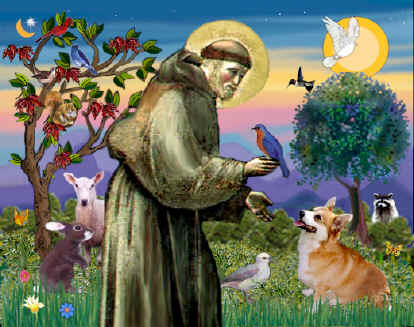
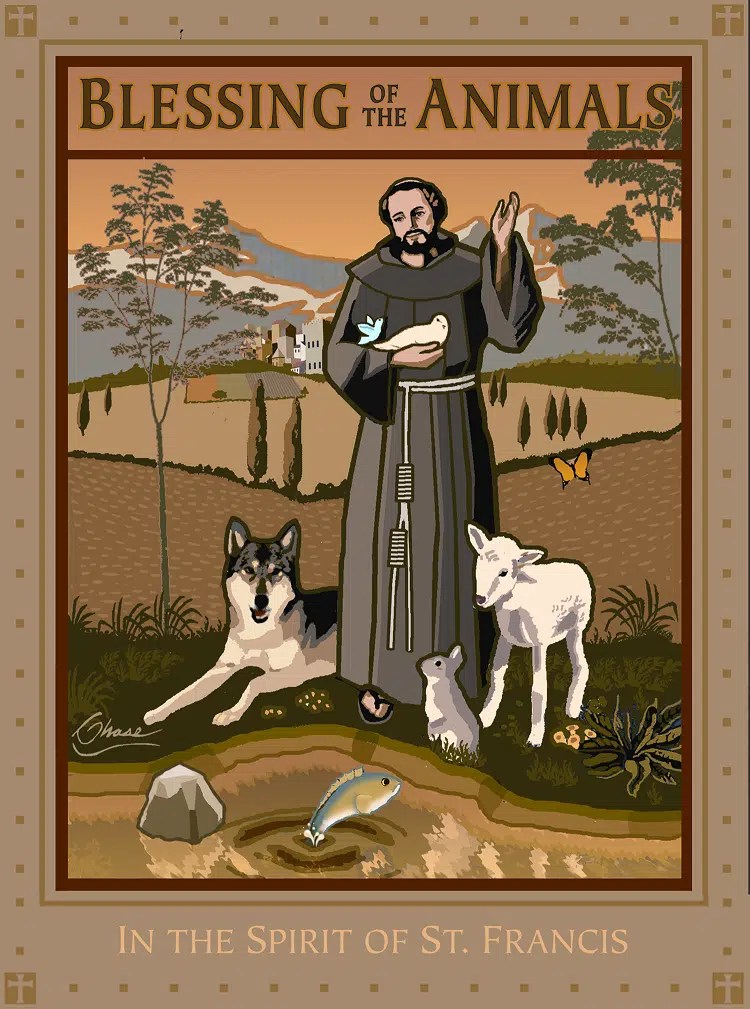
St. Francis of Assisi

Many Catholics worldwide celebrate the Feast of St Francis of Assisi on October 4 each year. The feast commemorates the life of St Francis, who was born in the 12th century and is the Catholic Church’s patron saint of animals and the environment.

The Feast of St. Francis of Assisi is celebrated on October 4th, and it is a day to commemorate the life of the patron saint of animals and the environment. On this day, people often bring their pets and other animals to church for blessings. 

The prayer of Saint Francis for animals is a prayer to bless pets and ask for God’s healing power for animals

  • Prayer for the Blessing of Pets”Blessed are you, Lord God, maker of all living creatures. You called forth fish in the sea, birds in the air and animals on the land. You inspired Saint Francis to call all of them his brothers and sisters. We ask you to bless this pet. By the power of your love, enable it to live according to your plan. May we always praise you for all your beauty in creation. Blessed are you, Lord our God, in all your creatures! Amen”.

Feast day: The Solemnity of the Most Holy Trinity is on May 26

You all are blessed, please click on The Solemnity of the Most Holy Trinity

Alleluia 

Rv 1:8

R. Alleluia, alleluia.
Glory to the Father, the Son, and the Holy Spirit;
to God who is, who was, and who is to come.
R. Alleluia, alleluia.

Revelation 1:8* refers  [1:81721:622:13Is 41:444:648:12.

* [1:8] The Alpha and the Omega: the first and last letters of the Greek alphabet. In Rev 22:13 the same words occur together with the expressions “the First and the Last, the Beginning and the End”; cf. Rev 1:172:821:6Is 41:444:6.

Alpha and Omega

 The first and last letters of the Greek alphabet. They appear together on the Paschal candle and signify the eternal presence of Jesus Christ.
Christ is the beginning and the end.

Feast day: The Solemnity of the Most Holy Trinity is on May 26

ETWN: Does Jesus ever claim to be God?

Yes, Jesus clearly indicates that He is God. In the Old Testament, God said to Moses that His Name is “I AM WHO I AM,” or simply, “I AM” (Exodus 3:14). In multiple places in the Gospel, Jesus uses this language or implies it, infuriating those who could not conceive of the possibility of God having a Son.

“Truly, truly, I say to you, before Abraham was, I am.” (John 8:58)

“I am the bread of life; he who comes to me shall not hunger, and he who believes in me shall never thirst.” (John 6:35)

“I am the light of the world; he who follows me will not walk in darkness, but will have the light of life.” (John 8:12)

“I am the good shepherd.” (John 10:11)

“I am the resurrection and the life, he who believes in me, though he die, yet shall he live… (John 11:25)

“I am the way, and the truth, and the life; no one comes to the Father, but by me. (John 14:6)

The group joyfully read Catholic Bible

Catechism of the Catholic Church: Please click To Catechism home page

“I Am who I Am” 👈❤️🤟🙏🕊️🔥📿🙏

Moses said to God, “If I come to the people of Israel and say to them, ‘The God of your fathers has sent me to you’, and they ask me, ‘What is his name?’ what shall I say to them?” God said to Moses, “I AM WHO I AM.” And he said, “Say this to the people of Israel, ‘I AM has sent me to you’. . . this is my name for ever, and thus I am to be remembered throughout all generations.” 10

206 In revealing his mysterious name, YHWH (“I AM HE WHO IS”, “I AM WHO AM” or “I AM WHO I AM”), God says who he is and by what name he is to be called. This divine name is mysterious just as God is mystery. It is at once a name revealed and something like the refusal of a name, and hence it better expresses God as what he is – infinitely above everything that we can understand or say: he is the “hidden God”, his name is ineffable, and he is the God who makes himself close to men. 11

207 By revealing his name God at the same time reveals his faithfulness which is from everlasting to everlasting, valid for the past (“I am the God of your father”), as for the future (“I will be with you”). 12 God, who reveals his name as “I AM”, reveals himself as the God who is always there, present to his people in order to save them. 

208 Faced with God’s fascinating and mysterious presence, man discovers his own insignificance. Before the burning bush, Moses takes off his sandals and veils his face in the presence of God’s holiness. 13 Before the glory of the thrice-holy God, Isaiah cries out: “Woe is me! I am lost; for I am a man of unclean lips.” 14 Before the divine signs wrought by Jesus, Peter exclaims: “Depart from me, for I am a sinful man, O Lord.” 15 But because God is holy, he can forgive the man who realizes that he is a sinner before him: “I will not execute my fierce anger. . . for I am God and not man, the Holy One in your midst.” 16 The apostle John says likewise: “We shall. . . reassure our hearts before him whenever our hearts condemn us; for God is greater than our hearts, and he knows everything.” 17

209 Out of respect for the holiness of God, the people of Israel do not pronounce his name. In the reading of Sacred Scripture, the revealed name (YHWH) is replaced by the divine title “LORD” (in Hebrew Adonai, in Greek Kyrios). It is under this title that the divinity of Jesus will be acclaimed: “Jesus is LORD.” 

Notes:

10 Ex 3:13-15.

11 Cf. Isa 45:15; Judg 13:18.

12 Ex 3:6, 12.

13 Cf. Ex 3:5-6.

14 Isa 6:5.

15 Lk 5:8.

16 Hos 11:9.

17 I Jn 3:19-20.

English Translation of the Cathechism of the Catholic Church for the United States of America © 1997, United States Catholic Conference, Inc.

Three Pilgrimage Festivals of Passover, Shavuot and Sukkot

Seven Species in Israel we all recognize the seven species listed are wheat, barley, grape, fig, pomegranates, olive (oil), and date (date honey) (Deuteronomy 8:8). Their first fruits were the only acceptable offerings in the Temple.

We all read Ruth 2:23 USCCB

23So she (Ruth) stayed gleaning with Boaz’s young women until the end of the barley and wheat harvests.

Sherlock Holmes Biblical Research

I want to share you all read study and learn first five books (Scroll) of Genesis, Exodus, Leviticus, Numbers, and Deuteronomy. I believe Jesus is New Covenant Messianic Fulfillment quoted from Old Covenant. Beautiful Parallels.

Three Pilgrimage Festivals of Passover, Shavuot and Sukkot are importantly recognized we all read more familiar whole Sacred Scriptures and Traditions of Jesus teach us all more spiritual comprehension what is Three Pilgrimage Festivals of Passover, Shavuot and Sukkot elaborately describe more clarification:

First, what is moedim in Hebrew?
Answer: “Appointed Times”. God (Elohim) and His Divine “Appointed Times” aka seasons according Genesis 1:14 first appeared:

14Then God said: Let there be lights in the dome of the sky, to separate day from night. Let them mark (oth) the seasons (moedim), the days (yom) and the years (shanah). Please check Genesis 1:14 Interlinear

Moedim are plural. Moed is singular. Moedim literally means “festivals” (“feasts”) i.e.: YHWH and His Sabbath & Seven Major Feasts.

The Hebrew moedim (plural) literally follow the agricultural cycles of harvests throughout the whole year.

Three Pilgrimage Harvests on Agricultural Calendar:

1. New Barley Harvest (March-April) begin on Paschal (“Easter”, Passover, Pesach) until barley ends, new wheat harvest begin example of the Book of Ruth 2:23 USCCB.

2. New Wheat Harvest (May-June) begin on Shavuot (50th day, Pentecost).

3. Grapes Harvest (September-October, “Fruit Harvest”) begin on Sukkot (Feast of Tabernacle, Festival of Booths, Feast of Ingathering).

Here are two excellent article I find more interesting information might help:

a. Ancient Israel Festivals (Feasts)

b. Harvest Seasons of Ancient Israel

Yom haBikkurium (FirstFruits) always is on 16th of Nisan (Aviv) same time Sefirat haOmer (Counting the Omer) is the powerfully anointing key after Chag haMatzah (Feast of Unleavened Bread) is High Shabbat (High Holy Day) on 15th of Nisan after Pesach (Passover, 14th of Nisan).

Counting the Omer (barley harvest*) is for counting on day(s) toward Shavuot (wheat harvest).

*in Israel, the harvesters use sickle tool (scythe tool) below photos:

Happy Feast of Pentecost!

We Catholic Christians joyfully celebrate Paschal (Easter) for a total of 50 days – all the way until Pentecost is on May 19, 2024.


I understood Catholic Sacred Scriptures parallels of Old Covenant to Jesus Christ is New Covenant Messianic Fulfillment:

Easter (Paschal, Pesach, Passover) is on 14th of Nisan. March-April. Barley Harvest. 👈

Feast of Unleavened (Chag haMatzah) is on 15th of Nisan, always is on High Holy Day aka High Shabbat.

Feast of First Fruits (Yom haBikkurium) always is on 16th of Nisan same time Counting of the Omer (Sefirat haOmer). In Ancient Israel, the harvesters began using sickle tool harvesting on barley harvest. 👈

We all learn basic words:
Pentecost was originally the Jewish Festival of Shavout, the biblical “Feast of Weeks.” Shavuot literally means “weeks” (שָׁבוּעוֹת). Shavua is singular, means week. In the Septuagint, the Greek translators used the word Πεντηκοστή (Pentēkostē) to refer to the festival. The word Pentecost means “fiftieth” (50th) refers to Shavout always occurs on the fiftieth day (50th).

Shavuot marked the wheat harvest in the Land of Israel. Shavuot is on May-June aka wheat harvest. 👈

On Shavuot we all read Old Covenant “first five books”: Exodus 19 “God spoke thunderous to Moses and people “Giving of the Torah (Law) on the Mount Sinai”. Shavuot is completely seven weeks after the exodus delivered from “430 years bondage (Exodus 12:40) of Egypt” on Exodus 12-15.

That’s why Jewish people read the Book of Ruth always is on Shavuot according Ruth 2:23 is the anointing message on Shavuot is that her story takes place at wheat harvest time from the “leftovers” barley harvest time (Second Passover on Firstfruits), and Shavuot also occurs at the time of the spring harvest. Read this:

Ruth 2:23 23 So she (Ruth) stayed close to the young women of Boaz, gleaning until the end of the barley and wheat harvests; and she lived with her mother-in-law (Noami).

Ruth 2:23 USCCB So she (Ruth) stayed gleaning with Boaz’s young women until the end of the barley and wheat harvests. 🤟 ❤️🙏🔥🕊️📿🙏

Ruth clinging to her mother in law’s (Naomi) shoulders after refusing to return to her family (Ruth 1:14). Illustration by Philip R Morris (1836-1902).

Please click and read on Ruth 1:16-17
16* But Ruth said, “Do not press me to go back and abandon you!

Wherever you go I will go,

wherever you lodge I will lodge.

Your people shall be my people

and your God, my God.

17Where you die I will die,

and there be buried.

May the LORD do thus to me, and more, if even death separates me from you!”

Footnote on verse 16:

 [1:1617] Ruth’s adherence to her mother-in-law in 1:14 is now expressed in a profound oath of loyalty, culminating in a formulary found frequently in Samuel and Kings; cf. especially 1 Sm 20:13. Even death: burial in Naomi’s family tomb means that not even death will separate them.

This memorial is celebrated every year on the Monday after Pentecost.

Please click on ETWN:

The memorial of Mary, Mother of the Church, is celebrated the Monday after Pentecost. On Pentecost Sunday, we celebrate the birthday of the Church, and on the memorial of Mary, Mother of the Church, Catholics celebrate the fact that Mary, as the mother of Our Lord, is intrinsically linked to the Church as her mother.

What does Mater Ecclesiae mean?

Mater Ecclesiae is Latin for “Mother of the Church.”

Please click:
USSCB On May 20 Blessed Virgin Mary, Mother of the Church

🤟❤️🙏🕊️🔥📿🙏

Colossians 3:1 with Catholic Commentary

Here is an excellent article

Ascension Press: Alleluia

Alleluia Col 3:1 USSCB

R. Alleluia, alleluia.
If then you were raised with Christ,
seek what is above,
where Christ is seated at the right hand of God.
R. Alleluia, alleluia.

From Living Space Prayer by Irish Jesuits I admire this reminds my journey meditation on the Word of God. Share you all are blessing. You are my thoughtful prayers. God bless you. 🤟🙏❤️🕊️🔥📿🙏

Commentary on Colossians 3:1-11🤟🙏❤️🔥🕊️🤟🙏

Just before today’s passage, Paul had been warning the Colossians against false beliefs and practices. These involved the observance of ‘New Moons’ and ‘Sabbaths’. He tells them not to be misled by people who choose to grovel to angels:

Do not let anyone disqualify you, insisting on self-abasement and worship of angels, initiatory visions, puffed up without cause by a human way of thinking… (Col 2:18)

Such people, he says, have no connection with:

…the head, from whom the whole body, nourished and held together by its ligaments and tendons, grows with a growth that is from God. (Col 2:19)

Their lives are being governed by all kinds of rules and petty regulations which are merely ‘human commandments and doctrines’ – “Do not pick up this, do not eat that, do not touch something else.” It is not unusual for some Christians today to become obsessed with these kinds of trivialities and miss the big picture – working with Christ to build the Kingdom of God on earth.

Having warned the Colossians about the futility of all kinds of external, ritualistic observances which it seems they were getting involved in, Paul asks them, in today’s reading to focus on just one thing – Christ:

So if you have been raised with Christ, seek the things that are above, where Christ is, seated at the right hand of God.

There are two interlocking elements in today’s reading: the first deals with the believer’s relationship with Christ, and the second speaks of the behaviour which should naturally follow from that relationship.

As to the believers’ position in Christ: they are as dead; they have been raised with Christ; they are already with Christ in heaven (“hidden with Christ”); they have:

…stripped off the old self…and have clothed yourselves with the new self.

The second element speaks of how the believers are to behave as a result: they are to set their heart (or mind) on things above; they are to put to death practices that belong to their earthly nature; and they are to rid themselves of practices that characterise their unredeemed selves. In summary, they are called upon to become, in their daily experiences, what they are in essence through their vocation in Christ.

Hence, their thoughts are to be on things above, not on the things that are on the earth. This is not a literal looking up to ‘heaven’, but rather that the thinking that guides their actions is solidly rooted in all that God stands for. They are not to identify themselves with the “world”, that part of our experience which is remote from, or opposed to, God’s way.

And the reason Paul gives is because:

…you have died, and your life is hidden with Christ in God.

They have not literally died, but all links with whatever is opposed to Christ have died in them. They are “hidden with Christ” in the sense that their whole being is totally immersed in the person and the vision of Christ and that brings them into close relationship with God. That is the ideal, of course; it takes a lifetime to make it a reality in practice.

And when Christ in his fullness and glory is revealed and, because we have become fully identified with him, then we too will be revealed together with him in glory. Through union with Christ in baptism, his followers already live the identical life he lives in heaven; we have already risen with him, but this spiritual life is not yet manifest and glorious as it will be at the Parousia.

Our identity with Christ – which includes both Christ’s gift to us of his life and our positive response to his call – must result in a way of life that is totally in harmony with that identity. So Paul now warns the Colossians of the kind of behaviour which should have no part in a Christian’s life:

Put to death, therefore, whatever in you is earthly: sexual immorality, impurity, passion, evil desire, and greed (which is idolatry). On account of these the wrath of God is coming on those who are disobedient. These are the ways you also once followed, when you were living that life. But now you must get rid of all such things: anger, wrath, malice, slander, and abusive language from your mouth.

He highlights ‘greed’ as a form of idolatry. Perhaps it is the main idol that is worshipped in the prosperous parts of the world today. The obsession with ownership and the power and status that ownership brings. The constant urge to buy, buy, buy things we have no need of. Our new temples (packed on Sundays) are our shopping malls.

On one level, our union with the Risen Christ, our sharing in his death and resurrection through baptism is immediate and total, but at the practical level of life on earth, this union has to be grown into gradually and we do that by ridding ourselves of the kind of behaviour Paul mentions. Paul has said that we are already “dead” in Christ, “hidden with Christ in God” but, on the practical level, that dying and being reborn is something that we have to work on every day, by “killing” the old and sinful self.

And then he gives some more examples of the things the Colossians need to die to, behaviour which marked their pre-Christian lives but which now should be removed from their life: anger, wrath, malice, slander, and abusive language from your mouth.” As the French say, ‘Plus ca change, plus c’est la meme chose’. All the examples Paul mentions are found every day in our media and played out in people’s lives.

With the abandoning of the old pre-Christian self, there must also be the abandonment of the old ways of doing and relating:

…you have stripped off the old self with its practices.

Just as one takes off dirty clothes and puts on clean ones, so Christians are called upon to renounce their evil ways and live in accordance with the ways of Christ’s kingdom.

Instead you have:

…clothed yourselves with the new self, which is being renewed in knowledge according to the image of its creator.

The human race, that was to have been in the ‘image of God’ (Gen 1:26), lost its way outside and apart from the will of God and became the slave of sin and sinful urges. This is the ‘old self (Greek, anthropos)’ that must die; the ‘new self’ is reborn in Christ, who is the true image of God and, in his humanity, the true image of what it is to be human.

And, when we have taken on this ‘new self’, this new way of being fully human:

…there is no longer Greek and Jew, circumcised and uncircumcised, barbarian, Scythian, enslaved and free…

‘Barbarians’ were those who did not speak Greek and hence were deemed uncivilised; Scythians, who came originally from what is now southern Russia, were known especially for their brutality and considered by other peoples as little better than wild animals. In many ways, this understanding of humanity was a huge advance in human relations.

There can then be only one conclusion, that:

…Christ is all and in all!

Jesus is the paradigm for all human thinking and acting and relating. It is the central theme of the whole letter. Christ is the Alpha and the Omega, the beginning and the end. He is the Word of God to be listened to and followed:

Let anyone with ears listen! (Matt 11:15)

All lesser ‘gods’ need to be abandoned, and we all certainly have our lesser gods. What are mine?

Christ is our Lord and he is also our Brother and his Father is the Father of every single person. Hence, the new creation will not be divided into races and religions and cultures and social classes in the way the present creation has been since the Fall. Christ transcends all barriers and unifies people from all cultures, races and nations. Such distinctions are no longer significant; Christ alone matters.

Again, that is the ideal but, in the more than 2,000 years since these words were written, we have still such a long way to go. And, far from being the model of unity we are called to be, Christians themselves are deeply divided, contemptuous and unaccepting of each other. Charles Schulz’s character, Charlie Brown, put it very well many years ago: “I love mankind; it’s people I can’t stand.” In church, we profess a great love for all mankind. What happens with all those people we bump into in the street?

Clearly this reading gives much room for personal and community reflection. It is as relevant to us, wherever we are today, as it was for the Christians of Colossae and Laodicea.

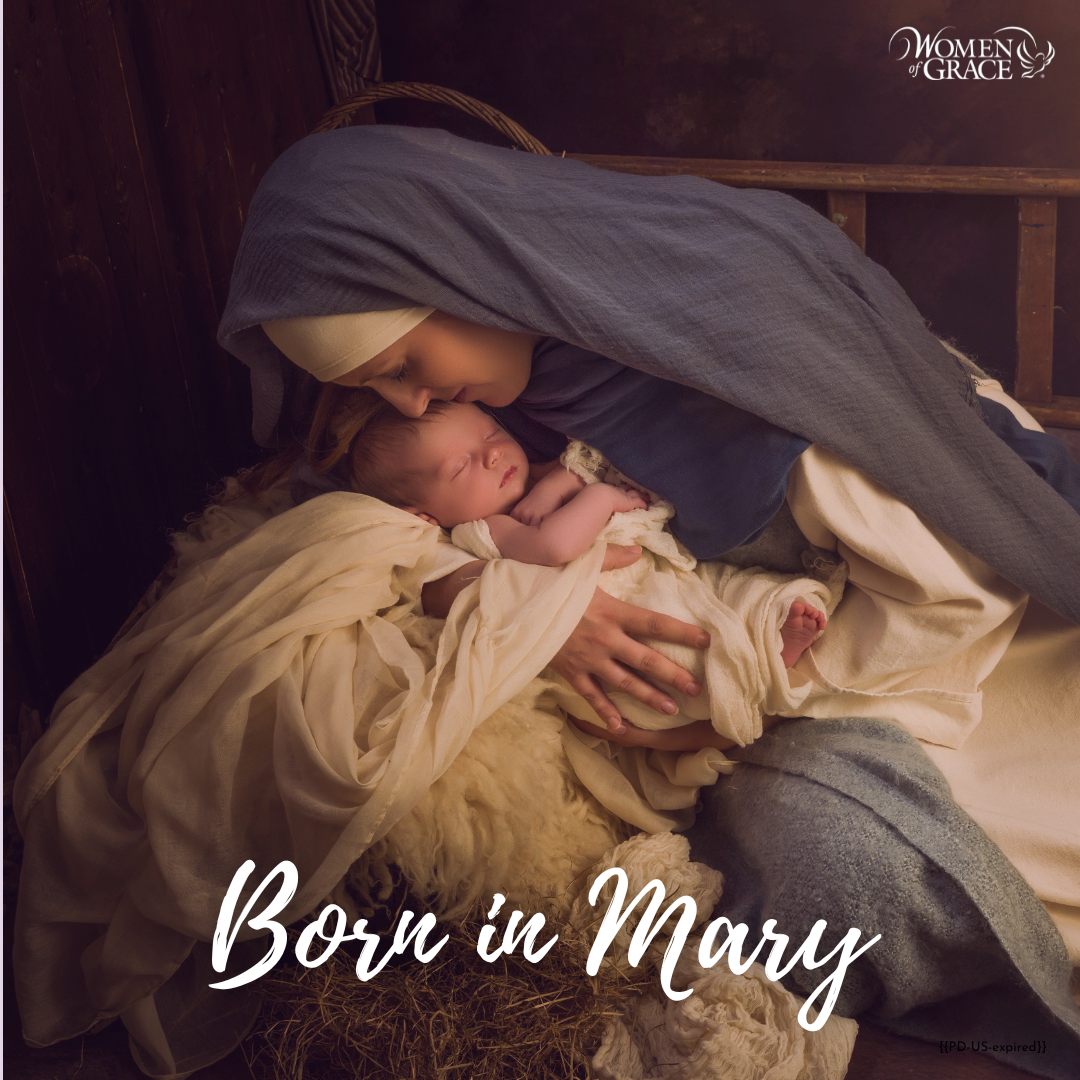
Born in Mary

This is from Women of Grace Newsletter: May 4

“If Jesus Christ, the Head of men, is born in [Mary], then the predestinate, who are the members of that Head, ought also to be born in her by a necessary consequence. One and the same mother does not bring forth into the world the head without the members… So in like manner in the order of grace, the head and the members are born of one and the same mother.”

-St. Louis Grignion de Montfort, True Devotion, 32

Today’s Reflection

St. Louis de Montfort uses the term “predestinate” and Paragraph 62 from Lumen Gentium makes reference to “the elect.” Read Paragraphs #600, #2782, #2823 in the Catechism of the Catholic Church. How have you been predestined by God in Jesus Christ? In light of this, examine how it is that Mary is our spiritual mother according to St. Louis de Montfort. Ponder all of this. To what extent does this enlarge your understanding of yourself? Of Mary? Of God’s love for you?

Read Paragraph Catechism #

600 To God, all moments of time are present in their immediacy. When therefore he establishes his eternal plan of “predestination”, he includes in it each person’s free response to his grace: “In this city, in fact, both Herod and Pontius Pilate, with the Gentiles and the peoples of Israel, gathered together against your holy servant Jesus, whom you anointed, to do whatever your hand and your plan had predestined to take place.”395 For the sake of accomplishing his plan of salvation, God permitted the acts that flowed from their blindness.396

395 Acts 4:27-28; cf. Ps 2:1-2.🤟❤️🙏🔥🕊️📿🙏
396 Cf. Mt 26:54; Jn 18:36; 19:11; Acts 3:17-18.
🤟❤️🙏🔥🕊️📿🙏

2782 We can adore the Father because he has caused us to be reborn to his life by adopting us as his children in his only Son: by Baptism, he incorporates us into the Body of his Christ; through the anointing of his Spirit who flows from the head to the members, he makes us other “Christs.” God, indeed, who has predestined us to adoption as his sons, has conformed us to the glorious Body of Christ. So then you who have become sharers in Christ are appropriately called “Christs.”34

The new man, reborn and restored to his God by grace, says first of all, “Father!” because he has now begun to be a son.35

34 St. Cyril of Jerusalem, Catech. myst. 3,1:PG 33,1088A.
35 St. Cyprian, De Dom. orat. 9:PL 4,525A.

2823 “He has made known to us the mystery of his will, according to his good pleasure that he set forth in Christ . . . to gather up all things in him, things in heaven and things on earth. In Christ we have also obtained an inheritance, having been destined according to the purpose of him who accomplishes all things according to his counsel and will.”98 We ask insistently for this loving plan to be fully realized on earth as it is already in heaven.

98 Eph 1:9-11. 🤟❤️🙏🕊️🔥📿🙏