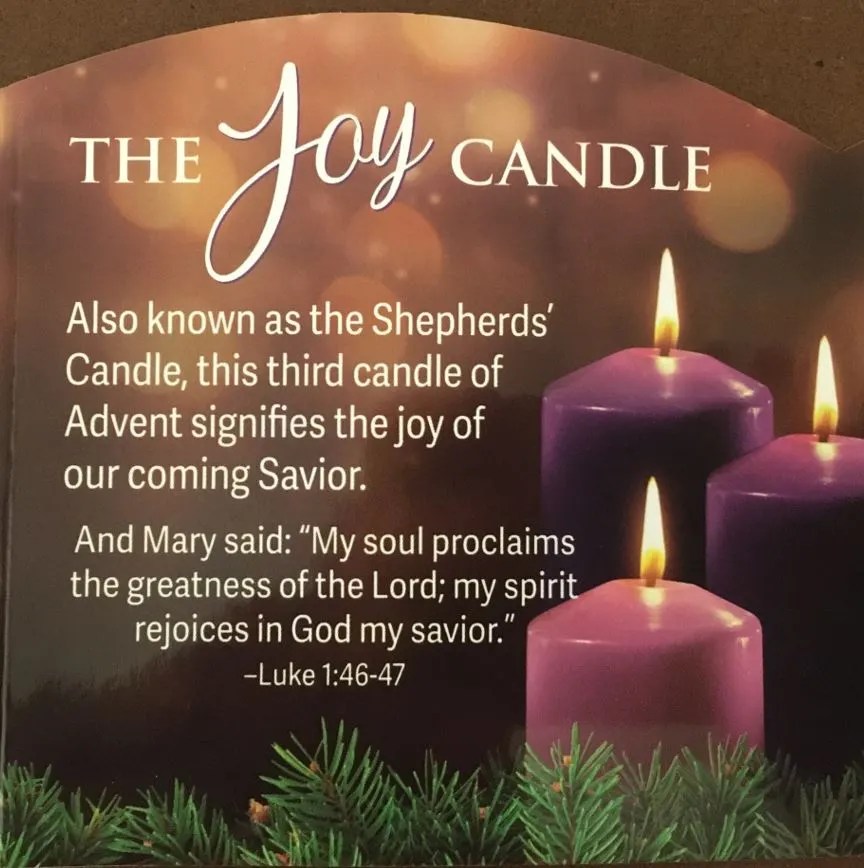
Third Advent Sunday: Joy

Don’t forgot January 6th: The feast of the Epiphany commemorates the arrival of the magi (sometimes referred to as Three Kings or Wise Men) to visit Infant Jesus.

It is a special date for many Christians as it’s when people celebrate how a star led the Magi – also known as the Three kings or the Wise Men – to visit the baby Jesus after he had been born. ‘Epiphany’ comes from the Greek word meaning ‘to reveal’, as it is when the baby Jesus was ‘revealed’ to the world.

Example: YHWH appeared Adam, ……, Noah, Abraham, Issac, Jacob, ….., Moses, …..David, ….. in Old Testament (Old Covenant).

The USCCB describes the Epiphany simply by saying it “marks the arrival of visitors, identified in Scripture as the magi, to the place where Jesus was born.” The word itself means “divine revelation.”

Matthew 2:10 They [Magi three wise men: Melchior, Caspar, and Balthazar] were overjoyed at seeing the star 🙏📿🕯️

Micah 5:1 foreshadowed approx. 700 years before the birth of JESUS….

Approximately 700 years from the Scroll (Book) of Micah 5:1 before the birth of JESUS (YESHUA in Aramaic) as recorded in Matthew’s Gospel in New Covenant (Testament). ❤️🤟🙏📿

According to Catholic understanding, Micah 5:1 (some versions 5:2), which is considered a prophecy about the Messiah’s birthplace in Bethlehem (in Hebrew: “House of Bread”), is believed to be written around 700 years before the events of the New Testament, meaning there is a roughly 700-year gap between the writing of Micah and the New Testament period.

Micah in Hebrew Bible: His name is an abbreviated form of the name Mikayahu which means, “Who is like the Lord?” He prophesied sometime during the reigns of Jotham, Ahaz and Hezekiah, kings of Judah (750-686 BC). His prophecies may have been compiled in this book after his death.

The above we see title the Lord, God reveals His Divine Name: ”Who is like YHWH?”

Key points:
Micah 5:1:
“But you, Bethlehem Ephrathah, though you are little among the clans of Judah, out of you shall come for me one who is to be ruler in Israel, whose origins are from old, from ancient days.”

Interpretation:
Christians (followers of Christ) interpret this verse as a prophecy about Jesus’ birth in Bethlehem in Hebrew “House of Bread
.”

Timeframe:
The Book of Micah is believed to have been written during the reigns of Kings Jotham, Ahaz, and Hezekiah of Judah, which is estimated to be around the 8th century BC
.

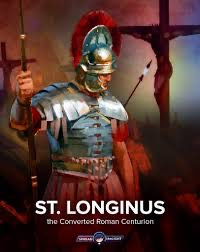
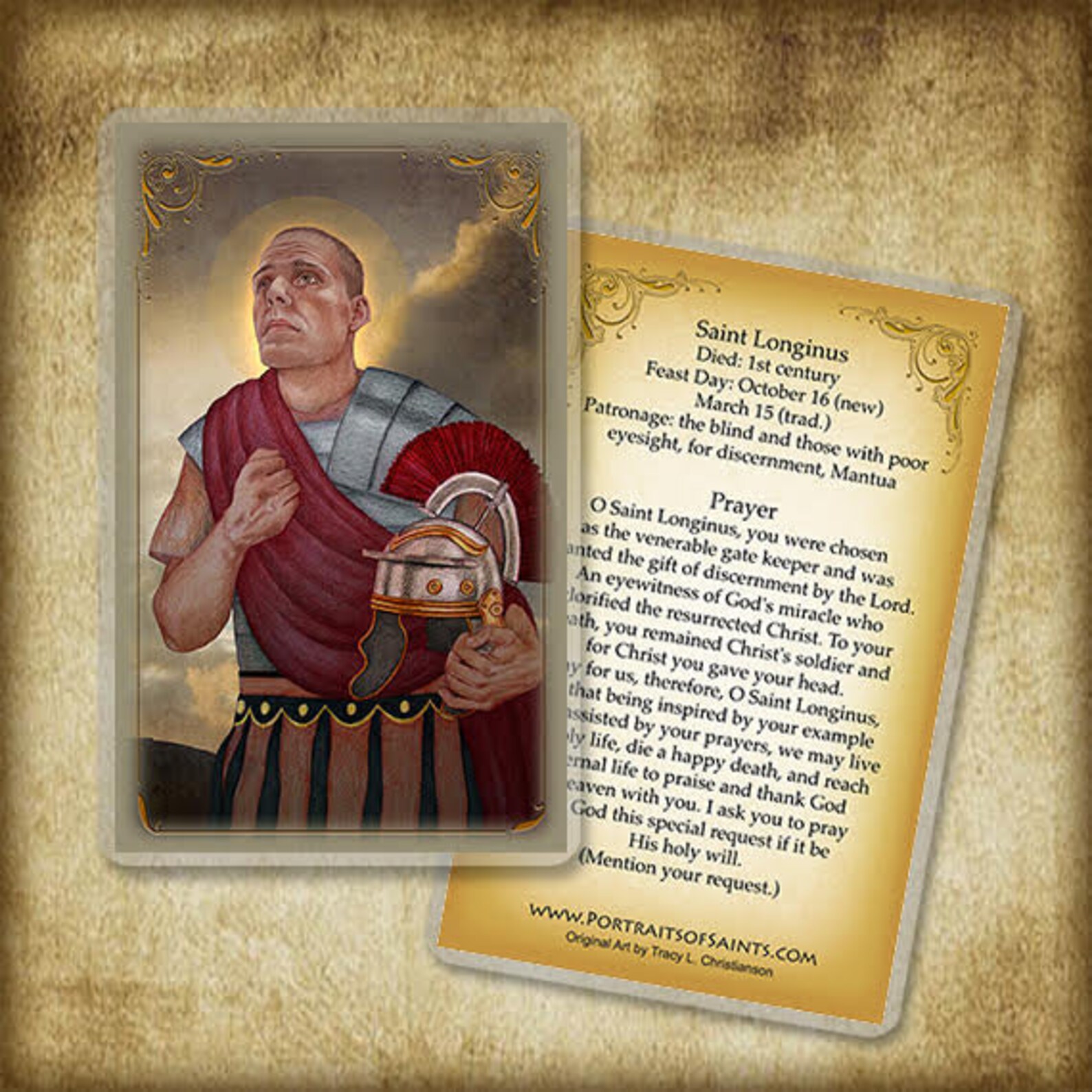
St. Longinus Roman centurion

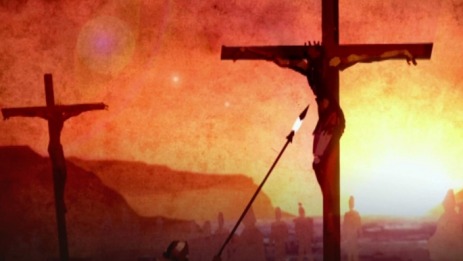
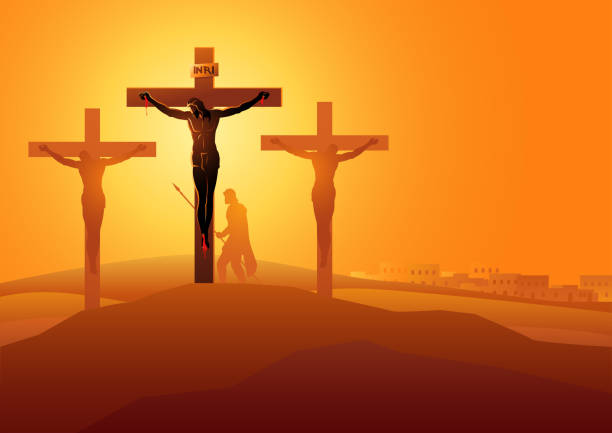
St. Longinus pierced the side of the Lord with his lance:  “One of the soldiers thrust a lance into His side, and immediately blood and water flowed out” (John 19:34).

What affiction or condition of the centurion was healed when Yeshua blood splashed on him?

Longinus was a Roman soldier whose one eye was blind. Before the body of Jesus was taken down from the cross, Longinus thrusted a spear on His side and came forth blood and water. A drop of blood spurted in the blind eye of Longinus, miraculously curing him of his blindness.

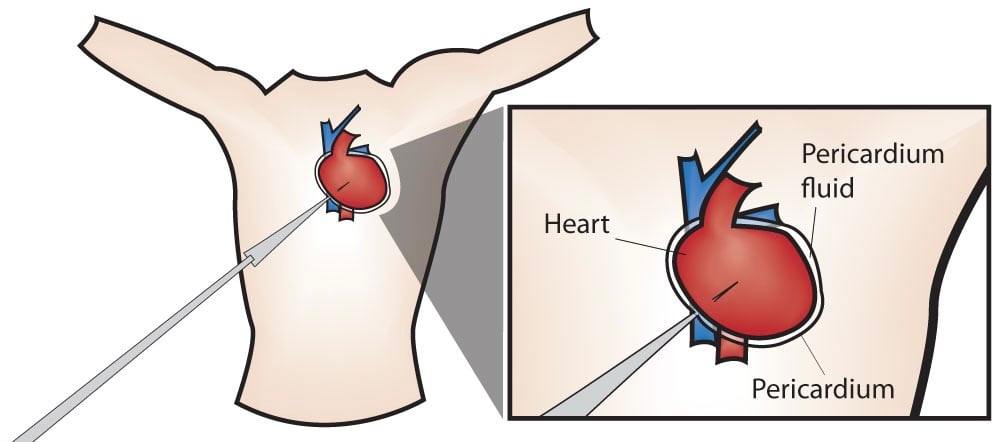
Why did water and blood come out of Yeshua?

When they came to check on Yeshua, He was already dead so they did not break His legs (Numbers 9:11-13, Psalms 34:20, Psalms 22, (John 19:33). Instead, the soldiers pierced His side (John 19:34) to assure (made sure) that He was dead. Isaiah 52:13-53:12 prophesied fulfillment that “blood and water came out” (John 19:34), referring to the watery fluid surrounding the heart and lungs.

DID YOU KNOW?

THE ROMAN SOLDIER WHO PIERCED THE SIDE OF JESUS CONVERTED AND BECAME A SAINT?


St. Longinus is the centurion who pierced the side of Our Lord while He was hanging on the Cross. St. Longinus, who was nearly blind, was healed when some of the blood and water from Jesus fell into his eyes. It was then he exclaimed “Indeed, this was the Son of God!” [Mark 15:39].

St. Longinus then converted, Left the army, took instruction from the apostles and became a monk in Cappadocia. There he was arrested for his faith, his teeth forced out and tongue cut off. However, St. Longinus miraculously continued to speak clearly and managed to destroy several idols in the presence of the governor. The governor, who was made blind by the demons that came from the idols, had his sight restored when St. Longinus was being beheaded, because his blood came in contact with the governors’ eyes.

St. Longinus’ relics are now in the church of St Augustine, in Rome. His Lance is contained in one of the four pillars over the altar in the Basilica of St Peter’s in Rome.

Yeshua Himself Pesach Lamb of God died at 3 pm on 15 Nisan (Second Chagigah) 30 CE according scripture verses.

Behold the blood of Yeshua, who was the High Priest (Cohen HaGadol) of the Brit Chadasha (Renewed Covenant), was also sprinkled before YHWH eight times:

  1. Yeshua perspired drops of blood in the Garden of Gethsemane when He prayed to the Father:  “And being in anguish, He prayed more earnestly, and His sweat was like drops of blood falling to the ground.”  (Luke 22:44)
  2. He was struck in the face until it was “marred beyond recognition.”  (Isaiah 52:14)
  3. His back was scourged with a whip.  (Isaiah 50:6; Matthew 27:26)
  4. The soldiers put a crown of thorns on His head.  (John 19:2)
  5. They plucked out His beard.  (Isaiah 50:6)
  6. They pierced His hands and feet.  (Psalm 22:16; Luke 24:39; John 20:27)
  7. They pierced His side with a spear and blood and water came out. (Psalm 22:14, John 19:34)
  8. Mark 15:39 When the centurion who stood facing him saw how he breathed his last he said, “Truly this man was the Son of God!”

Isaiah predicted 700 years later….

Isaiah in Hebrew: Yeshayahu means Yahweh is Salvation.

According to the Catholic understanding of Luke 3, which references Isaiah 40:3, the prophecy about “preparing the way of the Lord” was made hundreds of years before Jesus’ birth, with most scholars estimating the time of Isaiah’s writing to be around 700 years before Christ.

Key points:

The prophecy:
In Luke 3:4, John the Baptist is described as fulfilling Isaiah’s prophecy: “A voice cries out in the wilderness, ‘Prepare the way of the Lord, make straight paths for him.'”

Isaiah 40:3-5 New Catholic Bible
A voice cries out:
In the wilderness prepare the way of the Lord;
make a straight path in the desert for our God.
4 Let every valley be filled in
and every mountain and hill be made low.
Uneven ground will be made smooth
and the rugged places will become a plain.
5 Then the glory of the Lord will be revealed,
and all mankind will see it together,
for the mouth of the Lord has spoken.

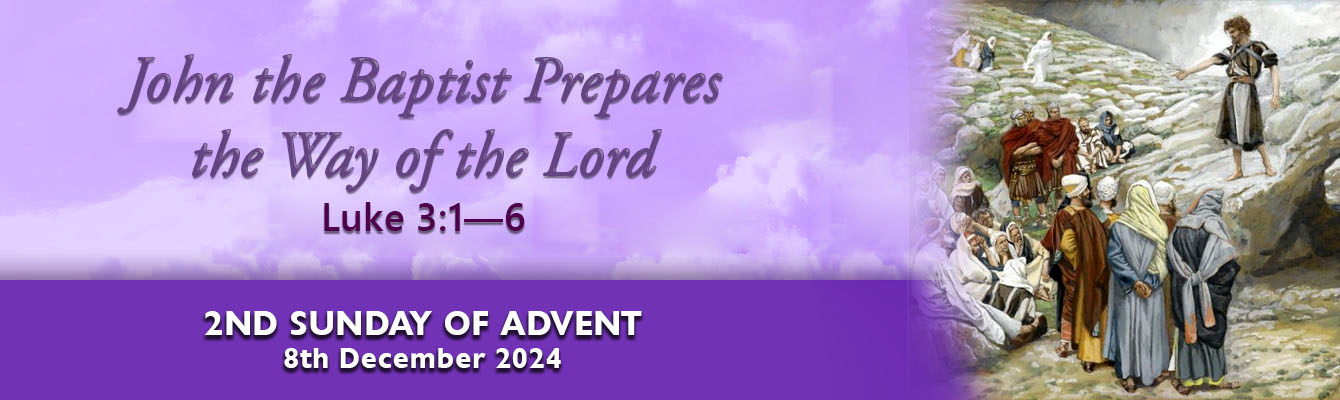
Luke 3:1-6
New Catholic Bible

The Ministry of John the Baptist. 1 In the fifteenth year of the reign of Tiberius Caesar, when Pontius Pilate was governor of Judea, and Herod was tetrarch of Galilee, and his brother Philip was tetrarch of the region of Ituraea and Trachonitis, and Lysanias[b] was tetrarch of Abilene, 2 during the high priesthood of Annas and Caiaphas,[c] the word of God came to John the son of Zechariah in the desert.
3 He [John the Baptist] journeyed throughout the entire region of the Jordan valley, proclaiming a baptism of repentance for the forgiveness of sins, 4 as it is written in the book of the words of the prophet Isaiah:

“The voice of one crying out in the wilderness:
‘Prepare the way of the Lord,
make straight his paths.
5 Every valley shall be filled in,
and every mountain and hill shall be leveled;
the winding roads shall be straightened
and the rough paths made smooth,
6 and all mankind shall see the salvation of God.’ ”

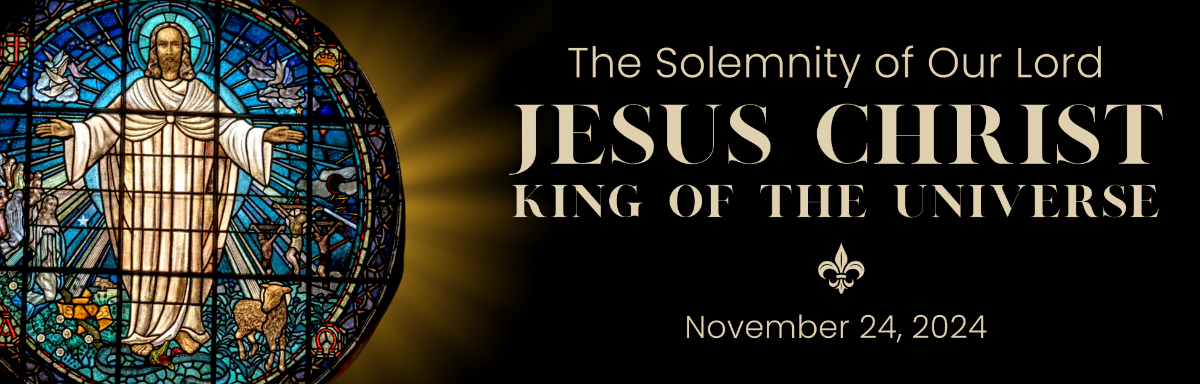
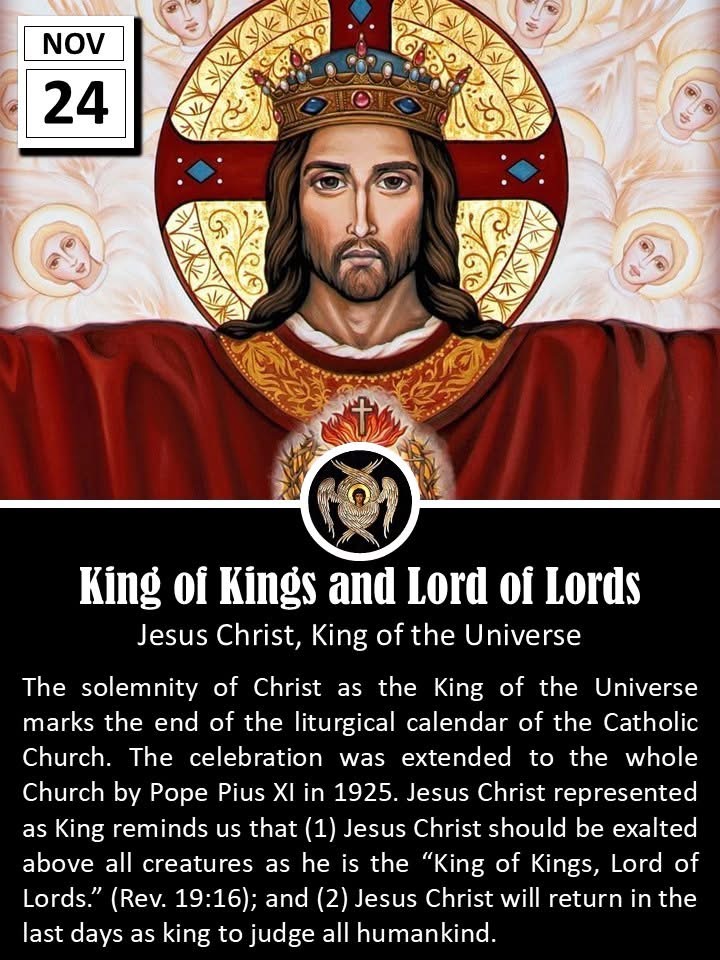
November 24th The Solemnity of Our Lord Jesus Christ, King of the Universe.

Ordinary Time: November 24th
Solemnity of Our Lord Jesus Christ, King of the Universe.

Please click copy and paste very excellent long article:

https://www.catholicculture.org/culture/liturgicalyear/calendar/day.cfm?date=2024-11-24

USCCB Daily Reading on November 24:

The Solemnity of Our Lord Jesus Christ, King of the Universe

Lectionary: 161
Reading I
Dn 7:13-14
As the visions during the night continued, I saw
one like a Son of man coming,
on the clouds of heaven;
when he reached the Ancient One
and was presented before him,
the one like a Son of man received dominion, glory, and kingship;
all peoples, nations, and languages serve him.
His dominion is an everlasting dominion
that shall not be taken away,
his kingship shall not be destroyed.

Responsorial Psalm
Ps 93:1, 1-2, 5
R. (1a) The Lord is king; he is robed in majesty.
The LORD is king, in splendor robed;
robed is the LORD and girt about with strength.
R. The Lord is king; he is robed in majesty.
And he has made the world firm,
not to be moved.
Your throne stands firm from of old;
from everlasting you are, O LORD.
R. The Lord is king; he is robed in majesty.
Your decrees are worthy of trust indeed;
holiness befits your house,
O LORD, for length of days.
R. The Lord is king; he is robed in majesty.

Reading II
Rv 1:5-8
Jesus Christ is the faithful witness,
the firstborn of the dead and ruler of the kings of the earth.
To him who loves us and has freed us from our sins by his blood,
who has made us into a kingdom, priests for his God and Father,
to him be glory and power forever and ever. Amen.
Behold, he is coming amid the clouds,
and every eye will see him,
even those who pierced him.
All the peoples of the earth will lament him.
Yes. Amen.

“I am the Alpha and the Omega, ” says the Lord God,
“the one who is and who was and who is to come, the almighty.”

Alleluia
Mk 11:9, 10
R. Alleluia, alleluia.
Blessed is he who comes in the name of the Lord!
Blessed is the kingdom of our father David that is to come!
R. Alleluia, alleluia.

Gospel
Jn 18:33b-37
Pilate said to Jesus,
“Are you the King of the Jews?”
Jesus answered, “Do you say this on your own
or have others told you about me?”
Pilate answered, “I am not a Jew, am I?
Your own nation and the chief priests handed you over to me.
What have you done?”
Jesus answered, “My kingdom does not belong to this world.
If my kingdom did belong to this world,
my attendants would be fighting
to keep me from being handed over to the Jews.
But as it is, my kingdom is not here.”
So Pilate said to him, “Then you are a king?”
Jesus answered, “You say I am a king.
For this I was born and for this I came into the world,
to testify to the truth.
Everyone who belongs to the truth listens to my voice.”

USCCB click on
https://bible.usccb.org/bible/readings/112424.cfm

❤️🤟🙏📿🕊️

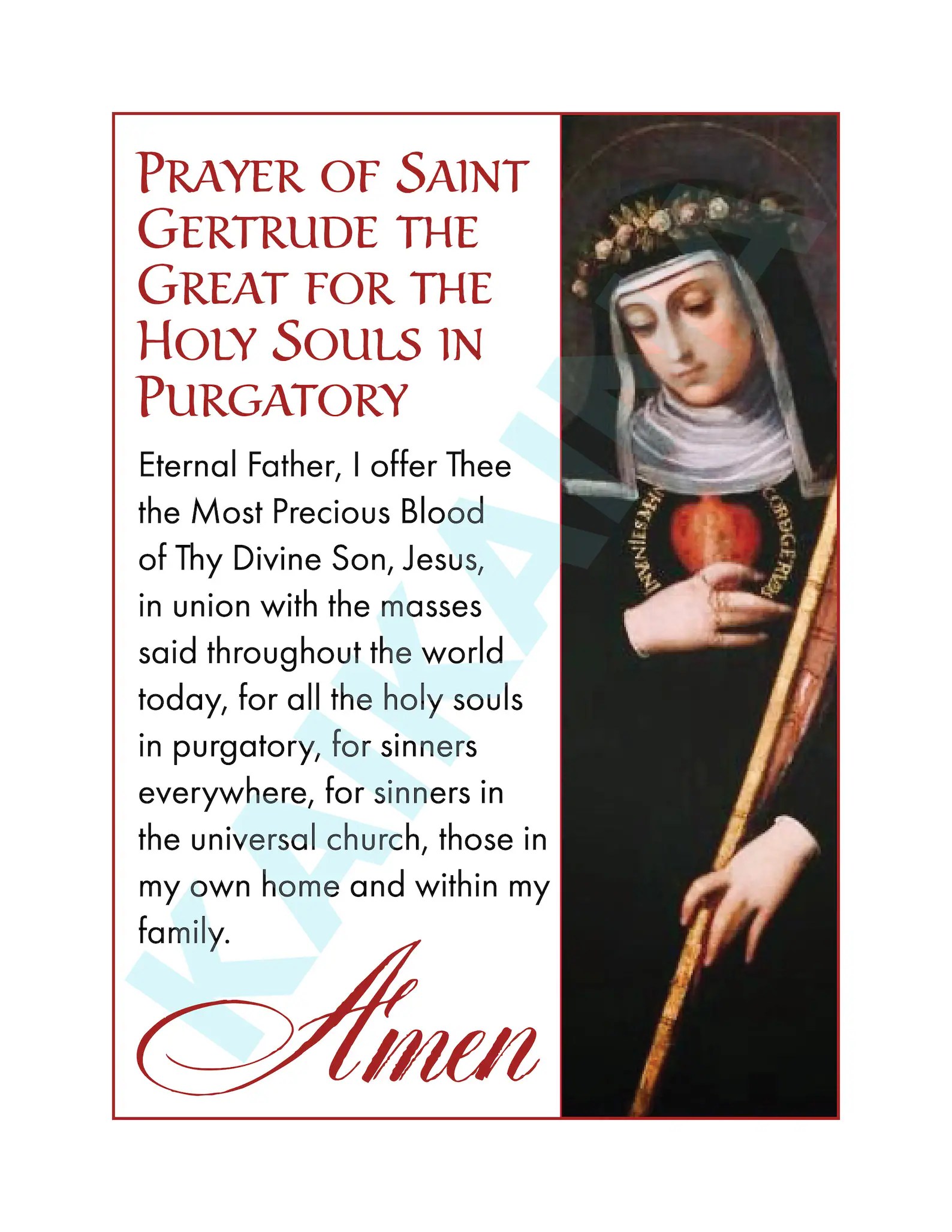
Question: Is Purgatory Biblical?

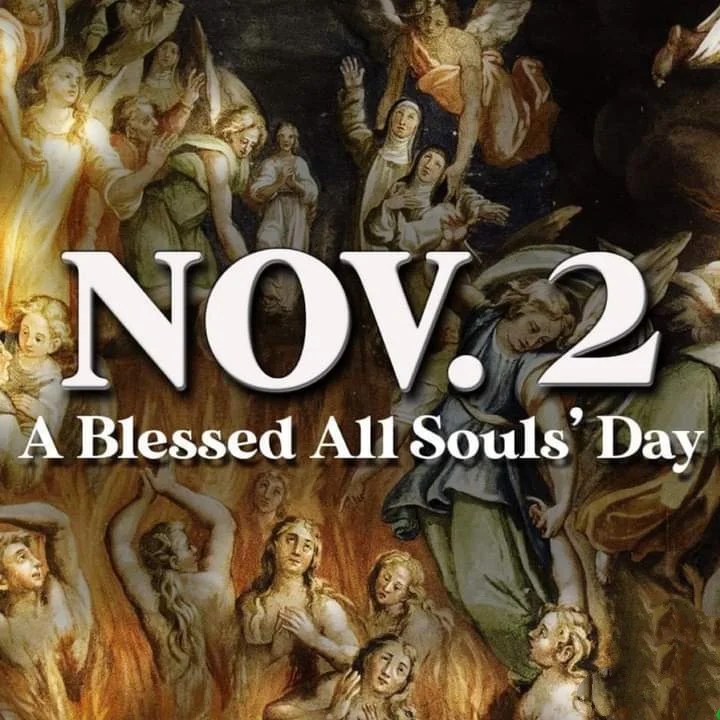
Today is November 2 Pray for All Souls’ Day.

Question: Is Purgatory Biblical?

Answer: Yes and we all read joyous Catholic Sacred Scripture and Tradition.

🙏📿 The word purgatory is derived from the Latin purgation, which means “cleansing” or “purification.” Just as gold is purged of dross in the refining process, so Scripture teaches that we are to be purified of all that is sinful or unclean. For instance, Psalm 51:7-10 USCCB reads:

7Behold, I was born in guilt,

in sin my mother conceived me.*d

8Behold, you desire true sincerity;

and secretly you teach me wisdom.

9Cleanse me with hyssop,* that I may be pure;

wash me, and I will be whiter than snow.e

10You will let me hear gladness and joy;

the bones you have crushed will rejoice.

True Tradition History of Maccabees:

Catholic Church endorse joyfully according to the Bible, Judas Maccabeus prayed for the dead on the day after the Sabbath, following the victory over the men of Gorgias. The true story is told in 2 Maccabees 12:38-46.

Before New Covenant (New Testament) begins, In Old Covenant (Old Testament) we read and find a Jewish hero named Judas Maccabeus, about a century and a half before Jesus Christ is New Covenant, praying for the Jewish warriors dead and specifically asking they be forgiven their sins after they have died (2 Macc. 12:43-46). This practice, known today as the Mourner’s Kaddish, was well established among Jews in Jesus’ own time. (Jews have historically believed, and many still believe, that the souls of the faithful departed undergo a period of purification, which may be aided by the prayers and charity of the living.)

Yes, and Judas Maccabeus prayed for the dead in the Bible, in the book of 2 Maccabees 12:39-42: 

  • Prayer: Judas and his men prayed for the dead to be forgiven for their sins. 
  • Collection: Judas collected silver to send to Jerusalem as a sin offering for the dead. 
  • Sacrifice: Judas ordered sacrifices to be offered in the Temple in Jerusalem for the slain soldiers. 
  • Exhortation: Judas exhorted the people to avoid sin. 

The true story of Judas praying for the dead is interpreted as a biblical justification for the teaching of purgatory. It also shows the belief that prayers from the living can help purify the dead.

2 Maccabees 12;38-46 Expiation for the Dead.

38Judas rallied his army and went to the city of Adullam. As the seventh day was approaching, they purified themselves according to custom and kept the sabbath there.

39On the following day, since the task had now become urgent, Judas and his companions went to gather up the bodies of the fallen and bury them with their kindred in their ancestral tombs.

40But under the tunic of each of the dead they found amulets sacred to the idols of Jamnia, which the law forbids the Jews to wear. So it was clear to all that this was why these men had fallen.f

41They all therefore praised the ways of the Lord, the just judge who brings to light the things that are hidden.

42* Turning to supplication, they prayed that the sinful deed might be fully blotted out. The noble Judas exhorted the people to keep themselves free from sin, for they had seen with their own eyes what had happened because of the sin of those who had fallen.g

43He then took up a collection among all his soldiers, amounting to two thousand silver drachmas, which he sent to Jerusalem to provide for an expiatory sacrifice. In doing this he acted in a very excellent and noble way, inasmuch as he had the resurrection in mind;

44for if he were not expecting the fallen to rise again, it would have been superfluous and foolish to pray for the dead.

45But if he did this with a view to the splendid reward that awaits those who had gone to rest in godliness, it was a holy and pious thought.

46Thus he made atonement for the dead that they might be absolved from their sin.

For no other foundation can any one lay than that which is laid, which is Jesus Christ. Now if any one builds on the foundation with gold, silver, precious stones, wood, hay, straw— each man’s work will become manifest; for the Day* will disclose it, because it will be revealed with fire, and the fire will test what sort of work each one has done. If the work which any man has built on the foundation survives, he will receive a reward. If any man’s work is burned up, he will suffer loss, though he himself will be saved, but only as through fire. – 1 Corinthians 3:11-15

* [3:13] The Day: the great day of Yahweh, the day of judgment, which can be a time of either gloom or joy. Fire both destroys and purifies.

Please click on What is Purgatory?

Please click on Purgatory? Where Is That In The Bible?

November in Latin “Nine”

Today is November. Why do we see November on Calendar?

November 1st ….

🕯️ Lit Novem [Novena] Candle 🕯️

The Latin word novem means “nine” and is the root of the Catholic tradition of the novena, which is a nine-day period of prayer:

Novenas are a traditional Catholic practice where people pray privately or in public for nine days in a row to ask for special favors, make petitions, or obtain graces. Catholics often pray novenas during times of need.

Some examples of novenas include:
Novena to St. Peregrine, prayed by cancer patients and their families
Novena to the Holy Spirit, which is said to have Biblical roots
Novena to the Miraculous Medal
Novena to the Sacred Heart of Jesus
Novena to St. Joseph
Novena to St. Jude

❤️🙏📿 🤟The tradition of the novena may have originated from the nine days between the Feast of the Ascension and Pentecost, when the disciples prayed together in the upper room. ❤️🙏📿🤟

The Church considers the novena to be a pious exercise that strengthens faith, and it grants a partial indulgence to those who take part in a public novena before certain feasts.

🙏📿 Novena is derived from the Latin “novem”, meaning nine. A novena is when a series of private or public prayer to obtain special graces, to implore special favors, or to make special petitions. The prayers are given for nine days straight for the special intention. The novena is offered as a sacrifice to God.🙏📿

The Greatest Commandment

We begin our prayer:
In the name of the Father, and of the Son, and of the Holy Spirit. Amen.
Almighty and merciful God,
by whose gift your faithful offer you
right and praiseworthy service,
grant, we pray,
that we may hasten without stumbling
to receive the things you have promised.
Through our Lord Jesus Christ, your Son,
who lives and reigns with you in the unity of the
Holy Spirit,
God, for ever and ever.
(Collect, Thirty-first Sunday in Ordinary Time)

Read the following Scripture two or three times.❤️🙏📿🙏

Mark 12:28b-34
One of the scribes came to Jesus and asked him,
“Which is the first of all the commandments?” Jesus
replied, “The first is this: Hear, O Israel! The Lord
our God is Lord alone! You shall love the Lord your
God with all your heart, with all your soul, with all
your mind, and with all your strength. The second is
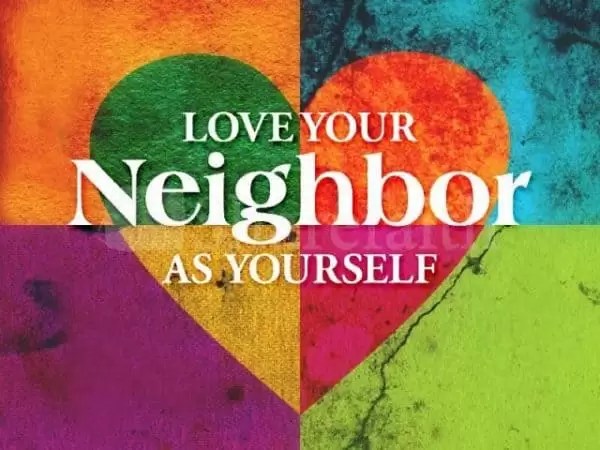
this: You shall love your neighbor as yourself.
There is no other commandment greater than these.”
*

The scribe said to him, “Well said, teacher. You are
right in saying, ‘He is One and there is no other than
he.’ And ‘to love him with all your heart, with all
your understanding, with all your strength, and to
love your neighbor as yourself’ is worth more than
all burnt offerings and sacrifices.” And when Jesus
saw that he answered with understanding, he said to
him, “You are not far from the kingdom of God.”
And no one dared to ask him any more questions.

*Mark 12:31 refers Lv 19:18Rom 13:9Gal 5:14Jas 2:8.

The New Commandment on John 13:31-35

When he had gone out, Jesus said, “Now is the Son of man glorified, and in him God is glorified; if God is glorified in him, God will also glorify him in himself, and glorify him at once. Little children, yet a little while I am with you. You will seek me; and as I said to the Jews so now I say to you, ‘Where I am going you cannot come.’ A new commandment* I give to you, that you love one another; even as I have loved you, that you also love one another. By this all men will know that you are my disciples, if you have love for one another.” – John 13:31-35


*The verse 34 I give you a new commandment: this puts Jesus on a par with Yahweh. The commandment itself is not new; cf. Lv 19:18 and the note there.

The Hebrew transliteration words for “Love your neighbor as yourself” is Ve’ahavta le’reyakha kamokha. It appears in the Bible in Leviticus 19:17-18. 🙏📿🙏❤️

Commentary on Galatians 5:18-25

Catholic Daily Readings

Catholic Daily Readings

This morning I read one of beautiful sermons with commentary applying my deep meditation diving into the Word of God through Holy Spirit transform my life digest more moisture into The Divine Word (Jesus Christ) …. 🤟❤️🙏📿

Please click (hopefully works) on Here is Living Space on October 16th …

Wednesday of Week 28 of Ordinary Time – First Reading

Commentary on Galatians 5:18-25

In our final reading from Galatians today we have a magnificent passage where Paul once again touches on the Spirit-given freedom which is the characteristic of the true Christian.

He begins with a statement which we Catholics should have engraved on our hearts: 

But if you are led by the Spirit, you are not subject to the law.

In the Letter to the Romans Paul had also said: 

For all who are led by the Spirit of God are children of God.(Rom 8:14)

And just prior to these verses, he had said to the Galatians: 

Live by the Spirit, I say, and do not gratify the desires of the flesh. (Gal 5:16)

By putting oneself under the Spirit, one is not under the bondage of trying to please God by minute observance of the law for salvation or sanctification.

The sign of the Spirit’s presence is love (agape). If we are genuinely filled with the Spirit of truth and love, then we really have no need of law. As we read in the First Letter of John: 

God is love, and those who abide in love abide in God, and God abides in them. (1 John 4:16)

And as St Teresa of Calcutta (Mother Teresa) once said:

Where there is (agape) love, there is God.

St Augustine put it: 

Love and do what you like.

If we were able to be truly loving, we could not commit sin, even though in certain circumstances we might violate the letter of a particular law. On the other hand, a person who meticulously carries out the smallest detail of a law may be a very unloving person, an intolerant bigot or a person full of hate.

In practice, of course, every institution or organisation needs some kinds of rules which help members to live according to the spirit of the group. Ignatius of Loyola realised this when he wrote his detailed Constitutions for the Society of Jesus. But the principle enunciated by Paul here must remain paramount. The rules are to help advance the spirit and goals of the group; any rule or any application of a rule that frustrates that spirit or goal is to be set aside.

Paul illustrates the difference between a life which is purely self-directed (lived according to the “flesh”) and one lived in the Spirit by describing two kinds of people. These are diametrically opposed to each other and mutually exclusive.

One kind consists of those who act in a spirit of total self-indulgence, those who do what they like whenever they feel like it. It is a description of the self-centred hedonistic, individualistic, person.

He gives a partial list of 15 kinds of behaviour: 

Now the works of the flesh are obvious: sexual immorality, impurity, debauchery, idolatry, sorcery, enmities, strife, jealousy, anger, quarrels, dissensions, factions, envy, drunkenness, carousing, and things like these.

These emerge from our lower instincts and are destructive both of others and oneself. Such lists of vices and virtues were common in the ancient world, and others can be found in the New Testament. This type of behaviour is clearly at odds with what one expects in a world where God’s way is paramount.

On the other hand, those who live in the Spirit of the Father and Christ behave in a very different way. The presence and power of the Spirit in such people results in very different characteristics. Paul says:

By contrast, the fruit of the Spirit is love, joy, peace, patience, kindness, generosity, faithfulness, gentleness, and self-control. There is no law against such things.

Christian character is produced by the Holy Spirit, not by the mere moral discipline of trying to live by following the laws. Paul makes it clear that justification by faith does not result in a law-less life. The indwelling Holy Spirit produces Christian virtues in the believer’s life. These are not just ‘virtues’ which I can acquire by constant practice. Much more they are the natural outcome of a life lived in close relationship with Jesus through his Spirit, and allowing the Way of Jesus to guide one’s life. It is not a question of self-discipline or self-control, but rather of having a vision of where the good life really is and following that path.

We might notice that Paul contrasts “works of the flesh” with the “fruit” (not ‘works’) of the Spirit. It is the Spirit, not the following of laws, which lead to such qualities in a person. And, as Paul points out, there is no law covering such characteristics. They are above and beyond any law and, when they are operative, the keeping of the law is more than adequately looked after.

The only way, then, to belong to Christ is by letting go of all—for us to:

…have crucified the flesh with its passions and desires.

The Spirit of Jesus directs such lives. As stated in the NIV Bible:

“Christian character is produced by the Holy Spirit, not by the mere moral discipline of trying to live by law.”

On the other hand, absence of law does not mean lawlessness or spiritual anarchy. On the contrary, our deepening relationship with Jesus, our prayerful reflection on his teaching and our acceptance of that teaching, points us firmly in the direction of truth, love and freedom.

The Letter to the Galatians, although it seems to be dealing with a very specific problem of a very specific group of people, in fact has a great deal of relevance for Christians of every age and every place. The lesson about the freedom of the Christian is of the greatest importance. It is very sad if we see our being Christian as a restricted form of being human, with limitations set as a condition for ‘salvation’ in a future existence. It is not a means of ‘numbing’ the lower classes to accepting an unjust existence as the price for a future happiness.

To the contrary, it is the person who is a world unto himself, with no thought of the needs of others, who becomes the slave of his own passions and fantasies. And when society is full of such people, then we see the kind of behaviour that Paul deplores in today’s passage. Paradoxically, it is the loving person, the one who lives for the genuine well-being of others, who becomes the most enriched. The best society is one where, when everyone gives, then everyone gets.
Feast day: The Solemnity of the Most Holy Trinity is on May 26

You all are blessed, please click on The Solemnity of the Most Holy Trinity

Alleluia 

Rv 1:8

R. Alleluia, alleluia.
Glory to the Father, the Son, and the Holy Spirit;
to God who is, who was, and who is to come.
R. Alleluia, alleluia.

Revelation 1:8* refers  [1:81721:622:13Is 41:444:648:12.

* [1:8] The Alpha and the Omega: the first and last letters of the Greek alphabet. In Rev 22:13 the same words occur together with the expressions “the First and the Last, the Beginning and the End”; cf. Rev 1:172:821:6Is 41:444:6.

Alpha and Omega

 The first and last letters of the Greek alphabet. They appear together on the Paschal candle and signify the eternal presence of Jesus Christ.
Christ is the beginning and the end.

Feast day: The Solemnity of the Most Holy Trinity is on May 26

ETWN: Does Jesus ever claim to be God?

Yes, Jesus clearly indicates that He is God. In the Old Testament, God said to Moses that His Name is “I AM WHO I AM,” or simply, “I AM” (Exodus 3:14). In multiple places in the Gospel, Jesus uses this language or implies it, infuriating those who could not conceive of the possibility of God having a Son.

“Truly, truly, I say to you, before Abraham was, I am.” (John 8:58)

“I am the bread of life; he who comes to me shall not hunger, and he who believes in me shall never thirst.” (John 6:35)

“I am the light of the world; he who follows me will not walk in darkness, but will have the light of life.” (John 8:12)

“I am the good shepherd.” (John 10:11)

“I am the resurrection and the life, he who believes in me, though he die, yet shall he live… (John 11:25)

“I am the way, and the truth, and the life; no one comes to the Father, but by me. (John 14:6)

The group joyfully read Catholic Bible

Catechism of the Catholic Church: Please click To Catechism home page

“I Am who I Am” 👈❤️🤟🙏🕊️🔥📿🙏

Moses said to God, “If I come to the people of Israel and say to them, ‘The God of your fathers has sent me to you’, and they ask me, ‘What is his name?’ what shall I say to them?” God said to Moses, “I AM WHO I AM.” And he said, “Say this to the people of Israel, ‘I AM has sent me to you’. . . this is my name for ever, and thus I am to be remembered throughout all generations.” 10

206 In revealing his mysterious name, YHWH (“I AM HE WHO IS”, “I AM WHO AM” or “I AM WHO I AM”), God says who he is and by what name he is to be called. This divine name is mysterious just as God is mystery. It is at once a name revealed and something like the refusal of a name, and hence it better expresses God as what he is – infinitely above everything that we can understand or say: he is the “hidden God”, his name is ineffable, and he is the God who makes himself close to men. 11

207 By revealing his name God at the same time reveals his faithfulness which is from everlasting to everlasting, valid for the past (“I am the God of your father”), as for the future (“I will be with you”). 12 God, who reveals his name as “I AM”, reveals himself as the God who is always there, present to his people in order to save them. 

208 Faced with God’s fascinating and mysterious presence, man discovers his own insignificance. Before the burning bush, Moses takes off his sandals and veils his face in the presence of God’s holiness. 13 Before the glory of the thrice-holy God, Isaiah cries out: “Woe is me! I am lost; for I am a man of unclean lips.” 14 Before the divine signs wrought by Jesus, Peter exclaims: “Depart from me, for I am a sinful man, O Lord.” 15 But because God is holy, he can forgive the man who realizes that he is a sinner before him: “I will not execute my fierce anger. . . for I am God and not man, the Holy One in your midst.” 16 The apostle John says likewise: “We shall. . . reassure our hearts before him whenever our hearts condemn us; for God is greater than our hearts, and he knows everything.” 17

209 Out of respect for the holiness of God, the people of Israel do not pronounce his name. In the reading of Sacred Scripture, the revealed name (YHWH) is replaced by the divine title “LORD” (in Hebrew Adonai, in Greek Kyrios). It is under this title that the divinity of Jesus will be acclaimed: “Jesus is LORD.” 

Notes:

10 Ex 3:13-15.

11 Cf. Isa 45:15; Judg 13:18.

12 Ex 3:6, 12.

13 Cf. Ex 3:5-6.

14 Isa 6:5.

15 Lk 5:8.

16 Hos 11:9.

17 I Jn 3:19-20.

English Translation of the Cathechism of the Catholic Church for the United States of America © 1997, United States Catholic Conference, Inc.